
„After the candidates were selected, the ‚inseminator‘ got down to business“: how German factories for the „production of people“ were organized
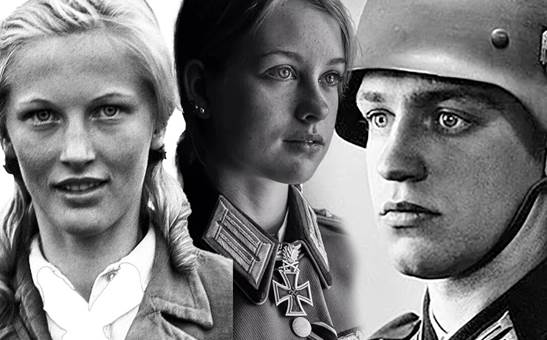
Virtually nothing was known about this Nazi program until the early 1980s. The only relatively intelligible mention of the Lebensborn program was an article in Life magazine published in the summer of 1945 about Lebensborn’s so-called „miracle children.“ However, the openly hostile tone of the article, as was to be expected, led to the fact that it was considered more propagandistic than in fact a unique historical fact.
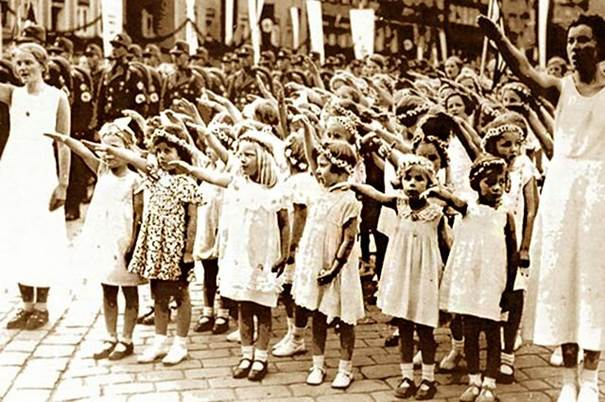
If we add to this the fact that just before the surrender of Germany, the Nazis destroyed most of the documents relating to the Lebensborn project, it is not surprising that the project itself was simply forgotten under the avalanche of facts about the atrocities of Nazism that were revealed in the post-war trials.
It wasn’t until after 1975 that public interest in the „cultivation“ program was spurred on by some published photographs and comments by professional researchers.
The reason for the birth of the Lebensborn program, nicknamed the Baby Factory, was that Hitler’s Germany was in dire need of constant renewal of human resources. After the outbreak of the war, the male population would naturally begin to die and be injured at the front, so Germany needed a high birth rate in the country itself.
For all the disadvantages of Hitler’s regime, the propaganda of large families and their state support were built at a very high level. For example, a woman who gave birth to at least four children was awarded a silver parental cross, which gave very, very extensive rights: skip-the-line entrance to any store, establishment, and so on. When buying food, mothers with many children were obliged to provide the best and freshest products. In addition, mothers with many children had many other benefits, including financial support from the state, free travel, etc. However, even such unprecedented measures to support motherhood did not yield results. The head of the SS, Himmler, himself said in one of his speeches:
„In terms of the value of our blood and the size of our population, we are dying out. We are called upon to lay the foundations for the next generation to make history.“
The Lebensborn program became the very foundations.
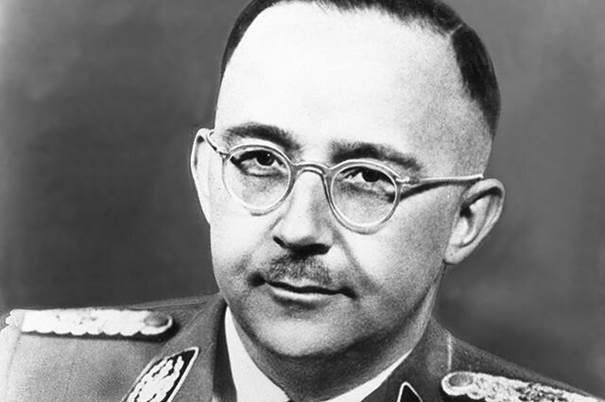
However, before its official adoption, Himmler began to actively criticize the Catholic Church for condemning polygamy. On the contrary, the SS chief strongly supported the thesis that pure-blooded Aryans not only could, but should also have extramarital affairs, so that Germany would receive more and more new citizens.
And if these citizens, even if illegitimate, had pure-blooded Aryans as their parents, then the state was ready to have a hand in their upbringing. Perhaps it was desperation over the difficult demographic situation that led Himmler to personally order, indeed order, all SS officers to have sex with Aryan women at every opportunity.
As a result of this policy, which is not surprising, it was the SS chief who prepared and approved the Lebensborn program, the implementation of which was the organization of the same name, created in 1935. The essence of the program was as follows: the healthiest, purest by blood, Aryan girls were selected throughout the country.
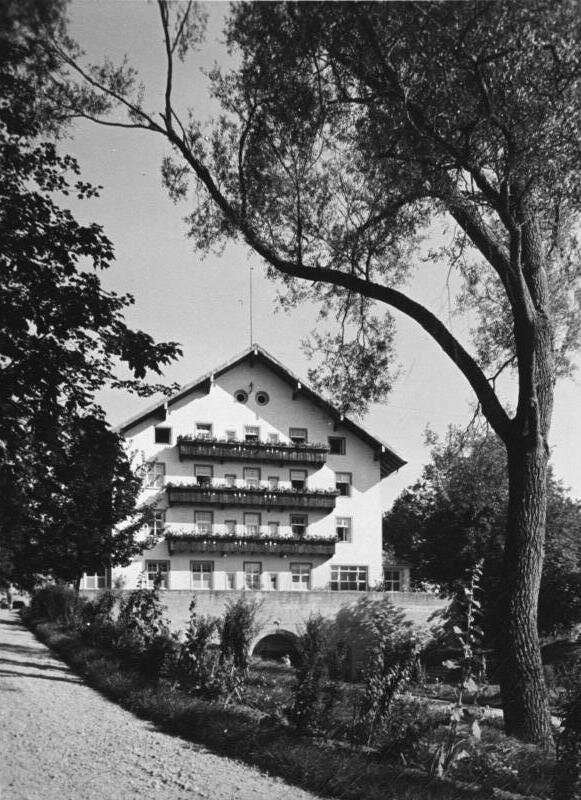
Lebensborn House
And the so-called „Lebensborn houses“ became a place for girls to meet with the most thoroughbred specimens of the Aryan race. Moreover, such meetings could be held, both by young people in love, brides and even wives, and „by order“. In other words, any German girl who passed a medical examination, the so-called „blood purity selection,“ could become a client of the Lebensborn Maternity Hospital, where she would eventually become pregnant and then give birth.
All patients of maternity hospitals received first-class medical care, food, living conditions and even „ideological indoctrination“ for those times. The motto „Give birth to the Führer“ was the most important motto in the Lebensborn maternity hospital chain. By the way, German women who carried children conceived by Germans often stayed in the same houses. At the same time, all patients, at their request, received complete confidentiality. First of all, this concerned mothers of illegitimate children, as well as those who came to the Lebensborn house to become pregnant and give birth voluntarily.
It should be noted right away that, as a rule, children born out of wedlock or children born „on order“ soon found new families, the babies were sent there with new documents, and they, in general, never found out who their real parents were.
In Germany itself, 17 maternity hospitals and 6 children’s homes operated within the framework of the Lebensborn program. After the birth of the baby, he was carefully examined for the absence of pathologies and „Aryanness“, and then, as mentioned above, either became a new member of a large family in the event of an official relationship, or ended up in a foster room.
It should be noted that there were even relatively „democratic“ rules for German women who came to give birth „to order“ – they could choose the man with whom they were going to conceive a child. Last but not least, these women were proud of their role, believing that they were helping their native Germany. Moreover, Hitler himself in one of his speeches bluntly stated:
„With every child brought into the world, she fights for the nation.“
And here it is necessary to note an important fact – in its essence, the Lebensborn program was an attempt to raise the so-called „superchildren“, the fathers of which were only specially selected men who were at least 180 cm tall, necessarily blonde and blue-eyed. Almost the same requirements were imposed on mothers.
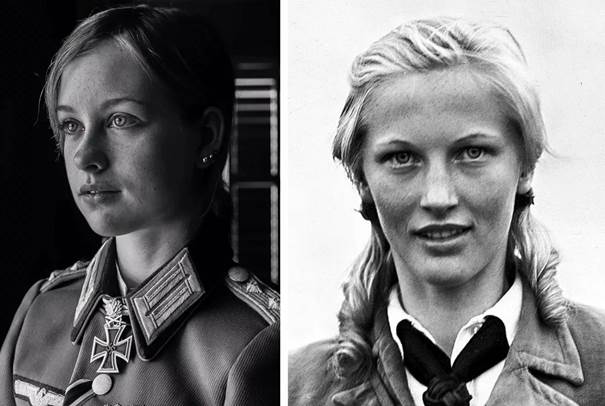
Both were checked for pedigrees up to 1750 to rule out even potential family ties. After the candidates were selected and agreed, the „inseminator“ got down to business. The first three nights he went to one girl, the next three to another. Sunday was considered a rest for the „inseminators“. The visits continued until conception.
The conditions offered to women in labor were so good that by 1938 at least 8,000 babies were born in special maternity hospitals. By the way, any German family could hand over a newborn to a maternity hospital, having previously provided all the necessary documents about the child’s health, racial purity, and so on.
With the outbreak of the Second World War, Lebensborn branches were also opened in the occupied countries: three maternity hospitals were opened in Poland, one in France, also one in the Netherlands and Luxembourg, and ten in Norway. This was due to the fact that there was a catastrophic shortage of pure German women, so in the occupied countries there was also an opportunity for healthy, fair-haired and blue-eyed girls to contribute to the strengthening of the Reich. It is funny that Hitler’s propaganda was silent about the purity of Aryan blood, coming up with excuses in the spirit that there are so-called „forgotten carriers of Aryanism“ in the occupied countries as well.
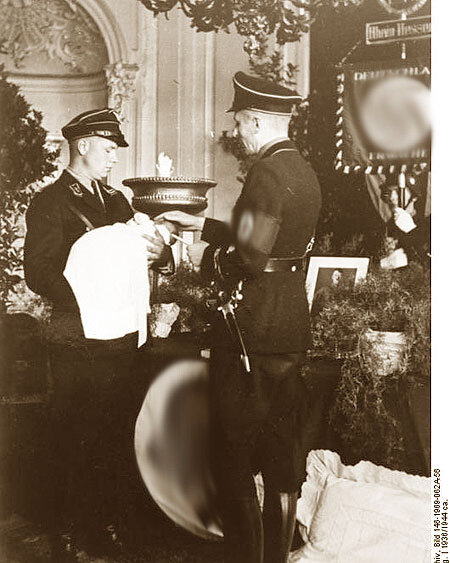
The babies themselves, before leaving the maternity hospital, underwent a rather specific rite of baptism, more similar to either Celtic or even satanic rituals. The baptism itself took place under the Nazi flag, a portrait of the Führer, and a burning torch. The person conducting the ceremony held a special SS dagger over the child and said the following „prayer“:
„We accept you into our community as part of the body. You will grow up under our protection and bring honor to your name, pride to your brotherhood, and unquenchable glory to your race.“
After such a procedure, it was believed that the baby forever became a faithful servant of the Reich.
The total number of children born under the Lebensborn program is unknown and cannot be determined. As mentioned earlier, most of the documents, including even the procedure for feeding the babies, were destroyed when the troops of the anti-Hitler coalition approached.
Some researchers claim that at least 9,200 children were born in total, but only pre-war data on 8,000 births refute this information. According to some sources, at least 20,000 children were born to Germans in Norway alone, 85,000 in France, and about 700 in Denmark. It is difficult to determine which of them were born within the framework of the Lebensborn program. It is known that only before the war and only in Norway at least 12 thousand such babies were born.
After the war, the fate of the children born under the Lebensborn program remained largely unknown. Only in Norway did the chief psychiatrist say that women who slept with the Nazis and had children with them should be considered insane. Accordingly, at first they tried to deport the children to Germany, and after failure, they were either distributed among other families, or simply given to homes for the insane. In the 1980s, Norway’s prime minister apologized to the surviving children and their mothers.
By the way, one of the most famous babies of the Lebensborn program is one of the vocalists of the ABBA band, Frida Lyngstad. Her mother, a Norwegian, gave birth to a German officer, Alfred Hase, as part of the program. After the liberation of Norway, the girl fled persecution to Sweden, where she later became a member of one of the most popular groups in the world.