
The Great Green Wall: How Does Africa Want to Stop Desertification and Protect Itself from the Sahara? Let me explain it in detail
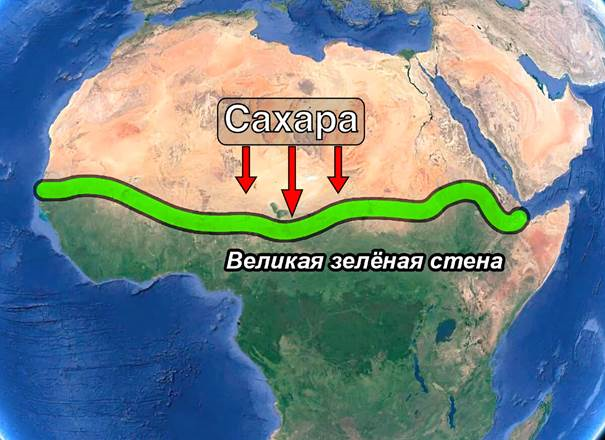
Since 2007, African countries have been implementing an ambitious $33 billion project. Its goal is to plant more than 1 million km² of desert land. For comparison, this territory is comparable to the territory of France and Spain combined. Why is the Sahara Desert expanding, and will Africans be able to defeat nature?
An Undetected War
The Sahara is the largest desert in the world. It stretches across Africa and occupies 30% of the continent. But the most terrible thing is that since the 19th century it has been constantly growing. The development of the continent by Europeans has led to the fact that the southern border of the desert is shifting by about 6-10 km per year.
Throughout the 20th century, the Sahara was encroaching on the Sahel, a tropical savannah separating the sands from the jungle. A narrow strip of land, it stretches for 3,900 km from the Atlantic Ocean in the west to the shores of the Red Sea in the east. The total area of the region is 3 million km².
Since 1914, droughts have been regularly recorded in the Sahel, leading to massive outbreaks of famine. They reached their maximum in the 1960s, when locals lived for several years almost without rain.
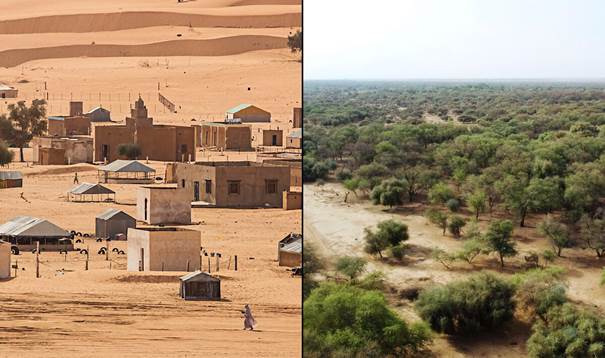
The north and south of the Sahel are already desert in one part
In 50 years, the number of areas unsuitable for agriculture has increased by 10% – despite all the development of technology and population growth! Today, 300 million Africans living in the savannah belt are at risk of starvation.
If desertification is not stopped, about 800 million people will lose their food supply by 2050. This will provoke one of the largest migration crises and humanitarian disasters in the history of mankind.
Thus, today 21 African countries are waging a real war with nature, striving to slow down land degradation and desertification, if not to stop.
Why is the desert expanding?
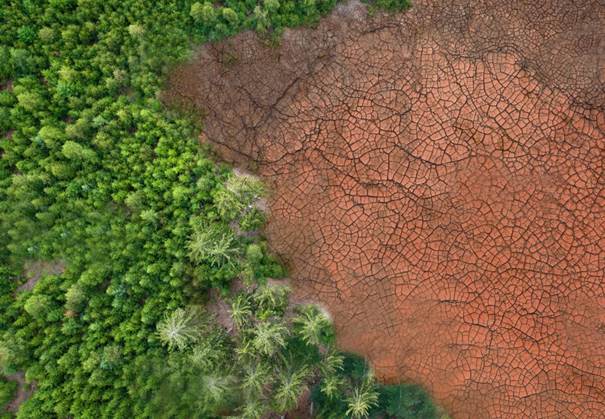
Central Africa is the most underdeveloped region on the planet. Modern fertilizers and machinery are not used in agriculture. At the same time, the land is used too intensively. Arable land is not rested, plots are not fertilized. Eventually, the soil degrades.
Uncontrolled grazing has a strong impact on the situation. Animals eat and trample vegetation. Finally, Africans are massively cutting down forests for quarries and mines, as well as for new cities.
Trees protect the area from wind erosion, increase humidity and retain water in the soil for longer. The leaves become a natural fertilizer. In the hot climate and dry winds coming from the Sahara, the lack of forests is becoming a detrimental factor for the African ecosystem.
Saving Africa?
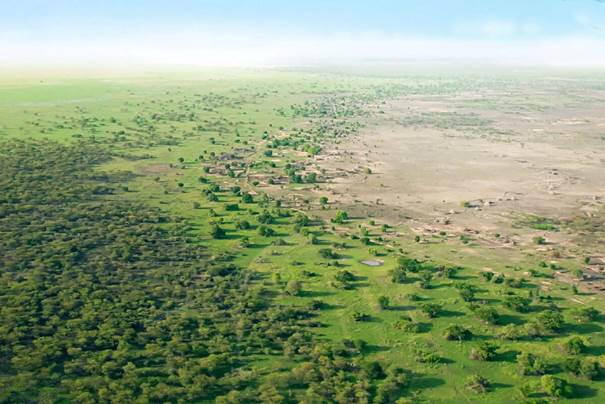
The Great Green Wall is a strip of forest planted along the entire belt of the Sahel. The width of the forest belt will be 15 km, the length will be 7775 km. It is planned to implement the project by planting 37 species of local plants that are able to develop in an arid climate.
The program has been endorsed by many African and international organizations. More than $33 billion has been allocated. 21 states are directly involved in the project. It is planned that by 2030, when the project is completed, 10 million jobs will be created.
Of course, the program involves working with the local population. Farmers will be taught to leave the land fallow, cattle breeders will be obliged to keep an eye on animals or create pens for them.
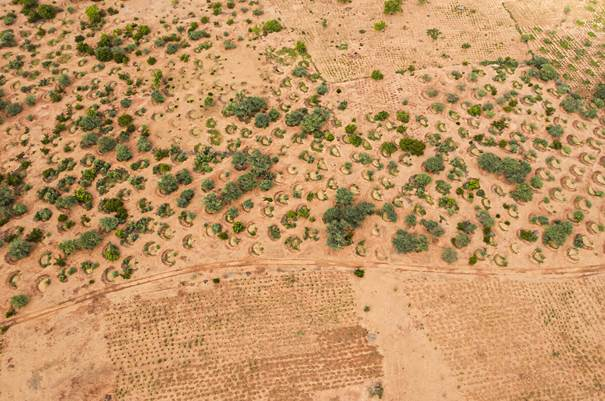
However, the project is progressing slowly and poorly. For 16 years, Africans have planted only 4% of the proposed forest belt. The project is less than 15% complete.
The main obstacle is the lack of adequate funding. Africa is not a rich region, and the money allocated by Europe does not reach the project. Corruption and the lack of desire of the population to follow the new rules are a problem.
Imagine, 80% of the trees planted during the project died. Some plants have wilted due to negligence and lack of attention from workers. Others were eaten by livestock. Some Africans, without thinking about the future, deliberately destroy young trees for wood and fuel.
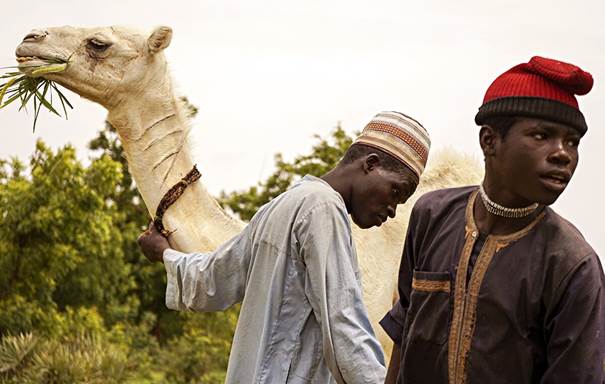
However, there are still some successes. In Nigeria, Senegal and Ethiopia, about 35 million hectares of land have already been restored. 350 thousand people got jobs. $8 billion spent.
Summing up the losses and intermediate results of the project, Western investors are in no hurry to allocate money. It is safe to say that Africa is losing this war. By the way, China also has its own Green Wall, and the Chinese have successfully implemented their project. Maybe Africans should learn from them?