
The Third Reich: Blitzkrieg and Gouging
As everyone knows, by the beginning of 1941, Hitler’s Europe had a superiority over the USSR in terms of mobile resources – one and a half times, in economy – 2.5 times, in steel smelting – 1.7 times. This prompted the Europeans to attack Russia once again in the belief of a quick and easy victory.
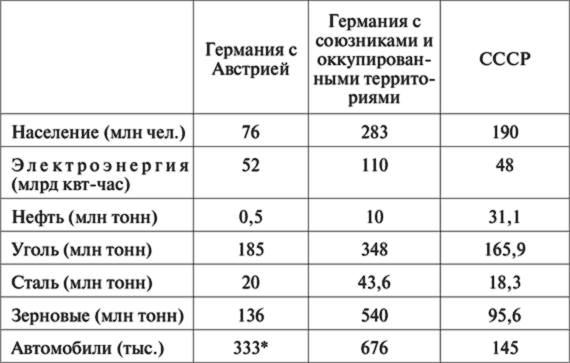
And as everyone knows, in the very first month of the war, the Wehrmacht alone, excluding the Allies, lost almost a quarter of a million soldiers. General Franz Halder, Chief of the General Staff of the German Army from 1938 to 1942, wrote in his diary:
____________________
Casualties from 22.6 to 31.7.1941: Wounded – 149609 non-commissioned officers and enlisted men and 5464 officers; killed: 44,027 non-commissioned officers and enlisted men and 2,443 officers; 11,539 non-commissioned officers and privates and 219 officers were missing.
A total of 205,175 non-commissioned officers and enlisted men and 8,126 officers.
…
A very significant number of patients is noteworthy, which is almost 54,000 people.
_____________________
Thus, even in extremely comfortable conditions: taking advantage of the suddenness of the attack, total superiority in manpower and equipment, excess ammunition and the combat experience of previous campaigns, the Wehrmacht in just 1 month only officially „wrote off as losses“ personnel in the amount of 50% of Germany’s annual conscription, of which 130,000 were pure „no return“ (only half of the wounded returned from German hospitals to the ranks).
Meanwhile, the experience of previous campaigns showed that the „official losses“ were always 30% lower than the real ones verified at the end of the war: 10,244 „reported“ against 15,450 real in Poland, 30,267 to 46,059 in France, 886 to 1,249 in Norway. So a quarter of a million is still a very optimistic figure for the Nazis.
But then, of course, it only got worse and by the end of 1942, the Wehrmacht’s losses reached 6 million people, which forced Hitler to declare a „total mobilization“ on January 13, 1943.
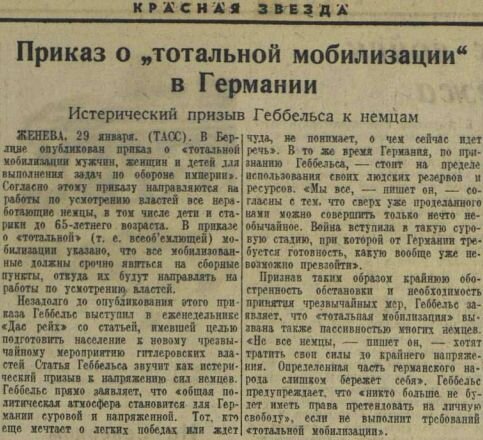
So how did the Europeans, with all their overwhelming advantage over the USSR, manage to reach such a shameful pre-crushing state during a year and a half of war?
Let’s find out.
But first, as usual, let’s voice the basic truths hated by „military experts„. The main truth is that any firearm – all cannons, mortars, machine guns and even tanks – by and large are not in the least afraid for the enemy. For it is not a gun, a mortar, or a tank that causes damage to the enemy. Damage is caused by a projectile that hits the target! And so it doesn’t really matter, How many guns do you have—one, two hundred, or fifteen thousand? If only 100 shells were delivered to your unit, you will not be able to fire more than 100 shots at the vorog, regardless of the size of your artillery park. The presence of an extra howitzer in the battery begins to matter only if you can provide it with at least a ton of ammunition per day. And this is very little – it is only 2-3 hours of active fire or a dozen fire raids at the request of the infantry. A mortar exists with at least a hundred rounds, a tank with fifty shells and a tank of fuel, an infantryman with a hundred cartridges, a dozen grenades and a pot of porridge with stew.
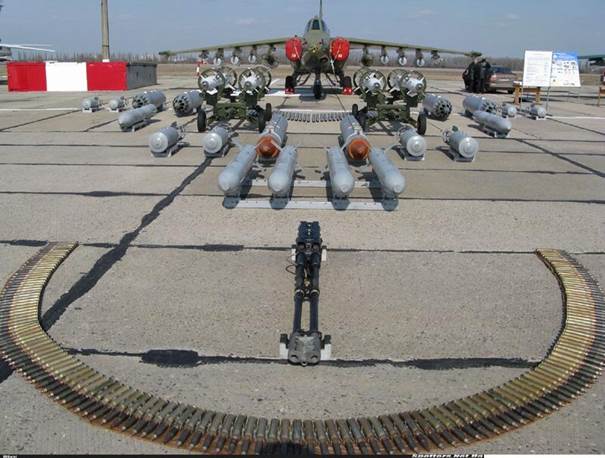
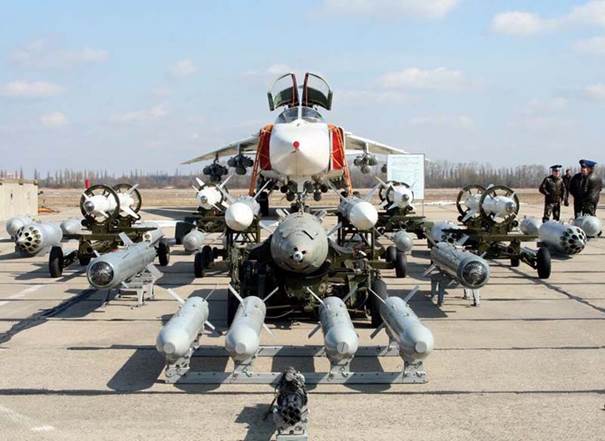
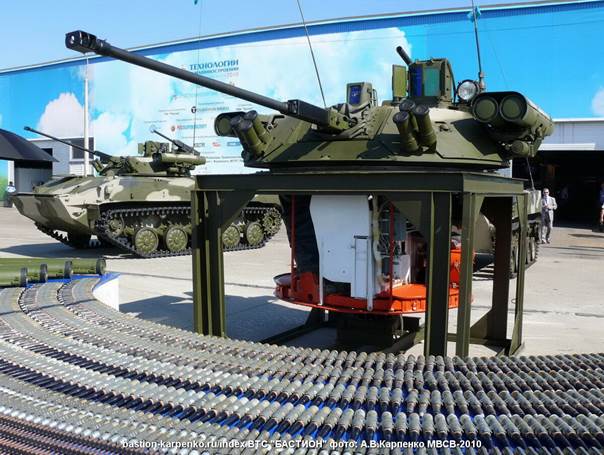
The main value of any weapon: ammunition!
If there are not enough supplies, then we have to do what the Germans did in the second (!) month of the war, in August 1941, and demand that the infantrymen sacrifice themselves in the name of saving shells. In other words, to fight off the „evil Russians“ on their own, with a knife and a rifle, without relying on artillery support.
In Meyer-Detring’s book, The 137th Infantry Division. 1940-1945″, Moscow, Tsentrpoligraf Publ., 2013. The following order for the 137th Infantry Division on ammunition consumption dated 19.08.1941 is given:
_____________________
Return fire on any targets in the near rear, on populated areas, etc., is senseless, and in our situation even criminal. We can do the Russians no greater service than to shoot all our ammunition before their large-scale offensive. Therefore, I order:
Only battalion commanders have the right to call in artillery fire. I demand of them that they call in artillery fire only if they are convinced that they will not be able to stop the enemy to the front line of defense with their own forces.
I forbid any retaliatory shooting!
I expect that all officers will be sympathetic to these measures, which are intended only for the benefit of the units themselves, and will strongly and fully communicate them to the personnel.
General Bergmann
__________________
The passage is particularly noteworthy: „I forbid retaliatory shooting!„, which clearly hints at the superiority of the Red Army in the volume of ammunition consumed. At least in German feelings.
Meanwhile, the term „shell famine“ is usually attributed to the problems of the Red Army. After all, after the defeat in the border battles, it lost a huge amount of its artillery and ammunition depots, its industrial base was initially three times the size of the European one, which lag was seriously aggravated by the evacuation of some factories — which, of course, did not work at that time.
In the Reich, they produced almost twice as many shells as in the USSR, and their planes were more powerful, and their tanks were cooler, and their machine guns were more rapid-firing, and their supplies were richer, and every Christmas the Fatherland treated the soldiers to apricots and champagne, sent parcels from relatives, and fed them chocolate and red wine.
The funny thing is that, at least about wine, the „experts“ are not lying. This is how General Günther Blumentritt, Chief of Staff of the Wehrmacht’s 4th Army, described his appearance in the units in his book The Battle of Moscow:
________________________
«… To cheer up the soldiers, entire trains of red wine were delivered from France and Germany to the Eastern Front. Of course, you can imagine what a disgusting feeling the soldiers and officers had when, instead of shells, without which the troops literally suffocated, wine was brought to them.“
„Things were not going well with the supply of the troops. Only a few railways approached our area of operations, and even these were often cut by partisans. Water froze in the steam boilers of steam locomotives. Each locomotive could pull only half the usual number of wagons. Many of them, covered with snow and ice, stood all day long in the dead ends of railway stations. Our great need for artillery shells was met with great difficulty.“
„The Russians were in incomparably better conditions. Immediately behind them was Moscow. Consequently, supply lines were short. The personnel of most Russian units were provided with fur short fur coats, jackets, felt boots and fur hats. The Russians had gloves, mittens and warm underwear.“
„In the area of Maloyaroslavets, we had an airfield, where transport planes from Smolensk, Orsha and Warsaw occasionally arrived. They delivered replacements, but they were not enough to compensate for the daily losses. The soldiers arriving by plane were dressed in long trousers and boots with laces. Often they did not have overcoats and blankets. Transport divisions awaited reinforcements at the airfields and immediately transferred them to the front, where they were most urgently needed. Often they found themselves at the front on the same night. Thus, people who only two days ago lived in the cozy barracks of Warsaw, in 48 hours found themselves on the Moscow front, which had already begun to disintegrate.
_________________
And this brief reminiscence fully reflects the classic state of another European army that ended up in Russia – 100%!
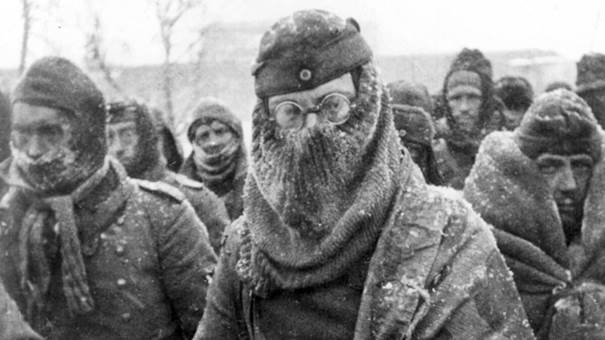
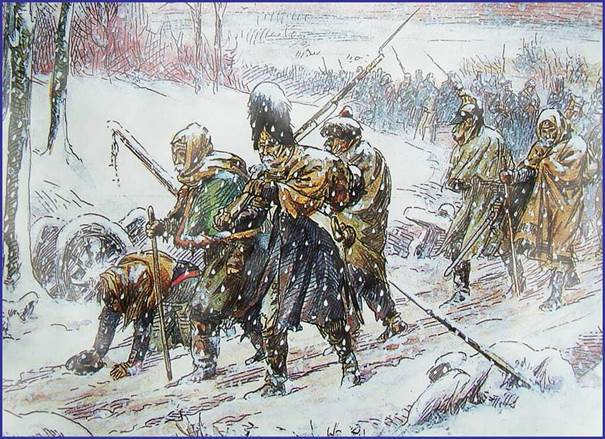
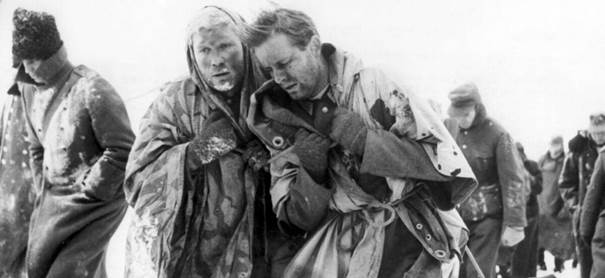
I don’t know who, but I was most touched by the very last passage — the lament that reinforcements, which were urgently needed at the front; The replenishment was so necessary that it was delivered by planes – this replenishment was brought in summer uniforms!
The general is terribly dissatisfied with this state of affairs!
However, it does not occur to him to do something as simple as pick up the phone, call Warsaw and demand that the recruits be dressed according to the season. They arrive naked, have losses from frostbite of up to 40% of the personnel, die by the thousands on the first day – well, to hell with them! There are a lot of conscripts in Germany, women always give birth to new ones.
We open the memoirs of Private Wolfgang Buff, or rather his letter of December 22, 1941:
___________________
„I’m doing relatively well, except that four toes are frostbitten. Dead meat peels off and new skin has already grown. This will last for a few more days, then I think everything will be fine. In recent days, we have received a lot of mail from you and parcels with precious contents: fish oil, elderberry juice, apples, a woolen vest, a warm hat, oil, as well as congratulations. I look forward to the upcoming walks in this warm polar garment. A thousand thanks for all the effort you have put in. Now I’m not really worried about surviving the winter. If only all my comrades had such warm clothes, there would be such caring relatives! But many have no one, and it was not in vain that Goebbels called for warm clothes to be sent to the front.“
____________________
And here are the memories Hans Biedermann shares in the book „In mortal combat. Memoirs of the Commander of the Anti-Tank Crew„:
____________________
„The days and nights we spent made it clear to us that the winter uniform issued in accordance with the regulations of the German Infantry Division was too light, especially for the soldiers in the front line. In front-line conditions, we were forced to live in open trenches or behind stone walls, and the roof over our heads consisted of light tarpaulins, cloak-tents. In these primitive shelters we were exposed to the elements, and it got even worse with the onset of frost and rain. From somewhere in the rear, we received instructions that army socks could be used as gloves at night temperatures below freezing. The recommendation, clearly stated in clear military language, stated that soldiers on the front line should cut two holes in the sock for the thumb and forefinger. Someone probably didn’t know that our boots were about to be thrown away, and our socks were almost in tatters, and there were so many holes in them that it wasn’t hard for us to find holes for all five toes.“
____________________
The Wehrmacht’s concern for its soldiers is off the charts, isn’t it?!
In general, the role of „General Moroz“ in the defeat of the fascist invaders is in reality much more significant than many Russian patriots are trying to prove. Let’s recall once again the classics summarized by Hans-Ulrich Rudel, pilot of the Junkers 87 dive bomber:
_________________________
„The sudden onset of cold freezes the usual lubricant. Our on-board weapons can’t fire. It is said that the cold has no effect on the Russians because they are well prepared for winter. We have constant problems with the right equipment. Supplies barely reach us. Our tankers complain that the tank turrets do not turn, everything is frozen. Trains practically do not run, there are no reserves and supplies, the wounded cannot be taken out of the battlefield. The bare necessities are missing. Cars are stopped, transport does not work, there is no fuel and ammunition. We have very few planes left. At low temperatures, engines don’t last long, hydraulics fail, relying on any technical tool means suicide. At these temperatures, the engines cannot be started in the morning, although we cover them with straw mats and blankets. During terribly cold nights, cases of frostbite are common…»
__________________________
No less interesting are the memoirs of the most ordinary rear wagon trainer, a modest private Aryan Guy Sayer, who in November 1942 drove a car with warm clothes in a car convoy from Minsk to Stalingrad.
Just don’t say that carrying supplies by car is complete cretinism, and that on such a road cars will burn more fuel than they will deliver equipment!! For even the Germans in the convoy, who did not shine with intellect, asked the same question…
But an order is an order:
_______________________
„From the loudspeakers located in the square, the speech of the Supreme Commander-in-Chief was heard. He reported that even a victorious army could not avoid the loss and death of soldiers; Our role as convoy troops is to deliver, in spite of all hardships, food, ammunition, and everything else that is required by the troops leading the offensive. Only in this way will General von Paulus be able to continue the victorious battle! We’re a thousand miles away from our destination, so there’s not a minute to lose.
All the following days remained in my memory as a frosty nightmare. We couldn’t keep warm. They even urinated on their stiff hands to keep warm and disinfect cracks on their fingers. Four of our squad, seriously ill with pneumonia and bronchial tubes, lay and moaned in folding beds arranged in one of the trucks. There were only two doctors in the company, but they could do little to help. In addition to these severe cases, Forty people got frostbite. Some soldiers had blisters on their noses, and their faces and hands were cracked from the cold. I wasn’t too hurt, but as soon as I moved my fingers, blood started oozing. At times the pain was so intense that I became desperate, began to sob uncontrollably; But everyone had enough of their own worries, and no one paid attention to me. Twice in the truck, which housed a field kitchen and also a first-aid post, they washed my hands with a 90 percent alcohol solution. The pain was so intense that I couldn’t stop myself from screaming, but for a few minutes it was warm on my hands. Thirty-eight trucks broke down, and we had to destroy them along with their cargo to keep them out of the hands of the guerrillas. Two seriously ill patients died, and several soldiers had their arms or legs amputated.“
___________________________
If you think that all these horrors belong to the front, then you are deeply mistaken. This is a description of the deep rear haul from the long-occupied Minsk to the long-occupied Kyiv! Which cost the Wehrmacht 38 trucks with equipment, a dozen and a half irretrievable losses of personnel (two corpses, a dozen invalids with amputations), plus seven hospitalized and 100% frostbitten!!
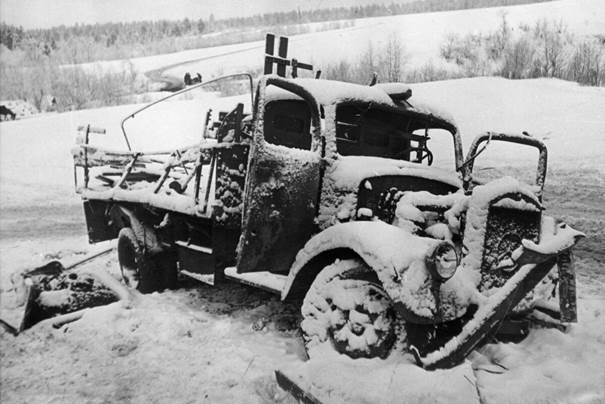
And this despite the fact that the convoy was carrying warm clothes! On the one hand, they could have dressed. On the other hand, it’s freezing outside, and warm uniforms, it turns out, are just on their way to the front! In the winter of 1942, Wehrmacht soldiers again died under the snow in summer clothes.
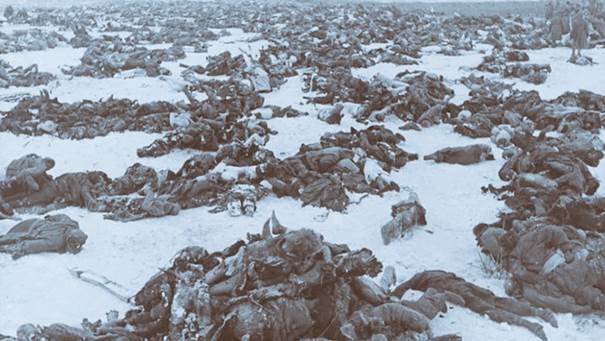
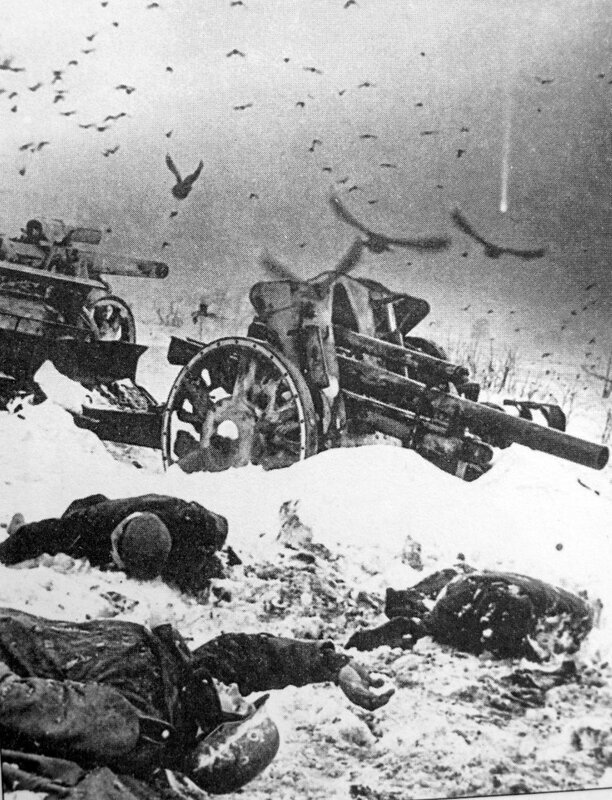
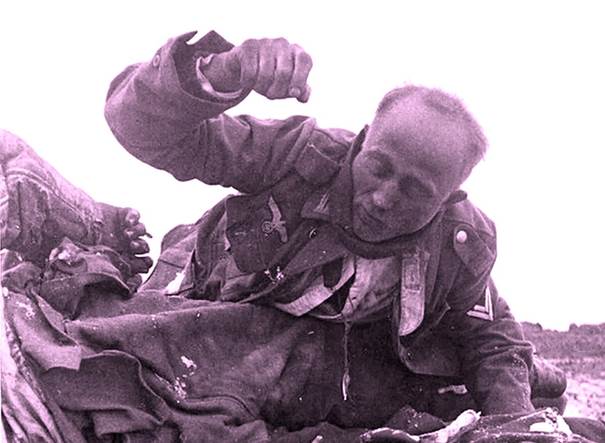
Every winter, the European army in Russia has an unexpected experience: it turns out that it is cold in winter! And you need to change clothes quickly.
And each time the warm uniforms reach the „eastern front“ only in the spring!!
The warm rags never reached Paulus’s army. In spite of all the courage of the wagon trains, behind Kharkov, the motorists, who broke forward under continuous shelling from partisans and Soviet aviation, very quickly ran into the outer ring of encirclement…
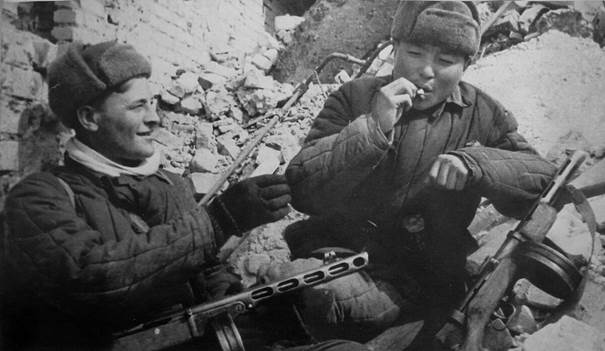
However, the memoirs are quite admirable, right? Corpses, amputations, frostbite, burned trucks…
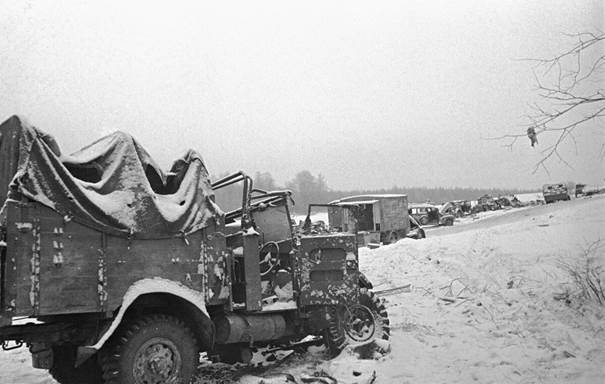
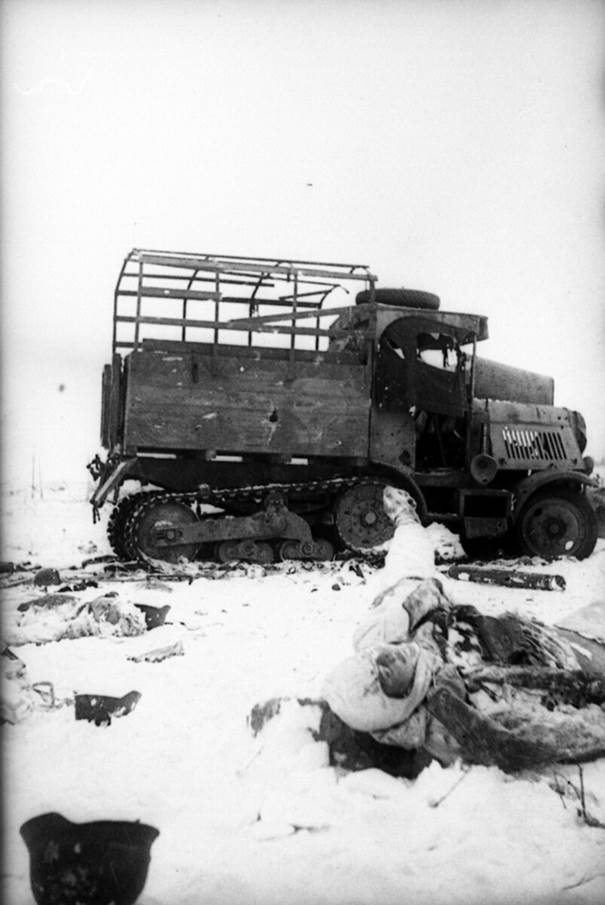
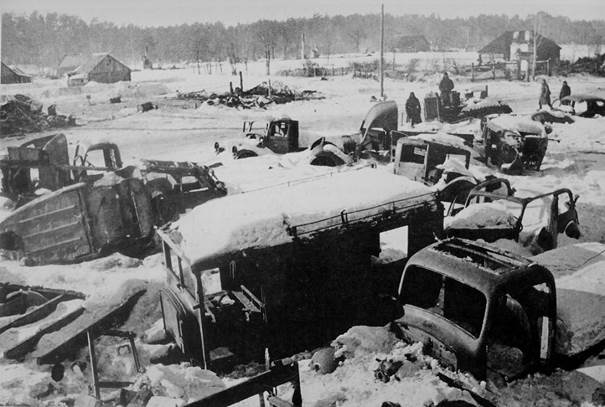
Try to imagine for a moment that on the way from Orenburg to Kazan, a certain convoy would have lost 20% of its transport and cargo, 10% of its personnel irretrievably, and the remaining 90% would have been sick…
It’s complete nonsense, isn’t it?
But for the European army, this situation turned out to be the order of the day. In the deep rear, during the most ordinary transition to the tail and mane, a supply column was defeated. The only participant in the attack is „General Frost„.
It would not hurt to nominate a distinguished commander for a medal.
During the entire war with the USSR, the Wehrmacht never (!) received the warm uniforms necessary for the weather, did not receive winter lubrication, constantly confused winter and summer fuel, did not have warm dwellings and hot baths. This led to frostbite every winter in 40% of the personnel (this is official!) and irretrievable losses due to amputations of limbs of hundreds of thousands of soldiers.
Field Marshal Erich Milch, Reich Marshal Goering’s deputy, was the best judge of what was happening. In the book „The Rise and Fall of the Luftwaffe„, it is told how, while inspecting transport airfields and trying to understand why only half of the allocated aircraft were used to save the encircled group at Stalingrad, and why the services could not cope with the maintenance of aircraft, the field marshal drew attention to the fact that the equipment working on windswept airfields did not have any equipment opportunities to keep warm. They had only buses at their disposal, the temperature in which was not much different from the temperature outside. Milch quite reasonably wondered why not bring in timber and build much warmer wooden makeshift houses. In response, he heard a reference to the absence of trucks. The Field Marshal asked about the army trucks near the airfield, but was told: „We have no right to touch them. It’s theft.“ Milch said, „The only theft that has been committed here is the brains stolen from you.“
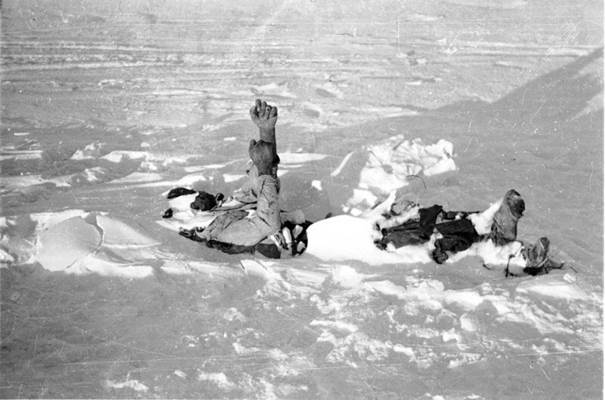
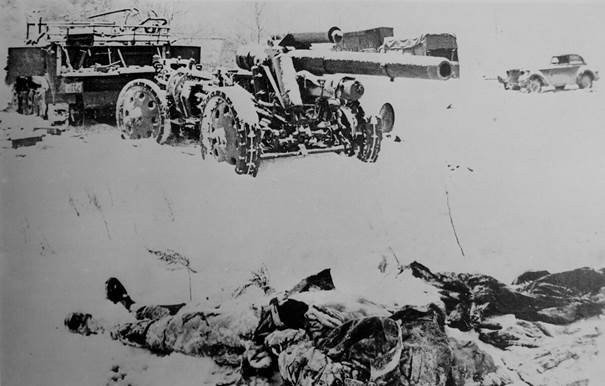
Of course, the situation was different along the front that was thousands of kilometers long. In some places, the invaders managed to settle down comfortably, in some places they got warm clothes and water for washing, in some places they settled in cozy dugouts — but in most cases, the Soviet soldiers suffered from the cold in warm dugouts near red-hot potbelly stoves, dressed in felt boots, cotton pants and coats, taking a steam bath every week and constantly receiving hot food. At the same time, their opponents „warmed up“ in unheated buses, wrapping themselves in summer overcoats and crushing lice.
And so, yes, „General Frost“ turned out to be truly terrible for the uninvited guests!
By the way, about lice – it was by no means a figure of speech. These insects run like a red thread through most German memoirs. For example, Bruno Winzer in his book „A Soldier of the Three Armies“ recalls how a newcomer, a certain Major Proy, arrived in his division, stationed near Leningrad, who was immediately outraged by the fact that the soldiers were constantly itching, as if wound up. Vinzer stood up for his subordinates:
___________________
„The soldiers have lice, Mr. Major.
„Excuse me, what?“
„Unfortunately, we have lice, and there are bedbugs in the bunker.
„It’s wild piggishness, my dear! That’s unheard of!
He began his career by issuing an order for the division, according to which every soldier was obliged to wash and change clothes. The company commanders were entrusted with the supervision of this procedure, they were asked to report in three days on the absolute absence of lice in the entrusted unit.
The order came, but there were no reports. There was no water on the front lines, and if someone shaved, they used part of their portion of tea or coffee to do so.
On the third day I removed the louse from the major’s collar. The adjutant was absorbed in studying the map, the clerk ran out of the bunker as if choking on something, and the major blushed to the roots of his hair. It was reported that he eventually relented.
____________________
The head of the German military hospital, Peter Bamm, no less vividly describes the lousy question in his memoirs „The Invisible Flank“. His hospital was inspected by a certain general and suddenly decided to check the sanitary condition in an original way: he loudly promised the soldiers a cigarette for each louse caught. But Bamm turned out to be a slick sewer:
____________________________
„I stood behind the general and raised my hand, straightening my middle and index fingers. This sign didn’t mean V-Victoria, it just meant „two“. The soldiers understood everything at once. Smiling broadly, they said they had no lice, but at noon, as promised, I gave them more than two hundred cigarettes.“
_____________________________
Such a typical European hospital with typical European lice!
But don’t suspect Peter Bamm of poor hospital management and disrespect for the wounded! It was he, for example, who, despite all the unimaginable difficulties, was able to organize the evacuation of his most seriously ill patients to the rear – giving bribes in the form of thirty kilos of sugar for each rescued soldier.
Pay attention: he did not appropriate the acutely scarce sugar, did not sell it, did not squander it, but used it to save his wounded, many of whom he did not even know by name!
It took place in the town of Heiligenbeil, in East Prussia.
_________________________
„When it became clear that Heiligenbeil would not be taken by the Russians on the move, the manager sent a special plane from Germany to pick up all his fishing equipment and several suitcases full of shoes. The shoes of Master Odebrecht, who lived in Berlin on the Wilhelmstrasse, were very good indeed. The pilot came straight to my room; He was a charming man and was very worried about the task entrusted to him. To assuage his conscience, we put two patients with head wounds on his plane.“
_______________________
And that’s when it dawned on Peter Bamm!
_______________________
„Not far from Heiligenbeil there was a sugar factory, which until now stored several hundred sacks of sugar, each weighing a hundredweight. I offered the commander of the aviation unit one sack of sugar for each batch of wounded taken out. … There were now four stretchers on all the ambulances arriving at the airfield, three with patients with head wounds, and the fourth with a bag of sugar. In this way, we were able to evacuate all such patients to Germany.“
__________________________
No less deftly he got out of the situation with the shortage of blankets that occurred in the spring of 1942 (!). Bamm sent two of his peacetime „service personnel“ to the rear, providing them with an armful of fake passes and several packs of cigarettes.
__________________
A week later, two of our travelers arrived back in Juhari-Karales. They drank a large number of cocktails in the bars of Bucharest and in the meantime found their girlfriends, whom they met back in 1940, when the division was training in Romania. But they delivered two planes filled to the brim with blankets.
_____________________
So the wounded from Peter Bamm’s hospital can only be envied! The fate of the poor fellows from ordinary medical institutions, for whose evacuation no one paid bribes from their own pockets, and for whom blankets were not obtained by semi-criminal means, was, of course, not so happy. They recovered like flies.
Is it any wonder, then, that only 49 percent of the wounded from German hospitals returned to service, compared to 72 percent from Soviet hospitals?
Given the scale of the war, the difference in the quality of medical care cost the lives of no less than two million fascists.
And here’s what’s interesting. A lot of filth has been filmed about the Patriotic War in recent decades. And about how soldiers were driven into the attack with sticks instead of weapons, and about how special forces shot Red Army soldiers after a victorious attack, and about how conscripts ran into attacks through minefields, clearing them for tanks. But even the most frostbitten moron of convinced liberals did not think of concocting a story about how the head of the hospital pays bribes to transport workers in order to evacuate at least the most seriously wounded from the front to the rear!
For the Wehrmacht, this is nothing – this is the order of the day.
However, in the German army, bribery was the order of the day, not only in medicine. For example, in 1944, Bruno Winter, already known to us, was promoted and placed under his command. Then I will just quote:
_________________________
„The beginning of my career was fraught with great disappointment. The infantry division was supposed to be equipped with new weapons, but the reality was different. Initially, my unit had only two companies: one with twelve anti-tank guns and the other with self-propelled anti-aircraft guns. The third company was still being formed; It was supposed to receive self-propelled artillery pieces. Only the anti-aircraft company was manned. The anti-tank gun company had only one three-gun tractor.
I decided to take advantage of my acquaintance with the logistics officer who was in charge of supplying the anti-tank units and through him to „organize“ the receipt of vehicles and guns. In order that my plan might be crowned with success, I took with me, on the advice of the quartermaster of the division, a box of suitable goods from the military store, schnapps and cigarettes. This „open sesame“ had its effect, and in Berlin I was promised that within a week I would be able to take over the cars I needed in Brandenburg.“
______________________
I wonder what the audience would have said if in the film „Podolsk Cadets“ the commander of one of the divisions had rolled up to the deputy rear and offered: „Fellow countryman, give me guns with unfired barrels, tractors and two trucks with shells, and I have a box of cognac and three boxes of chocolates…„, to which the major would reply: „If you want new tractors, from the reserve, you still have a box of vodka“ – how would you react to such a „truth of life„?
Probably, the scriptwriters would have called the paramedics. Or, for insulting the defenders of the Motherland, they would just punch the producer and the director in the face
But in the Wehrmacht, judging by German memoirs, bribes for high-quality armament of their unit were the norm of life. That is why veterans who know the „intricacies of army life“ have always been better equipped than conscripts.
But the most magnificent litmus test demonstrating the quality of the Wehrmacht’s work in supplying its units with everything necessary is the „air bridge“ to the units surrounded in Stalingrad. After all, this very supply of the encircled units became a matter of honor for the Third Reich in general and Hermann Göring in particular!!
From the point of view of theory, there could be no problems with the provision of encirclement. Paulus’s army needed about 1,000 tons of food and ammunition per day to survive in a blind defense—to eat and shoot back. 400 Ju-52s with a carrying capacity of 1.5 tons, making two trips a day, could deliver 1,200 tons. That is, there was also some reserve. So Goering was not lying to Hitler with his promises – he was quite capable of supplying his entourage.
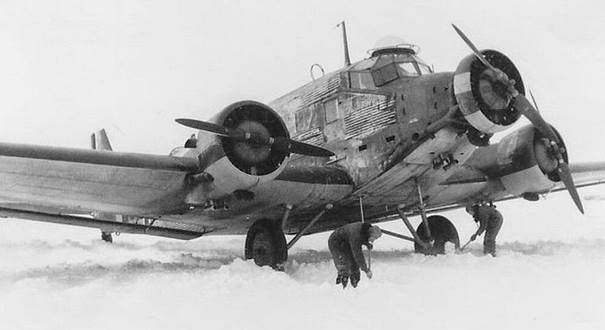
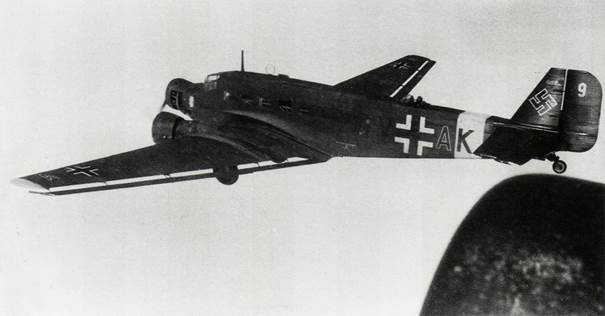
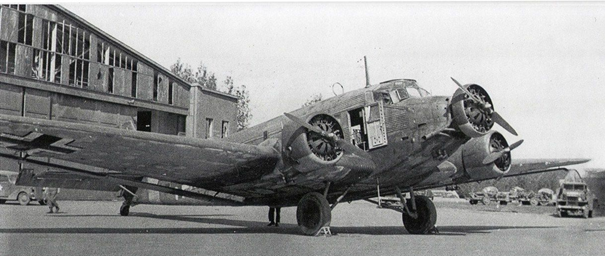
German transport aircraft „Ju-52“ in the hope of take-off
In reality, however, the technicians were able to keep only half of the aircraft flying due to frostbite, fatigue and non-working instruments.
Due to the usual gouging for the Wehrmacht, the load of aircraft did not exceed 50%.
And in addition, about 10% of the transport workers were shot by Soviet air defenses.
As a result, no more than 300 tons of cargo reached Paulus’s army per day!
In the amount of these 300 tons, aviation delivered barbed wire, tens of thousands of sets of old newspapers, soldiers‘ memos issued by the War Propaganda Department, roofing sheets, caramel, spices, Croatian medals and collars to the starving soldiers. (It’s all memories „Veeder I. Catastrophe on the Volga. Moscow, Progress Publ., 1965.“)
To fend off the „Russian barbarians„, the encircled people were offered to use roofing tile instead of cartridges and eat old newspapers instead of canned food.
„The last planes delivered a dozen boxes of condoms, 5 tons of candy, 4 tons of marjoram and pepper, 200,000 brochures of the Wehrmacht’s propaganda department.“ — these are the memoirs of Adjutant Paulus Adam Wilhelm
To put it simply, at the cost of incredible efforts and huge losses, the Luftwaffe managed to deliver several thousand blood-soaked tons of frankly useless garbage to the encircled!!
This situation worried even the Germans, and Reich Marshal Goering, as we remember, sent Field Marshal Erich Milch to inspect it. Upon arrival at the first airfield, he ordered to open several containers prepared for shipment and, of course, found in them… fish food!!
To send fish food instead of human food to the soldiers surrounded on the banks of a huge river – even Stalin himself would probably not have risen to such a level of mockery if he had been able to interfere with supplies for the Wehrmacht. Fish food for those who are about to go to fish food themselves!
Very witty, don’t you think?
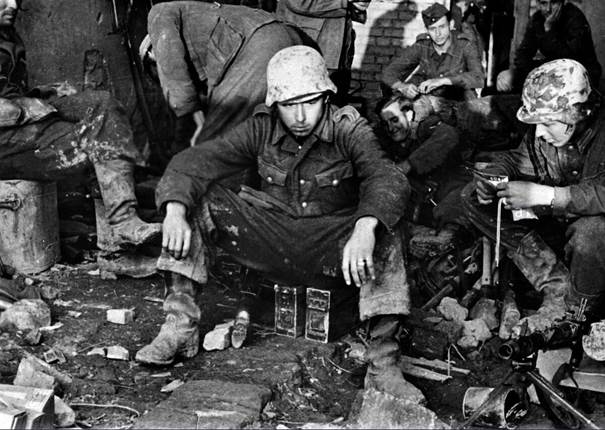
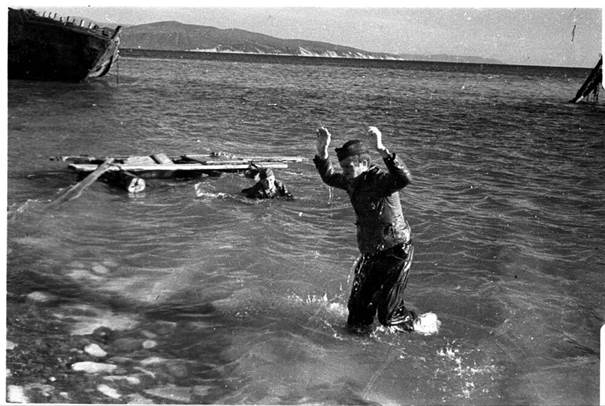
However, I inadvertently deviated greatly from the main issue – the shell famine in the Wehrmacht. Therefore, I will ask them again: was there a hunger for shells, or is it just my fantasy?
These figures show that during the first year and a half of the war we maintained relative parity with the Germans in the consumption of shells. It is not possible to obtain comparative statistics for 1941, since it is impossible to determine what part of the shells „decommissioned“ by the USSR were fired and which were lost along with the border depots, but in 1942 the Germans had some superiority only in the medium caliber (76-152 mm). firing 22 million shells against 17.5 million of the Red Army. On the other hand, the Red Army „fired“ 3.5 million 120 mm mines, which the Germans practically did not have, so even in this caliber the Wehrmacht’s advantage is small – only a million shots.
And if the „shell famine“ in the Red Army in the initial period of the war is considered a generally recognized fact, what can be said about the Wehrmacht, which consumes exactly the same amount of ammunition?
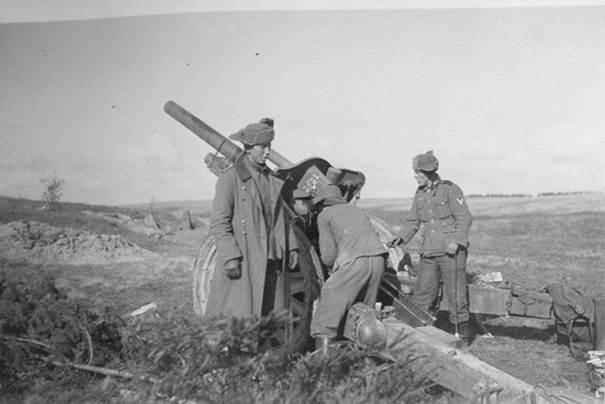
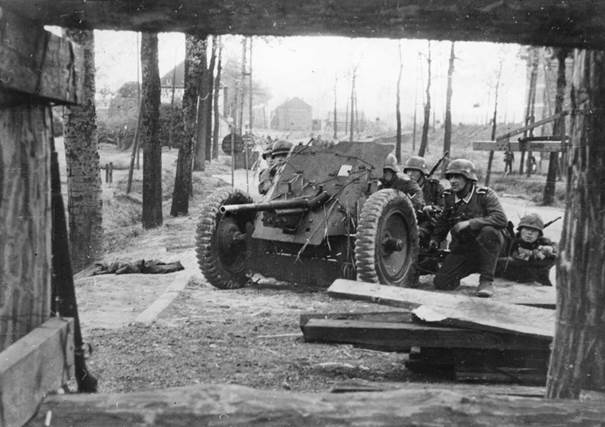
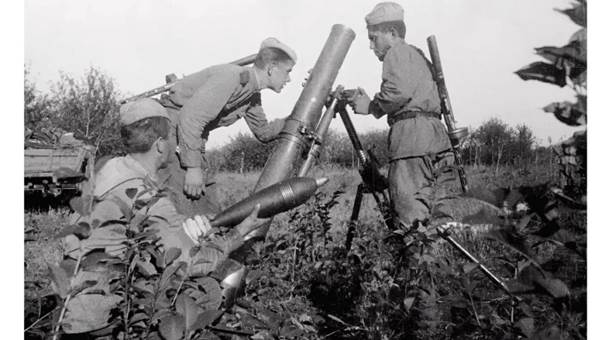
And it must be said the following: unlike the Red Army, the Germans were advancing! This means that they had to break through the defenses of the entrenched infantry. Meanwhile, firing at „openly positioned infantry“ going on the offensive is six times more effective than firing at riflemen buried in the ground and hiding in pillboxes.
Parity in the expenditure of shells is understandable if both sides adhere to the same tactics. If both sides are engaged in a war of maneuver and hit mostly exposed targets, such as in the Civil War; Or if both sides are entrenched and forced to destroy each other’s positions, like the European armies of the First World War.
But if one side is advancing and the other is fighting back in strongholds, the attackers must spend significantly more ammunition!
According to the statutory standards for the consumption of shells to suppress entrenched infantry with a caliber of 100 mm, gunners need to shoot 300 pieces per hectare. A fire advantage of 1 million 100 mm shells allowed the Wehrmacht to suppress the defenses of the Red Army on a front 300 km long with a defense depth of 100 meters. Or 100 km of front at a depth of 300 meters.
Is it a lot or a little?
The Red Army, having begun offensive operations, fired 11 million 120 mm mines „in excess of parity“ in 1943, and 16 million in 1944. (And that’s not even counting the 14.5 million Katyusha-type MLRS shells against the 200,000 German rockets!).
Note that the 120mm mortar is an infantry weapon in service with regiments. They were used when the advancing companies ran into a center of resistance in order to quickly „throw“ 200-300 heavy ammunition on the enemy’s head.
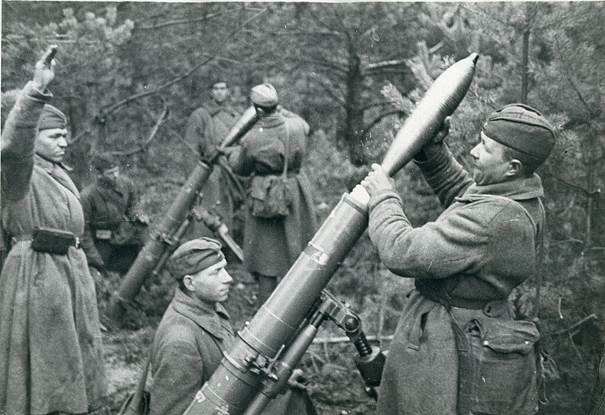
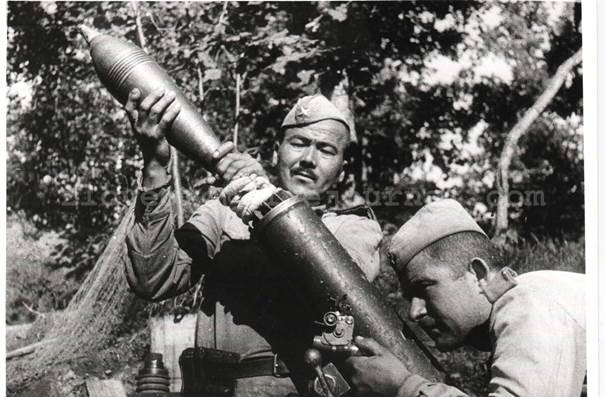
The Germans do not have such „heavy weapons“ of infantry. In artillery, the Red Army had parity with the Germans at the beginning of the war.
The science of arithmetic suggests that such a parity of shells could be formed only and exclusively in one case: if the Wehrmacht infantry repeatedly had to storm the enemy’s unsuppressed defenses, relying on their superiority in tanks and numbers. This, in the end, led to gigantic fascist losses, amounting to at least 6 million heads, and forced Hitler to declare total mobilization in January 1943.
In such conditions, it is not surprising that the „super-mobile„, „highly maneuverable“ and „totally mechanized“ troops of the Third Reich took three months to get to Moscow than Napoleon’s columns, accompanied by leisurely horse-drawn wagons.
The question remains: why the hell did the Nazis rush into attacks without proper artillery preparation, like brainless baboons? Where are the shells baked by European industry in innumerable quantities?!
Let us give the floor to Field Marshal von Bock, commander of Army Group Center. According to his calculations, in August 1941, his troops needed at least 34 trains per day, each weighing 450 tons, for a successful offensive.
In reality, he received no more than 18 trains!
By October, the situation had improved markedly: Army Group Center had lost up to half of its personnel and equipment, and therefore its requirements were reduced to 27 trains per day.
But she only got 16!
The commander of the Fourth Army, von Kluge, declared: „Due to the increasing distances, the army is almost entirely dependent on the functioning of railway transport. „The army lives one day at a time,“ he continued, „especially when it comes to the supply of fuel.“
And the commander of the Ninth Army firmly stated that the vehicles at his disposal were „clearly not sufficient to prepare for the coming operations.“
There was no chance of the situation improving: with the outbreak of the war, it suddenly became clear that the width of the railway gauge in the USSR was different from that in Europe!! Therefore, the equipment needed to be reloaded in Šiauliai. However, instead of the normative, in peacetime, 3 hours per train, it took… Three days!
In addition, as we remember, steam locomotives froze and broke down, and did not give out power. For, as it suddenly turned out, European steam locomotives, accustomed to eating anthracite, could not use captured brown coal from captured mines as fuel.
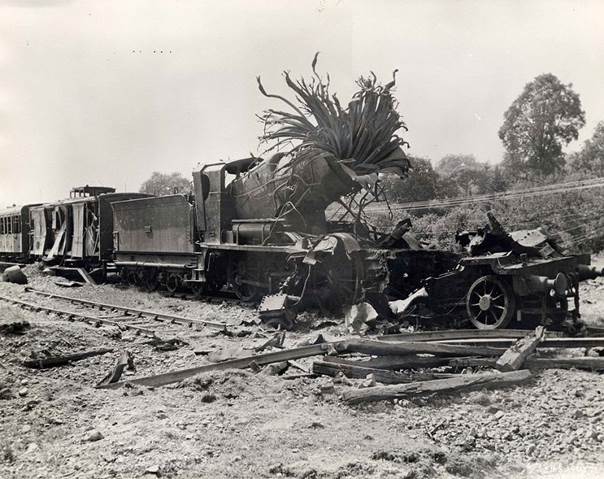
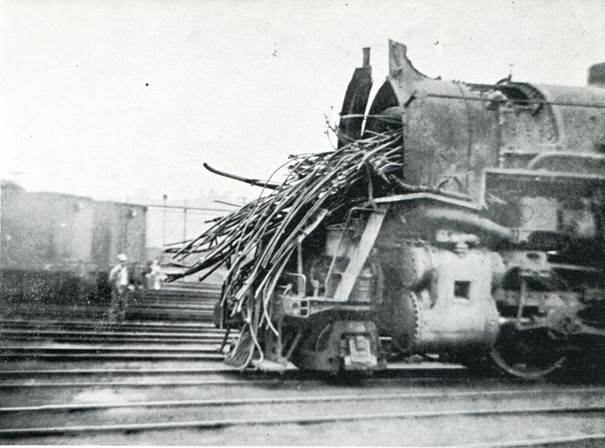
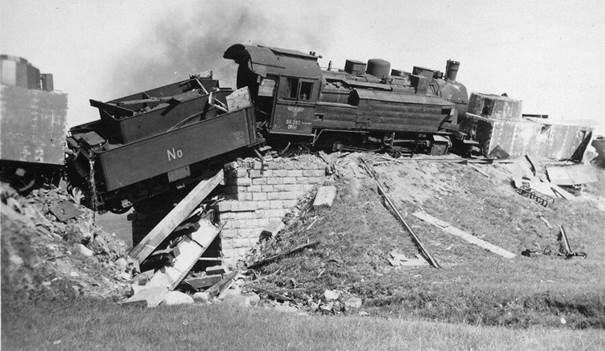
The Germans tried to solve this difficulty with the help of motor transport (yes, we remember the march from Brest to Stalingrad under their own power). However, it suddenly turned out that after the passage of tank columns, paved roads turned into mush, unpaved roads turned into swamps, and ordinary country roads turned into ravines. And that’s why the trucks turned out to be disposable – 400 pieces were consumed per month!
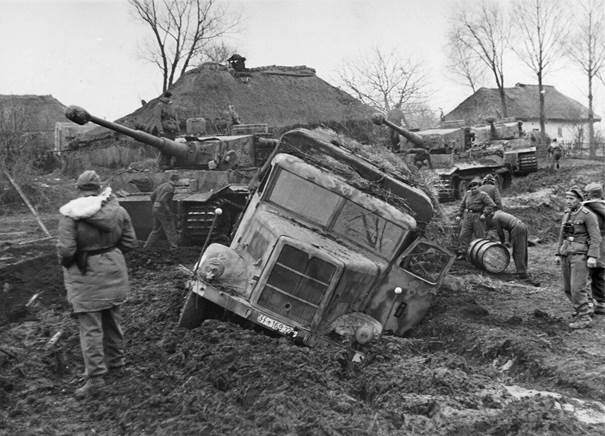
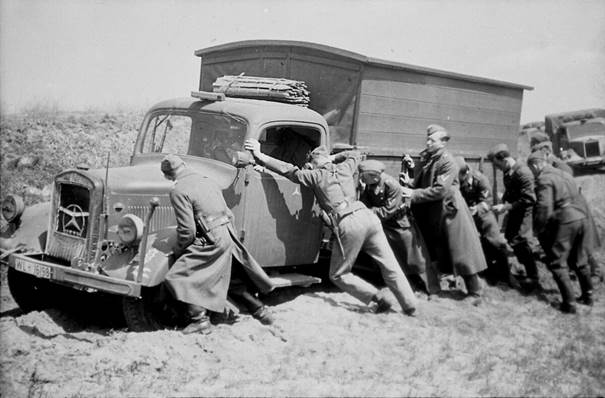
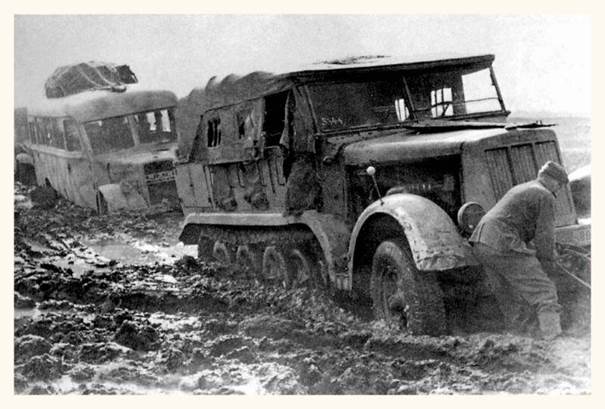
And just as suddenly it turned out that in the USSR there were no gas stations at every intersection, as in France or Poland – and therefore fuel for trucks also had to be transported by trucks!
And in addition, as we have already noticed, the issues of supplies in the Third Reich were raised openly through the ass. The German army often received wine instead of shells, apricots instead of warm clothes, and astrakhan women’s coats instead of food. In Stalingrad, the plane with ladies‘ fur coats, muffs and children’s hats was so „welcome“ that Paulus’s adjutant Wilhelm Adam even became hysterical upon receiving such cargo.
There are hundreds of examples of the mess in the supply, planning and documents of the Wehrmacht, but the „sheet“ turned out to be too big, so I will move on to conclusions.
So, the Third Reich started the war without even realizing that:
— it can be cold in Russia in winter
— In Russia, the distances are very long
— Russia has a different railway gauge
— Other coal is used in Russia
— Russia has a poorly developed road network
— there is no network of private public gas stations in Russia
— and that the army in time of war needs constant supplies.
And this is in addition to the fact that the logistics of supplying the Wehrmacht is quite intelligibly described by only one term: „Homeric mess„
This begs the question: why the hell did the Third Reich move to the east at all with such and such preparation for military operations?! After all, the Nazis had nothing ready for war except arrows drawn on the map!
It is here that we encounter „the greatest secret of the indestructible German blitzkrieg, which grants quick victories!For in fact, Hitler had no intention of going to war with the USSR at all. He hoped to take Stalin in a brazen way!
The famous German „Blitzkrieg“ consists solely and exclusively in accumulating on the frontier with the enemy a considerable force of well-trained troops; troops completely, even excessively equipped, provided with everything necessary, and then, having an overwhelming superiority in all positions, to suddenly attack the enemy, swiftly defeat him in border battles, to invade foreign lands to the maximum possible depth, to frighten, to dumbfound. to sow panic — and force a speedy conclusion of a shameful peace…
This happened to the Poles, who got scared and fled a month after the start of the war, spitting on the fate of their country; it worked with the French, who cried and surrendered after only a month of war, and it worked with Denmark and Norway, who did not dare to resist at all.
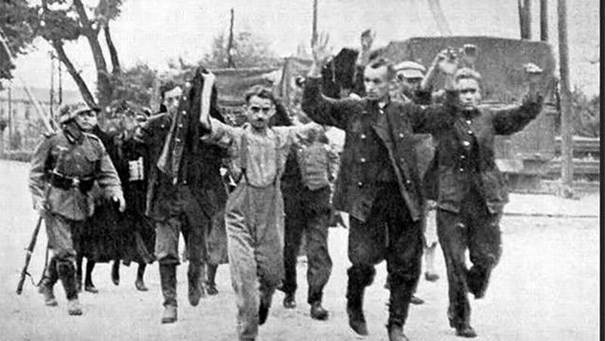
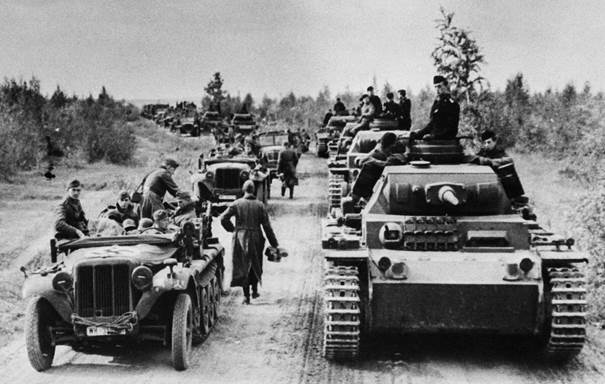
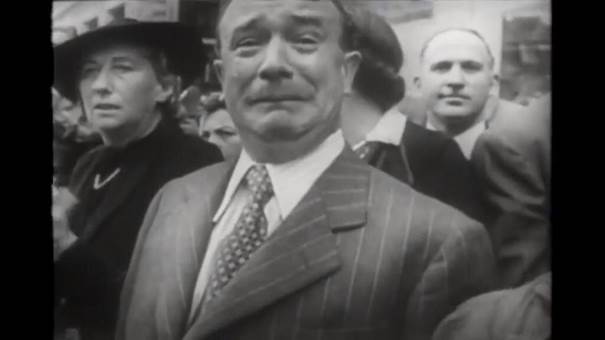
And therefore, based on previous experience, with the outbreak of war with the USSR, the Third Reich began to curtail the production of ammunition for the land army, cutting production by as much as 29%!!
The Wehrmacht was provided with supplies for a couple of months of the war — and then Stalin would surrender.
Everyone gives up!
So why store extra shells?
And yes — in the war with the USSR, the well-practiced victorious „blitzkrieg“ was 100% embodied. In the first month after the attack, the Soviet troops were cut by crushing blows, partly surrounded, partly pushed back, and the Wehrmacht broke through into the depth of Soviet territory for hundreds of kilometers, reached Smolensk, Mogilev, Luga, captured Moldavia and Northern Bukovina.
On July 3, 1941, the Chief of the General Staff of the German Army, Colonel General Franz Halder, wrote in his diary: „It would not be an exaggeration to say that the campaign against Russia has been won in 14 days.“
That was the end of the successful blitzkrieg. All that remains is to accept the surrender of the defeated enemy, sign the documents and open the champagne.
However, the evil Russians, with their inherent treachery, not only did not scatter, like the Poles, like cockroaches when the light was on, not only did they not cry in shame like the French. Not only did they not ask for peace on any terms in the most despicable way, but they insidiously and unscrupulously continued the fighting!
And then it suddenly became clear that the Wehrmacht had absolutely no idea how to act in such a situation!!
That is, the Nazis still had infantrymen and even tanks ready to move in the indicated direction, they had well-sharpened pencils to draw beautiful arrows on maps. But they didn’t know how to do the most important thing: to consistently fill these arrows with contents: equipment, fuel, ammunition!!
Hitler had at his disposal the largest and most powerful civilization on the planet, the most powerful and numerous army, and ample ammunition depots throughout Europe.
It would seem – win and reign!
But he couldn’t do it: deliver the resources produced by this most advanced civilization to that mighty army!
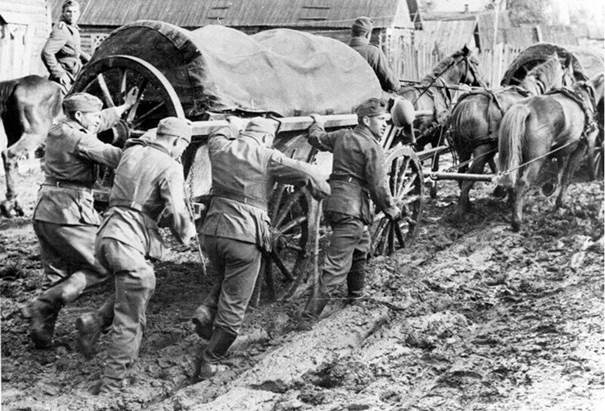
Armaments, equipment, ammunition and fuel did not reach the Wehrmacht, which had broken away from the borders. It was possible to push only 15-20 echelons per day to the east, convoys lost up to a third of equipment and cargo on the way, horse-drawn transport could not pull the required volumes. And the complete absence of warm clothes in the freezing army was the most striking, but only one of many thousands of growing problems!
Let’s give the Nazis their due: they did not retreat in the face of the difficulties that arose and began to solve the problems of supplying the army at the highest technical level. As early as December 1941, Hitler ordered the mobilization of 30,000 workers to rebuild the railways in Russia. In Poland, in the occupied countries, and even in Germany, they removed rails from secondary tracks and sent them to the east. for laying new tracks and relinquishing old ones; Steam locomotives and wagons were gathering all over Europe and heading east, too.
At the beginning of 1942, the Europeans had only 80,000 wagons on the tracks of the occupied territory. On Dec. 1, 1942, the Nazis reported 200,000 wagons!
Since steam locomotives did not survive on the roads of the occupied USSR for a long time, the Germans launched the production of disposable steam locomotives – „Kriegslocomotives M52„. All additional equipment was thrown out of them, parts from non-ferrous metal were replaced with cast-iron and even plastic ones. As a result, the cost of cars has almost halved, but reliability has fallen tenfold. But reliability was not required from the M52 – it was enough for the locomotive to reach the front at least once.
The Europeans did not plan to repair them or simply take care of them.
From January 1943 to 1945, the Third Reich produced 6,200 of these locomotives!
Ironically, it was the Kriegslocomotives that made up the main replenishment of the Soviet locomotive fleet during the Patriotic War. Since the Nazis did not take care of the M52, they easily abandoned it during the retreat. That is why every third Kriegslocomotive made by Europeans ended up in the hands of the Red Army soon after production. Our railway workers re-modernized them, replacing cast-iron units with bronze, and plastic ones with iron ones. under the brand name „TE“ (trophy type „E“) they were released on railway lines. Where they successfully worked until the eighties.
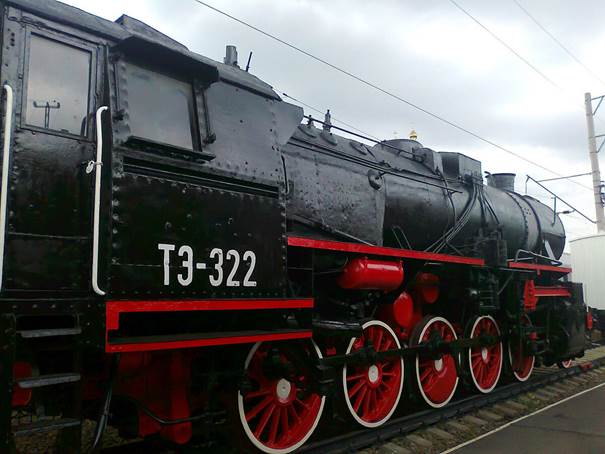
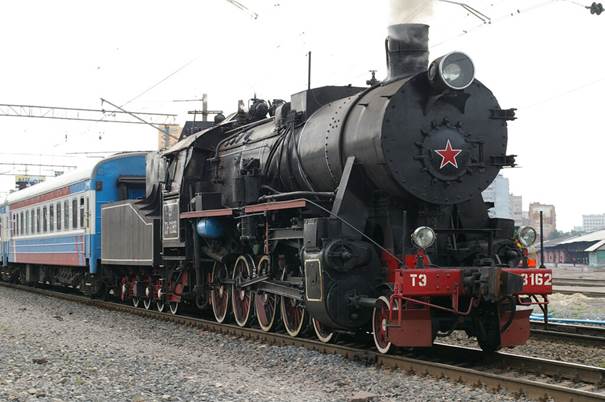
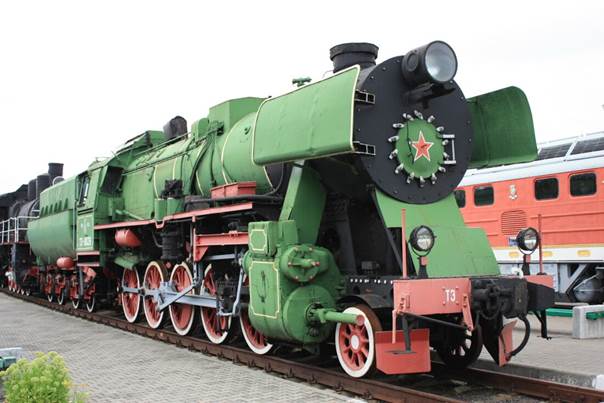
Wonderful steam locomotives were produced by the Third Reich for the USSR in 1943-44! (The first letter „T“ stands for „trophy“.
The decisive measures taken by the fascist command made it possible to increase the volume of railway transportation by more than 10 times – from 16 trains per day to almost 200!
But there is one nuance: the Europeans achieved this success only by the summer of 1943, by the beginning of the Kursk salient.
That is, after the USSR was able to expand its industry and transfer it to a mobilization regime; after it established the formation of full-fledged units; after the Stalingrad defeat of the Wehrmacht and its expulsion from the Caucasus, and after the high-quality „cannon fodder“ of the Third Reich had already been ground up in defensive battles and replaced by second-class conscripts assembled under „total mobilization.“
The backbone of the Wehrmacht – experienced, shelled, trained soldiers and officers at that time were knocked out, mutilated, buried in craters and graves, burned in funeral pyres in the expanses from Brest to the Volga.
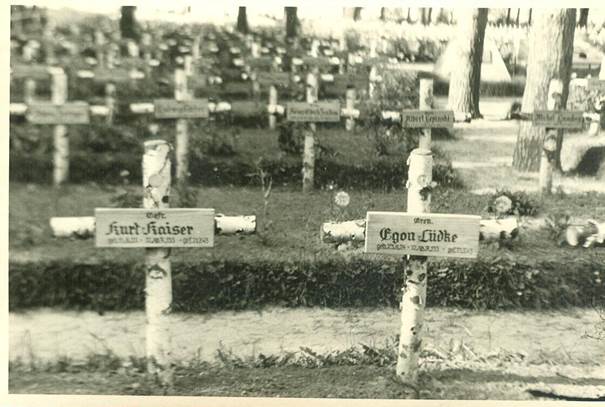
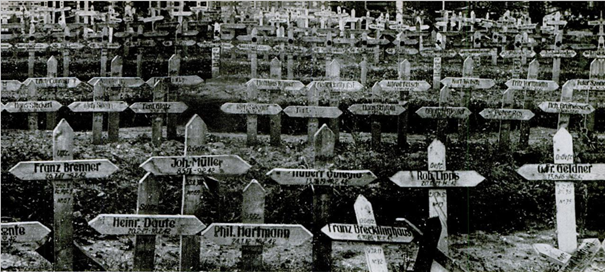
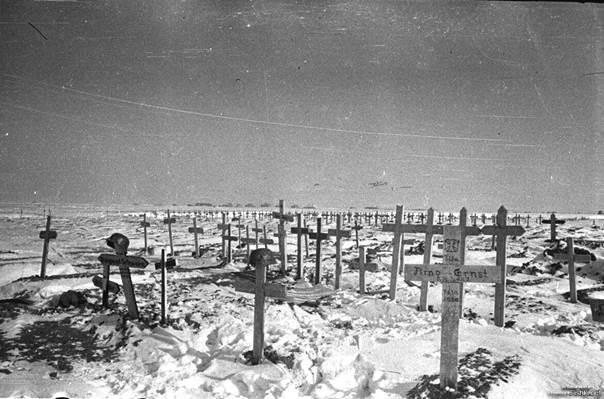
Of course, the hardest part of this work of sanitizing all this fascist filth fell on the shoulders of the Red Army soldiers, who shot the Europeans from the trenches, threw mines and shells at them, crushed them with tracks and bombed them from the sky.
However, you must admit that the contribution of Nazi strategists, transport workers, as well as German quartermasters, to the defeat of the Third Reich by all sorts of „experts“ is very, very underestimated!
From day one, they on their army as best they could!
Maybe unwittingly. However, there is no weapon more terrible than human stupidity!