
Anders‘ Army vs. Katyn
Over the past decade, events on the topic of the Katyn tragedy have been held almost annually, which their organizers most often refer to as „round tables.“
Interestingly, the concept of „round table“ has two completely opposite contents.
According to one interpretation, a round table is „a free conference of heterogeneous participants for direct discussion of certain problems.“
According to another interpretation, the round table is „a closed society of the chosen ones, making important decisions on the sidelines.“
Events on the topic of the Katyn tragedy correspond to the declared name „round table“ only in its second interpretation. This is a kind of club of apostles of the version that there was no shooting of Polish prisoners of war in Smolensk, Kalinin and Kharkov in 1940.
There is no hint of an exchange of views at such round tables.
On the other hand, such an exchange of opinions periodically arises in the margins of texts from my series of articles on this topic.
The two previous articles were written on the basis of an exchange of views on the two main arguments of the supporters of the version that the Poles were shot by the Poles in the Katyn Forest: German cartridges and „German ropes“.
He showed readers documents refuting the thesis that there were no weapons of 7.65 caliber in the Soviet Union, on which the formula is based: „The shootings were carried out from German-made 7.65 mm pistols.
Conclusion: there was an abundance of such weapons in the Soviet Union, and they could have been used by the NKVD to shoot Poles.
The use of 7.65 caliber weapons is only a recorded fact, which can neither prove nor disprove any of the versions.
In the second article („The German Paper Twine of Katyn“) I gave evidence that the German origin of the ropes is a forgery.
But the supporters of the version that the Poles were shot by the Germans still have arguments.
One of them is the subject of this article. I will give it to you in the words of a commentator under the nickname „Vladimir U“
«… The question arises: how is it possible to combine the shooting of a number of thousands, mostly officers, and the organization of three (!) Polish armies on the territory of the USSR later? Andreas’s army, which went to Asia, and two who fought on the Soviet-German front. Okay, even if the last two were not only Poles from Poland, but also ethnic Poles from the USSR, and not even Poles at all („three Poles, Georgians and a dog“), but still. How can you recruit so many officers and junior commanders for 3 (three!!) armies, if so many shots have been fired?“
I offer you a discussion on this topic between two of the most prepared representatives of opposing points of view. You, my readers, are smart and well-read people. Those who have the brains to read only slogans and headlines have already left the channel, to my satisfaction. It will not be difficult for you to make your own decision, whose position is more reasoned.
I believe that your preference expressed in the margins of the article will be interesting not only for me, but also for other readers of the channel.
Discussion is the only place where truth can be born.
So.
Radiy Kurbanov
«… Let me remind you that in 1941 the whole Anders Army was formed from the „executed Poles“. With a population of up to 100 thousand people. With generals, senior and junior officers. And then the 1st Polish Army, and then the 2nd Polish Army. And the same with generals and officers. And also the 1st Tank Corps, the 1st Air Corps and other units. Whom, you say, did Stalin destroy?“
Take a look here:
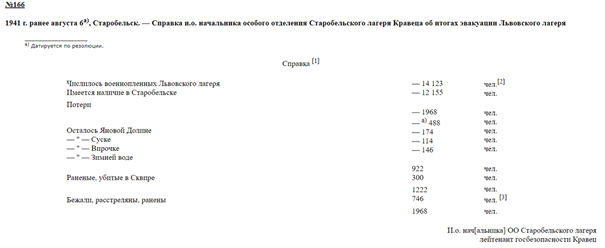
In total, 8488 officers with generals and cornets with cadets were counted. And let us record for the sake of memory that the officers were kept in the Starobilsk and Kozelsk camps. With slight errors – only officers of the Polish army.
It is these 8,000-odd Poles who have disappeared for you. And if they disappeared, it means that the villainous Bolshevik regime shot them. What to take from it? However. See the document of November 2, 1940.
„1. At present, 18,297 Polish prisoners of war are being held in the camps of the NKVD of the USSR, including: generals – 2, colonels and lieutenant colonels – 39, majors and captains – 222, lieutenants and second lieutenants – 691, junior commanders – 4,022…“
And add to those who were in the camps, by November 30, 1941, Anders‘ Polish army in the USSR (two divisions and a reserve regiment) consisted of 1965 officers… And then there’s a dozen more generals.
When you say they were shot?
And I’ll repeat myself. There was also, though later, the 1st Polish Army, and then the 2nd Polish Army. And the same with generals and officers. And also the 1st Tank Corps, the 1st Air Corps and other units.“
Alexey Kolesnikov
Radiy Kurbanov, quote:
1. „It is these 8,000-odd Poles who have disappeared for you. And if they disappeared, it means that the villainous Bolshevik regime shot them. What to take from it? However. We are looking at the document of November 2, 1940.“
What is the meaning of the word „however“ if the figures you cite confirm the disappearance of 8,000 officers during 1940?
Let us see how the figures of the officer corps as of November 2, 1940, as of November 2, 1940, correlate with those of March 2, 1940.
So, there were 12 generals plus one admiral (2 left).
There were 283 colonels and lieutenant colonels (39 remained)
Majors and captains were 2049 (222 remained)
There were 6014 lieutenants and second lieutenants (691 remained).
And this is despite the fact that in the summer of 1940 in the internment camps in Lithuania there were: 1 general, 22 colonels and lieutenant colonels, 193 majors and captains, and 618 lieutenants and second lieutenants.
In addition, another 107 officers were taken to internment camps in Latvia.
In general, if it were not for the officers taken in the summer of 1940 in the Baltics, Anders would have had practically no one to form an officer corps.
Question: What kind of terrible pestilence swept through the Polish officers who were captured in the USSR in the period from March 2 to November 2, 1940?
2. Well, since you also love numbers, here’s another portion of them for dessert.
On June 22, 1941, there were 27,760 Polish prisoners of war in the USSR. Apart from those who had not been deported from the Lvov camp (1,834), refuseniks and sick (289 people), and Germans of nationality (263 people), practically all the others, numbering 25,115 people, joined Anders‘ army, according to the reports of the NKVD, and no one found any shortage of more than 4,000 officers allegedly taken prisoner by the Germans.
As you understand, there are also links to the source of each of these figures and, if necessary, can be provided to you at any time.
And the question is: where is the crack in which you can squeeze in more than 4,000 Polish officers allegedly shot by the Germans?
3. This phrase turned out to be very interesting:
„And add to those who were in the camps, by November 30, 1941, Anders‘ Polish army in the USSR (two divisions and a reserve regiment) consisted of 1,965 officers… and a dozen more generals.“
What does „To those who were in the camps“ have to do with it? All those who were imprisoned in prisoner-of-war camps were transferred to Anders‘ army during September-October 1941, and to them were added several hundred officers who had been released after the amnesty of August 12, 1941, who had been in prisons, camps and exile.
This is how the number of 1965 officers on November 1, 1941 came about.
But you managed to find some DOZEN generals, you will definitely tell us all about it in the next comment.
Surely, many others could be interested in this.
Radiy Kurbanov
Alexei Kolesnikov, I satisfy the interest of those who are in the know.
As for the generals, it’s easier with them – a piece of „goods“, and the villains did not like it in the first place, except for the well-known Anders, General Janushaitis, General Boruto-Spechovich, General Przezdetsky are mentioned in Beria’s report, and the commanders of the units of Anders‘ army, General Bronisław Rakowski and General Nikodem Sulik, are not mentioned. If you wish, you will find all the generals who were „shot“ by the villains of the Bolsheviks.
And I hope you still understand that the Poles interned from the Baltic States in the summer ended up in the statistics of the NKVD in November. So don’t clutter up your correspondence.
Yesterday you were short of more than 8,000 officers. Today, it’s already 4 thousand. Should I wait until tomorrow? And can you decide how many Polish officers were shot?
… Quote: „No one found any shortage of more than 4,000 officers allegedly taken prisoner by the Germans.“
No one is like that. I poked around and found a small crack so far. Not for all 4 thousand you are looking for, but for now for two. In Lviv – „Certificate of the acting head of the special department of the Starobilsk camp Kravets on the results of the evacuation of the Lviv camp“
And I’ll throw in the generals:
Rusilo-Volkovitsky
Tokarzewski-Karaszewicz
Savitsky (died in the hospital of the internal prison of the Yaroslavl NKVD)
Bogutsky (died during the transfer to Kherson at the end of 1940)
Zarusky (died of cholera during the convoy in Kherson on 08.04.1941)
By the way, near Kharkov there is another memorial on which about 4 thousand more names of Polish servicemen „shot“ by the Bolsheviks are engraved, including 8 generals.
Still, it is worth deciding on the number of generals and officers shot.
Alexey Kolesnikov
Radiy Kurbanov, Interesting phrase:
„If you wish, you will find all the generals who were ’shot‘ by the villains of the Bolsheviks.“
So, those who were in Soviet captivity before April 1940 are wanted:
Rear Admiral Chernitsky
Generals:
Minkevich,
Smoravinsky,
Bogatyrevich,
Haller
Skersky,
Sikorski
Billevich,
Kovalevsky
Plisovsky,
Skoratovich,
Orlik-Lukovsky,
As Radiy Kurbanov told the Zen team, it turns out that all of them, it turns out, can be found, it’s just a pity that Radiy forgot to indicate where exactly.
For example, the Polish government-in-exile could not find them anywhere, and on January 28, 1942, it sent a note to the Soviet ambassador to the Polish government in London, A.E. Bogomolov, which read, in part:
„Of the total number of officers and soldiers registered in the prisoner-of-war camps in Kozelsk, Starobilsk and Ostashkov, 12 generals, 94 colonels, 263 captains and about 7,800 officers of lower ranks have not yet been released.“
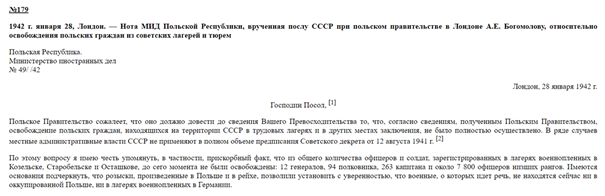
That is, the Polish government does not know where the 12 generals disappeared, but Radiy Kurbanov does, so we will ask him to tell us all where he managed to find each of these missing generals.
2. This means that the fate of the Polish generals who were in Soviet prisoner-of-war camps as of March 1940 is being investigated. It was they who were concerned by the decision of the Politburo of March 5, 1940.
The question is, what does this have to do with Anders or Boruta-Spechovich, who were under investigation at the time of the shooting in Lubyanka, which saved them?
Or Wacław Przezdecki, taken in an internment camp in Lithuania in the summer of 1940.
Or Bronisław Rakowski, who became a general only in December 1941.
Or Nikodem Sulik, who became a general only in 1944.
What do they have to do with the Polish generals from the Kozelsk and Starobilsk camps, who were shot in April-May 1940, and what dozen missing generals did you manage to find in Anders‘ army?
Radium will probably tell us all about this in his next comment, well, if he doesn’t forget, of course.
3. Quote:
„And, I hope, you still understand that the Poles interned in the summer from the Baltic States ended up in the statistics of the NKVD in November.“
Not only do I understand, but I have even explained to you that by the end of 1940 the crumbs of the Polish officer corps that remained in the USSR were mainly Baltic officers, and that of the more than 8,000 officers who were in prisoner-of-war camps on March 2, 1940, only 350 remained by the end of the year.
But when asked where more than 8,000 Polish officers disappeared between March 2 and November 2, 1940, you somehow preferred to hide under the plinth.
Why would that be?
And instead of answering, they began to make a fool of themselves: „Yesterday you were short of more than 8,000 officers. Today, it’s already 4,000. Should I wait until tomorrow?“
Yes, wait until tomorrow, maybe you will realize that we are talking about the missing 8,000 officers in relation to the pre-war period.
And for the period after June 22, 1941, the lies of your brothers in mind that the 4,143 Polish officers dug up by the Germans were allegedly killed by the Germans themselves.
And, of course, if this were the case, the NKVD statistics would immediately record this loss.
So you were offered to find these missing people in the statistics of the NKVD, and you gave these statistics:
„On June 22, 1941, there were 27,760 Polish prisoners of war in the USSR. In addition to those who were not deported from the Lvov camp (1,834), refuseniks and sick (289 people), and Germans by nationality (263 people), practically all the rest, numbering 25,115 people, joined Anders‘ army, according to the NKVD reports.
So where are the missing 4,000-odd Polish prisoners of war who were allegedly captured by the Germans?
Well, there is one more question asked to you, from which you are also diligently hiding under the skirting board.
On June 22, 1941, according to NKVD documents, there were only 909 Polish officers in the Smolensk region, who were taken to the Vologda region by July 2, 1941. That is, by the time the Germans came to the region, there was not a single Polish officer there.
Consequently, they simply had no one to take prisoner or shoot, therefore, as we can clearly see in this case, the Stalinists shy away from the statistics of the NKVD like devils from incense, since it drives an aspen stake into their lies, with the help of which they diligently fool the gullible public.
And they are well aware of this.
Radiy Kurbanov
Alexei Kolesnikov, I will try to be brief.
1 and 2. A total of 12 Polish generals were interned. In the camps after the „events“ 2 were noted. You believe that 10 were shot. But I told you 5 who were alive and well (with the two mentioned, guilty, overreacted) and 3 dead. And Beria knows. So you, and not only you, are fantasizing.
As for the Polish requests… so we have not yet answered them for the Tu-154 that crashed near Smolensk.
3. According to (this document)
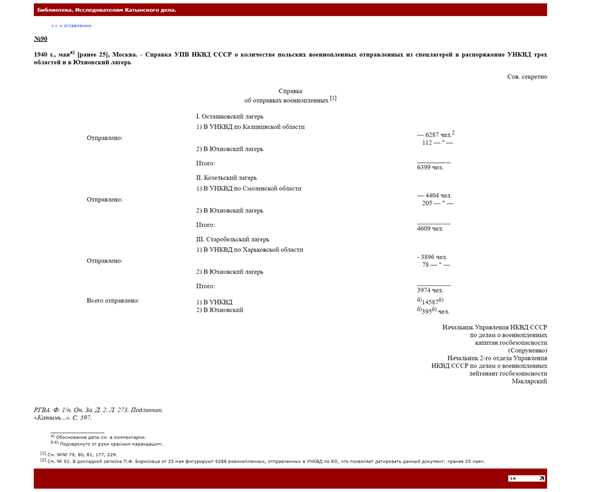
Prisoners of war from the special camps (about which you cite statistics) were sent to the disposal of the NKVD of three regions and to the Yukhnovsky camp. Therefore, they fell out of the statistics of special camps. I don’t have any other Polish officers for you. With imagination, we can assume that they were shot in the regional NKVD. After all, there was nowhere else for rail transport to stand idle? Otherwise, everything is in business. They drink blood. The question remains. A year later, Anders‘ army began to be recruited. For this purpose, 1965 officers were involved. The „Baltic“ Poles plus the Poles of the Yukhnovsky camp are 750 people. Where did the others come from? Out of ammo? And the officers were to remain for Berling’s army.
P.S. But I don’t know where the corpses in Katyn came from, and I don’t want to figure it out. Although I fully admit that due to the severity of those times, open enemies who posed a threat to the country were shot.
Alexey Kolesnikov
Radiy Kurbanov,
1. It’s strange that you can’t understand what they write to you. I’m talking about your historic discovery of the missing Poles. Quotation:
„I poked around and found a small crack so far. Not for all 4 thousand you are looking for, but for now for two. In Lviv – „Certificate of the acting head of the special department of the Starobilsk camp Kravets on the results of the evacuation of the Lviv camp…“
And now we read aloud and with expression what they wrote to you:
„On June 22, 1941, there were 27,760 Polish prisoners of war in the USSR. With the exception of those who were not deported from the Lvov camp (1,834), refuseniks and sick (289 people), and Germans of nationality (263 people), practically all the rest, numbering 25,115 people, joined Anders‘ army, according to the reports of the NKVD, and no one found any shortage of more than 4,000 officers allegedly taken prisoner by the Germans.
I repeat: the 1834 people who were not evacuated during the evacuation of the Lvov camp were taken into account by the statistics of the NKVD, so that you did not find any „crack.
Again. You take a calculator and do the math. On June 22, 1941, there were 27,760 Polish prisoners of war in the USSR. 1834 could not be evacuated from the Lvov camp, 289 did not join Anders‘ army because of illness or refusal to serve in it, 263 because of their German nationality. How much is left? That’s right: 25374.
And how many of the prisoners of war joined Anders‘ army? 25115 people
Two hundred were lost somewhere, either died, or escaped, or were arrested, it doesn’t matter.
Well, where are the more than 4,000 who were allegedly captured by the Germans in the Smolensk region?
2. After Radiy Kurbanov was presented with a list of the names of 12 Polish generals who had been shot, he tirelessly searched for some other Polish generals who had nothing to do with those who had been shot.
And now I have brought another such list.
Let’s see what this time.
And this time, the generals:
– Rusilo-Volkovitsky, who was never shot and who became one of the 395 lucky ones who, having escaped execution, were transferred to the Yukhnovsky camp.
– Tokarzewski – Karaszewicz: at the time of the shooting, he was not in a prisoner-of-war camp, but under investigation in prison, which saved him.
– Savitsky – at the time of the shooting he was in prison, where he later died
– Bogutsky – the same
– Zarusky – arrested in Lviv in 1941.
What they have to do with the missing generals, who were in prisoner-of-war camps until April-May 1940, and then handed over to the disposal of three regional NKVD, after which they were no longer registered by the NKVD, none of them was seen alive anymore and no letters were received from them – only Gely Kurbanov knows, who for some reason slips them into a conversation about the 12 generals who disappeared in April 1940 from prisoner-of-war camps. to which they have nothing to do.
3. Quote:
„By the way, there is another memorial near Kharkov, on which about 4,000 more names of Polish servicemen who were „shot“ by the Bolsheviks are engraved, including 8 generals.
Still, it is necessary to decide on the number of generals and officers shot.“
Well, yes, in Kharkov exactly 8 generals were killed, transferred from the Starobilsk camp for prisoners of war to the disposal of the Kharkov NKVD. And 3 more generals plus one rear admiral were shot at Katyn.
A total of 8,348 officers were killed (including police, KOP and gendarmerie officers), including 12 generals (including one rear admiral), 77 colonels, 197 lieutenant colonels, 541 majors, 1,441 captains, and 6,061 other officers.
These are the people who were handed over in April-May 1940 to the three regional NKVD, after which they were no longer registered by the NKVD and none of them were seen alive anymore:
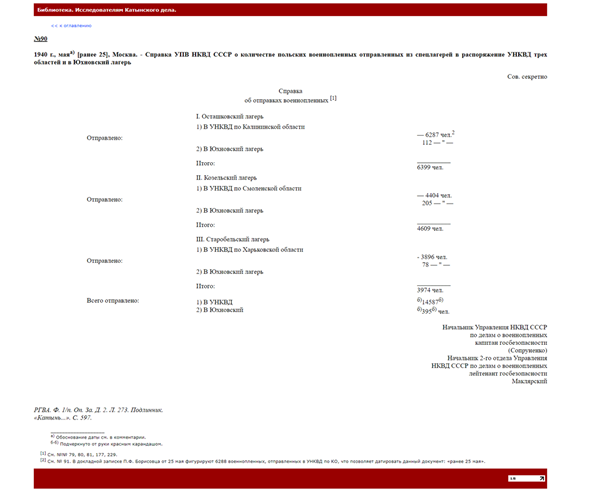
At least the Germans found 4,404 officers from the Kozelsk camp, and 10,183 officers and policemen from the Starobilsk and Ostashkovsky camps simply disappeared without a trace and forever in the vastness of Stalin’s USSR, and in response to the question: „Where have these gone?“, the Stalinists always react in the same way – they instantly dive under the plinth and pretend to be deaf-blind.
So all hope is on Geliy Kurbanov. With his sensible approach (the root is „reason“), he must surely know.
Alexey Kolesnikov
Radiy Kurbanov,
1. Strange. Radiy Kurbanov is given a list of the names of 12 missing generals, looking at which he concludes: „You believe that 10 were shot. But I have told you 5 who were alive and well (with the two mentioned, guilty, overreacted) and 3 dead.“
Once again, not 10, but 12 generals (including one rear admiral) were shot, and none of those you named are listed among the generals shot. No matter how many names you put in, they all have nothing to do with the generals who were shot.
2. Quote:
„According to http://www.katyn-books.ru/archive/1940_2000/doc/90doc.html, prisoners of war from special camps (about whom you cite statistics) were sent to the disposal of the NKVD of three regions and to the Yukhnovsky camp. That’s why they dropped out of the statistics of the special camps.“
And that’s a lie. First of all, the statistics were kept not by the special camps, but by the Office for Prisoners of War, and while remaining prisoners of war, the Poles had to be taken into account wherever they were sent.
And it is also a lie, because the prisoners of war transferred to the Yukhnov camp continued to be counted by the statistics of the NKVD, and there is extensive internal documentation on them – both when they were in the Yukhnovsky camp and when they were later transferred to the Gryazovets camp, from where they were then transferred to the Anders army.
But the 14,587 Polish officers and policemen who were handed over in April-May 1940 to the three regional NKVD were no longer registered by the NKVD, none of them was seen alive since, no letters were received from them, none of them came to Anders‘ army, and in response to all the requests of the Poles during 1940-42 with a request to explain, What happened to them, no answer was ever received.
Both in the NKVD statistics for December 1941 and in the statistics for December 1943 they are listed as having been transferred to the NKVD in 1940.
So what did the NKVD do to them that there is nothing more to say about them? Why, in the first place, were they suddenly sent there?
On this question the Stalinists, out of habit, fall into a deep reverie, from which it is practically impossible to bring them out.
3. Radiy Kurbanov has already been quoted several times with statistics that on June 22, 1941, 1259 Polish officers remained in the USSR. These were Baltic officers, plus 350 people who escaped execution for various reasons and were in the Yukhnovsky camp.
But he has his own arithmetic – „The Baltic Poles plus the Poles of the Yukhnovsky camp are 750 people“
Drop the source of the number „750 people“ if it is not difficult.
And as for the rest, it has already been explained where they came from – after the amnesty on August 12, 1941, several hundred officers arrived in Anders‘ army, who were in prisons, camps and special settlements.
As of September 27, 1941 alone, 50,295 people had been released from prisons and Gulags, and another 265,242 Polish citizens had been released from special settlements and exile. It was from them that these several hundred officers were taken.
For some reason, Geliy Kurbanov is very interested in where they came from. But where between March 2 and November 2, 1940, more than 8,000 officers disappeared, who, in fact, are being talked about all the time, is of no interest at all.
Such is the selective interest…)
4. Quote: „But I don’t know where the corpses in Katyn came from, and I don’t want to figure it out.“
Of course, you don’t want to, because you start figuring it out, and you don’t know what will come out. Well, for example, this. According to the inventory of the items found on the Katyn corpses compiled by the Burdenkov commission, of the 19 dated scraps of newspapers, one was from November 1939, two from February 1940, three from March 1940, and 13 from April 1940 (the latest being for April 25, 1940).
And what normal Stalinist would want to understand all this?
Radiy Kurbanov
Alexei Kolesnikov, in pursuit…
After sending 14,000 interned Polish officers to the three regional NKVDs, they were taken care of not by the Office for Prisoners of War, but by the Main Directorate of Camps (GULAG). In the documents, they no longer appeared as „prisoners of war“, but as „prisoners“.
In the work of V.N. Zemskov http://www.hrono.ru/statii/2001/zemskov.php Number 5 shows the national composition of the Gulag camp inmates in 1939-1941 (as of January 1 of each year):
1939 – The Poles 16860
1940 – Poles 16133
1941 – Poles 29457
The difference between the number of Poles imprisoned in the Gulag between January 1, 1940 and January 1, 1941 is 13,324.
Do not think that these other Poles were convicted during this period. According to O.B. Mozokhin’s „Statistics of the Repressive Activities of the Security Organs of the USSR“, Poles were convicted: in 1939 – 11,604, in 1940 – 31,681, and in 1941 – 6,415.
Alexey Kolesnikov
Radiy Kurbanov,
It’s strange, I understand your verbosity without any problems and answer all the points.
You can just ask a question in one phrase, and you have to answer it in two or three. In the same way, something stupid can be voiced in one phrase, but it takes many more words to refute it.
You have not been able to refute any of the facts given to you that testify to the shooting of Poles by the NKVD. And if there is nothing to answer, then naturally, there is a desire not to answer, but to huddle under the plinth.
From a human point of view, this is a very understandable aspiration.
Let’s move on.
Earlier, you were given a list of 12 generals who were shot (4 from the Kozelsk camp, 8 from the Starobilsk camp):
Rear Admiral Chernitsky
Generals:
Minkevich,
Smoravinsky,
Bogatyrevich,
Haller
Skersky,
Sikorski
Billevich,
Kovalevsky
Plisovsky,
Skoratovich,
Orlik-Lukovsky,
In addition to them, some other Polish generals were also captured. But what do they have to do with the case, if we are talking about the generals who were shot, and not about all those who were in the hands of the NKVD in the period before the start of the war? You can talk about them only if you want to divert the conversation.
Okay, let’s digress the conversation.
General Jerzy Wolkowicki managed to escape execution, as did 350 other officers.
Wacław Przezdecki was taken in the summer of 1940 in an internment camp in Lithuania.
Generals Anders, Janušaitis and Boruta-Spechovič were under investigation at the time of the shooting in Lubyanka, which saved them.
There were also several other generals: some were shot in lynching, some died or were sent to the Gulag – all this, as I have already said, has nothing to do with the conversation.
As for the strange question of where the generals came from in the Polish army, you have just been given five generals, and the others have been promoted to generals in the usual way of assigning successive military ranks, as in any other army.
Well, specifically Berling, the rank of general was already awarded by the Soviet authorities, in the Polish army he was only a lieutenant colonel.
Radiy Kurbanov
Alexei Kolesnikov: In order to understand, and then draw conclusions from this about the generals who were shot, I believe that first of all to determine how many of them there were in total. It doesn’t matter where exactly, but just internees in the USSR. I suspect that when they were interned, they were under the jurisdiction of the NKVD Prisoner of War Administration. Then, it is worth subtracting from this number the living for the period under discussion, and dealing with the rest in detail and in detail.
The alternative to this in the form of some lists of some people, even with the rank of general, only clouds the situation. Who and when said that the listed persons were interned and were on the territory of the USSR during the period under discussion? Did the NKVD take it on the „balance sheet“?
And then, be more serious, Józef Haller, who was „shot“ by you, mentioned in your execution list, „after the defeat of Poland at the beginning of the Second World War and its occupation by German troops in 1940-1943, was a member of the Polish government-in-exile, headed by Władysław Sikorski, where he was the Minister of Education. After the war he lived in England.“ Until 1960. This is what Vicky writes. I don’t think she was wrong about the members of Sikorski’s government.
Alexey Kolesnikov
Radiy Kurbanov,
Well, if you’re wondering how many Polish generals ended up in the hands of the NKVD, figure it out, I don’t mind.
After collecting all of them, you will still have to single out those who were shot, and they are already known, and all 12 were named after you.
Your suggestion sounded very funny: „And then, be more serious.“ This is about your historical discovery that General Sikorski, who was shot, lived happily ever after until 1943, and General Józef Haller until 1960.
As for Sikorski, it seems that you have decided (and this is just from the „you can’t make it up on purpose“ series) that you are talking about the Prime Minister of the Polish government-in-exile, who was not in Soviet captivity for a single minute and therefore could not be shot in any way.
Of course, we are not talking about Władysław Sikorski, but about Franciszek Józef Sikorski, who commanded the defense of Lviv and then ended up in the Starobilsk camp.
The same absurdity applies to General Haller, only not Józef Haller, who was also never in Soviet captivity, but Stanisław Haller de Hallenburg, who, already retired, was arrested in 1939, placed in the Starobilsk camp and shot in Kharkov in April 1940.
Quotation:
„After sending 14,000 interned Polish officers to the disposal of the three regional NKVD, they were dealt with not by the Office for Prisoners of War, but by the Main Directorate of Camps (GULAG). In the documents, they no longer appeared as „prisoners of war“, but as „prisoners“.
Before you recount someone else’s nonsense with a serious air, you would first ask who and when condemned Polish officers to imprisonment in the Gulag? Someone had to condemn them. Do you have such a document?
If they had been convicted, they would have been convicted under the documents of the Gulag, and there is not a single mention of them in any of the documents, although all the funds of the Gulag have been open for 30 years.
In this case, after the amnesty of August 12, 1941, they would all have to report to Anders‘ army, where none of them came.
If they had been convicted, they would have gone straight from the prisoner-of-war camps to their designated Gulag, and not to the regional NKVD, where they had absolutely nothing to do, since the NKVD had nothing to do with the Gulag.
If they had been convicted, then in Soprunenko’s certificate of May 25, 1940 on the transfer of the Poles to the disposal of the NKVD, they would have been called convicts, not prisoners of war:
Well, in general, all these lies of the Katyn thimble-makers about the convicted Poles are shattered by one specific document, which explains once again why the Stalinists dislike the statistics of the NKVD so much.
This is a certificate from the head of the UPVI Soprunenko dated June 1941, giving the entire breakdown of the Poles for the entire period of their stay in the USSR.
So:
1. A total of 130242 prisoners of war captured by Red Army units and interned in the Baltic States were received.
2. Released to the western regions of the Ukrainian SSR and the BSSR … 42400 people
3. Handed over to the German authorities … 43042 people
4. Sent to the NKVD in April-May 1940. … 14587 people
5. Arrested, convicted, died and fled for all time … 2758 people
6. Held in the NKVD camps … 27455 people:
As can be seen from the certificate, during the entire period of the Poles‘ stay in the USSR, only 2,758 people were convicted (together with those arrested, died and escaped). But the most important thing is that the 14,587 people transferred to the NKVD have nothing to do with the convicted Poles, since they are in a completely different column of statistical reporting.
2. Accordingly, all these attempts to find Polish prisoners of war among the inhabitants of the Gulag are just petty fraud. Hundreds of thousands of Soviet citizens of Polish nationality lived in our country, millions of Poles lived in the territories of Western Ukraine and Belarus that became part of the USSR – so there was someone to send to the Gulag.
As for Mozokhin, he wrote on his website about the statistics of the repressive activities of the NKVD in black and white:
„Statistical data are given mainly on the basis of the statistics of the Central Statistics of the FSB of the Russian Federation F-8-OS, op. 1, as well as, to a lesser extent, according to the materials of secret record keeping. This does not include statistics on such events as the Kronstadt Uprising, the Crimean Tragedy and Katyn.
Radiy Kurbanov, not admitting defeat in the discussion with Alexei Kolesnikov, merged, but did not leave the discussion club. Switching to „Andrey Stefanovich“, he activated the „Well, stupid!“ mode and, as if nothing had happened, sparkled with sarcasm again.
Andrei Stefanovich, the main thing here is not to attract the attention of the orderlies. I can offer an alternative, equally well-reasoned option – sending 100,500 Poles to Mars. You can see the description from „Aelita“.