
On this day in history. A satirical artist who died in the struggle against the autocracy
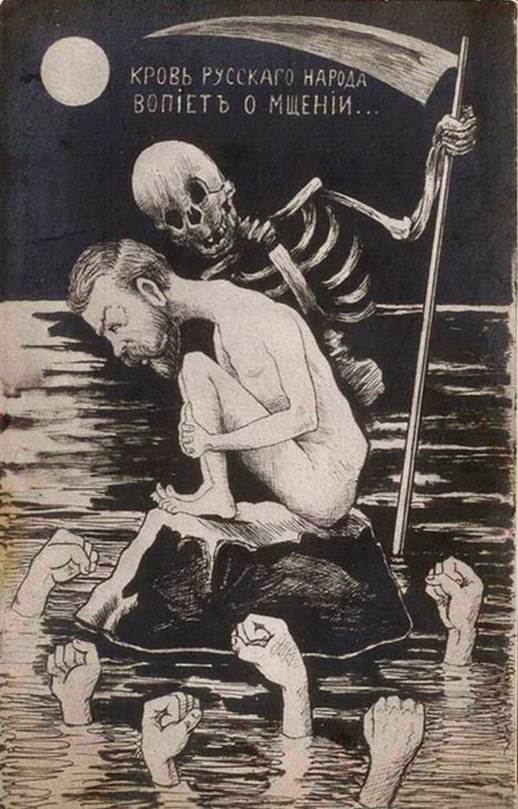
Mikhail Chemodanov. Postcard. 1905—1907
November 7 (October 26) is the birthday of Mikhail Mikhailovich Chemodanov (1856-1908), a half-forgotten Russian artist, who was originally a doctor. During the first Russian Revolution of 1905-1907, his drawings gained great popularity, which were distributed in the form of illegal postcards, since they offended the sacred person of the sovereign emperor himself. It was said about him: „In order to draw, Chemodanov tears a feather out of a live goose. He repairs it with a poisoned dagger and dips it in the same goose’s bile.“ And the artist himself admitted: „I dreamed of being Shchedrin in my caricature work.“ Here’s another one of his drawings:
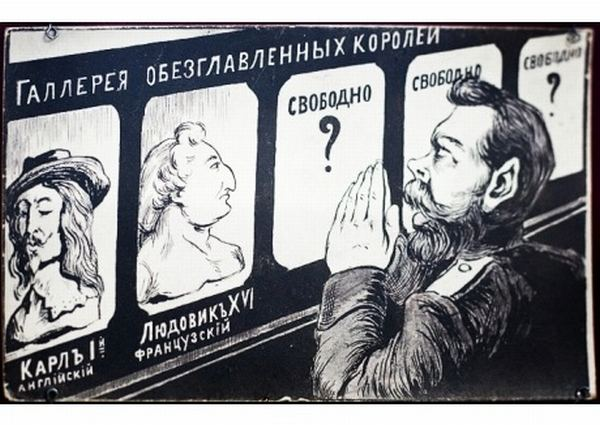
And here’s another:
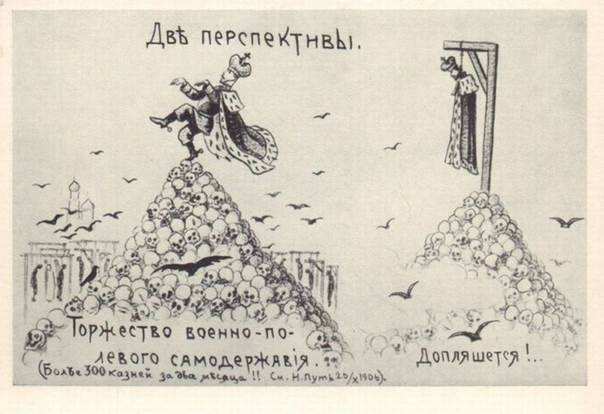
As we can see, both drawings contain a direct prediction, which came true on this day, or rather, on the night of July 16-17, 1918. The artist did not get away with the courage of the pen: he was arrested for seditious pictures, caught a cold in an unheated prison cell, and fell ill with pneumonia. Shortly before his death, due to the troubles of his relatives, he was released due to illness „on bail“, but did not live to see the trial…
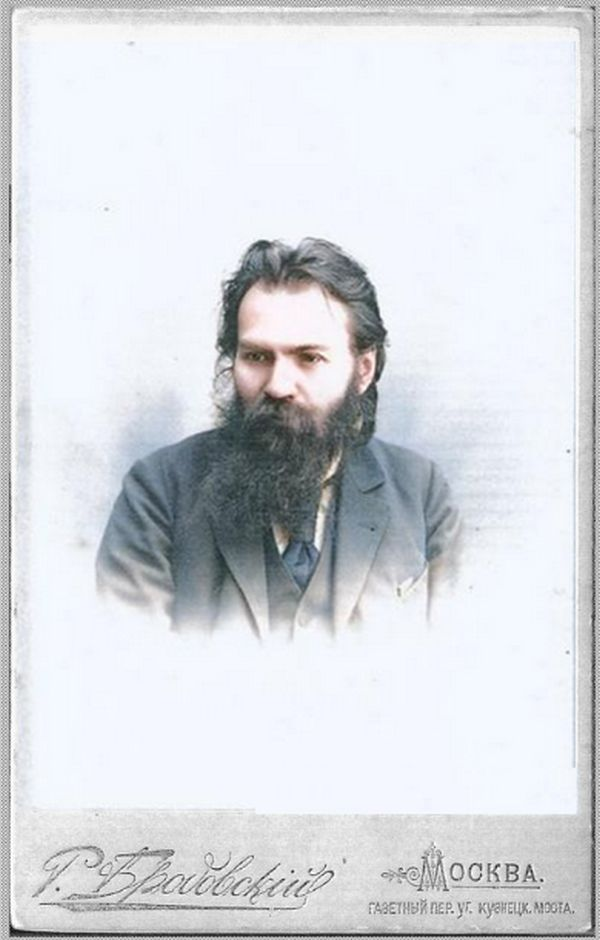
Mikhail Chemodanov
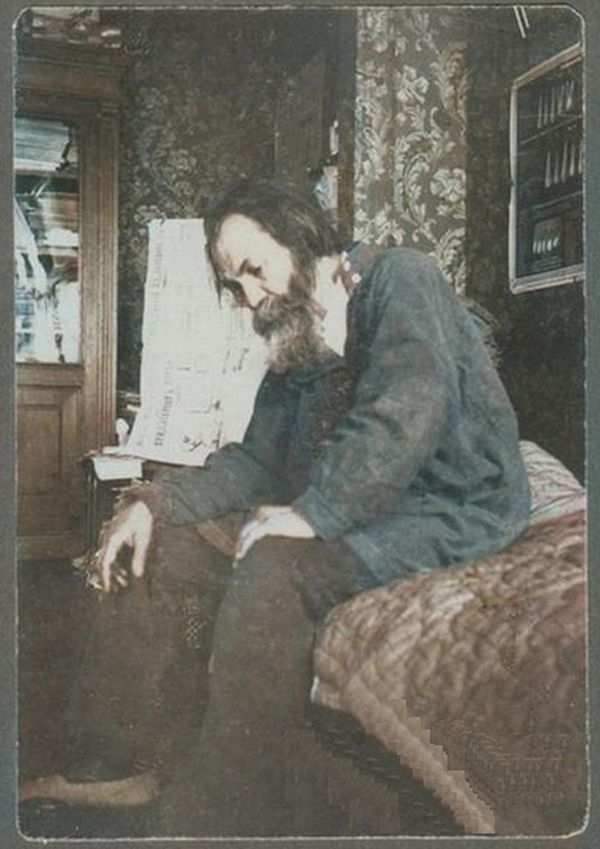
Mikhail Chemodanov after his release from prison
By the way, when I heard the word „dance“ in the artist’s picture, I immediately remembered an excerpt from the memoirs of the former Prime Minister, Count Vladimir Kokovtsov, about how the people met the execution of the adored monarch in 1918.
„Everyone I saw in Petrograd,“ he wrote, „was stunned by this news: some simply did not believe it, others wept silently, most were simply stupidly silent. But on the crowd, on what is commonly called „the people,“ the news made an impression I did not expect. On the day the news was printed, I was twice in the street, riding in a tram, and nowhere did I see the slightest glimmer of pity or compassion. The news was read loudly, with sneers, mockery and the most ruthless comments… The most disgusting expressions: „I wish it was like this a long time ago,“ „Come on, reign again,“ „Nikolashka’s lid,“ „Oh, brother Romanov, he danced to the end,“ were heard all around.
„It will dance,“ the artist prophetically wrote in a picture in 1906.
„I’ve danced,“ the people said in 1918.
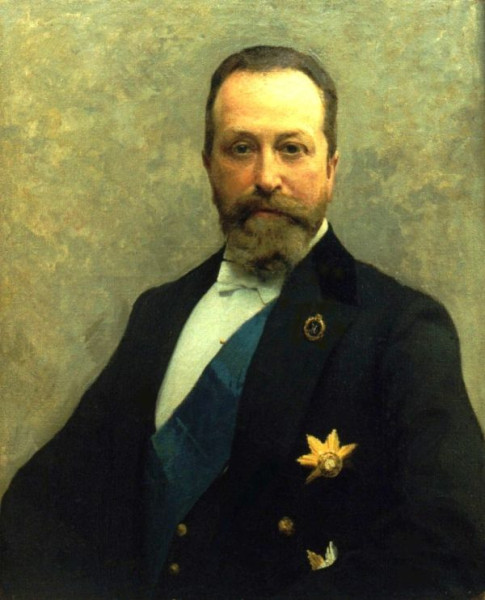
Count V.N. Kokovtsov (1853-1943)
Of course, not all of Mikhail Chemodanov’s prophecies came true. This, for example, did not come true…
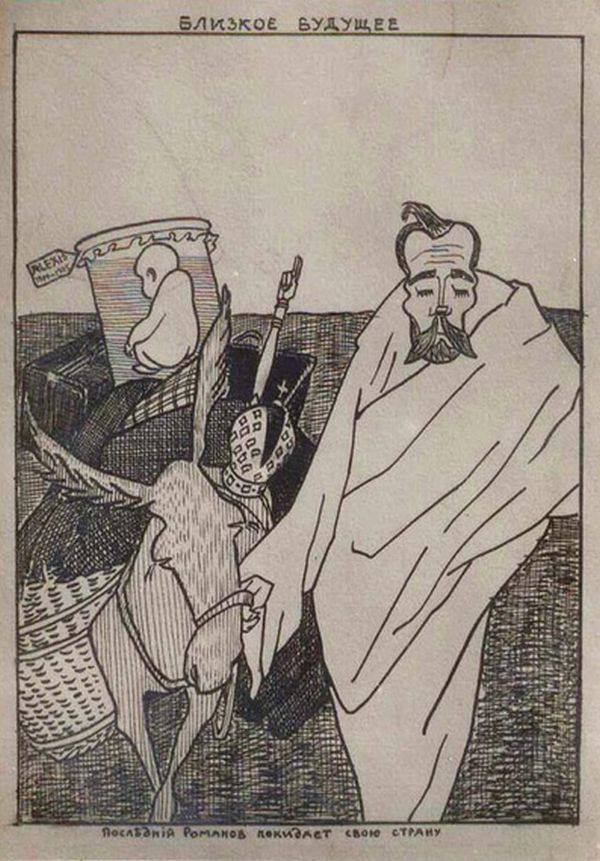
Postcard. „The near future. The Last Romanov Leaves His Country“
Didn’t leave…
And on this postcard from 1905, the artist depicted the battle of the tsar-autocrat with the „nationwide uprising“. The rebellion is depicted in the form of a multi-headed toothy dragon or a hydra, which is not particularly friendly in appearance, but all the author’s sympathies are definitely on the side of this very many-headed mile. Usually, everything was depicted exactly the other way around – a light warrior and an evil monster, but here the author decided, apparently, to deviate from the boring canon, to refresh it with a new interpretation.
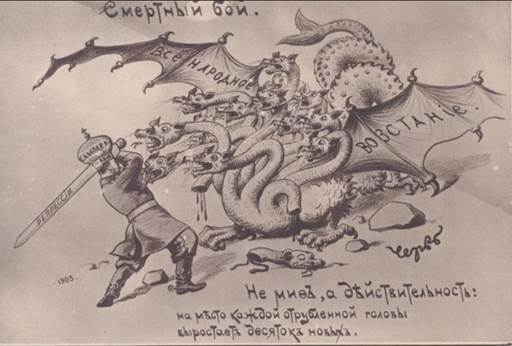
And indeed, less than 12 years later, the artist did not live to see it, but his prediction came true, and our hydronka took it! 🙂 Looking at an old postcard, I was reminded of Leon Trotsky’s famous prediction of what awaits the former Soviet Union in the event of the restoration of capitalism. He wrote in 1933: „Even in the event of the victory of the counter-revolution, the Soviet hydra, instead of each severed head, will grow a new one. […] A historical account is, in this case, a count of decades. The fall of Soviet power, in the end, would have been only a historical episode. But it would be one of the most terrible episodes in the history of the world. The whole point is to prevent it. Meanwhile, the danger is getting closer.“
I wonder if when Lev Daviditch wrote these lines, did he have a popular postcard by Chemodanov in front of his eyes, which he must have seen during the years of the first Russian revolution? Otherwise, how would he have thought of calling the revolution such a bad word as „hydra“? And it turns out that this postcard speaks of two times at once – about 1905 and… about modernity. Only the dragon should be written „Soviet hydra“ for our time.
As it was said by another classic?
„He’s going to win, my dear! He’s going to win, weirdo! Darling-chick! You’re a troublesome flyer!“ (c) 🙂
More postcards by Chemodanov:
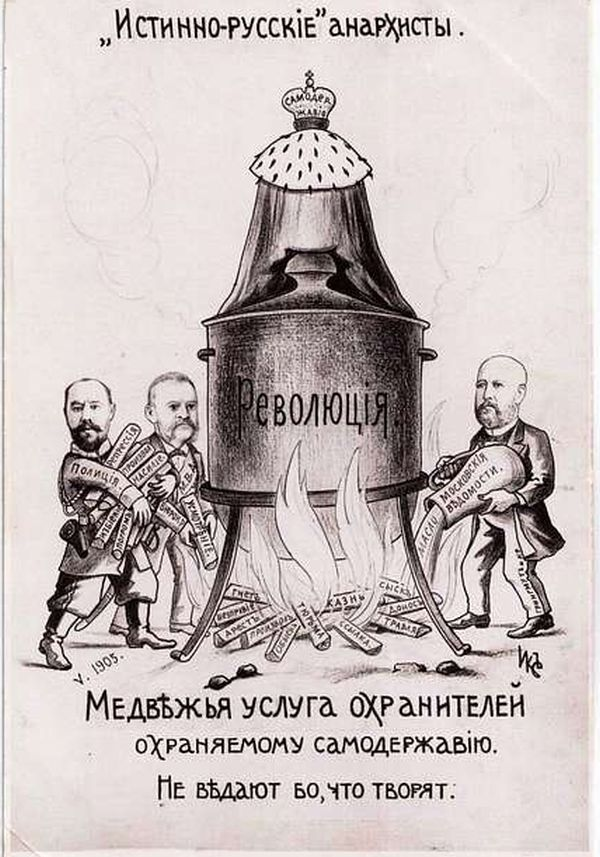
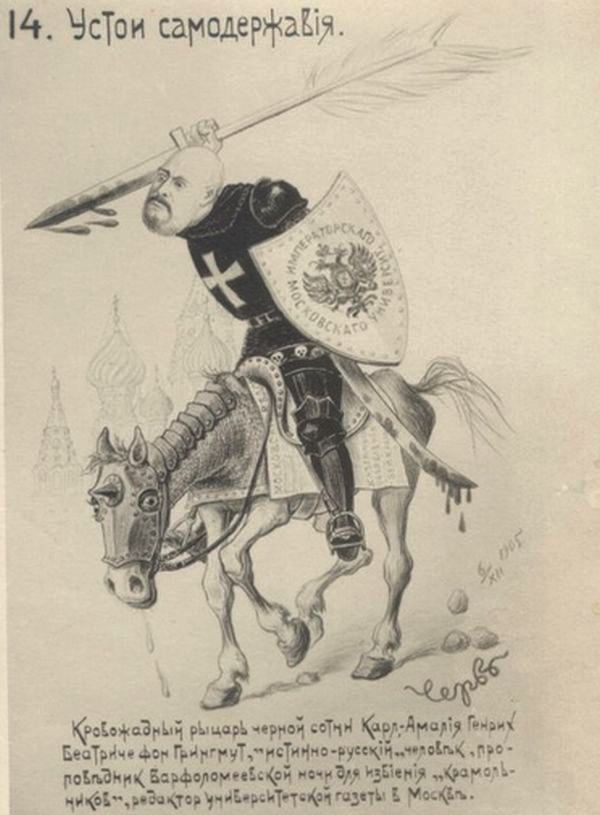
A postcard with a caricature of the famous monarchist Black Hundred, journalist Vladimir Gringmuth (1851-1907).
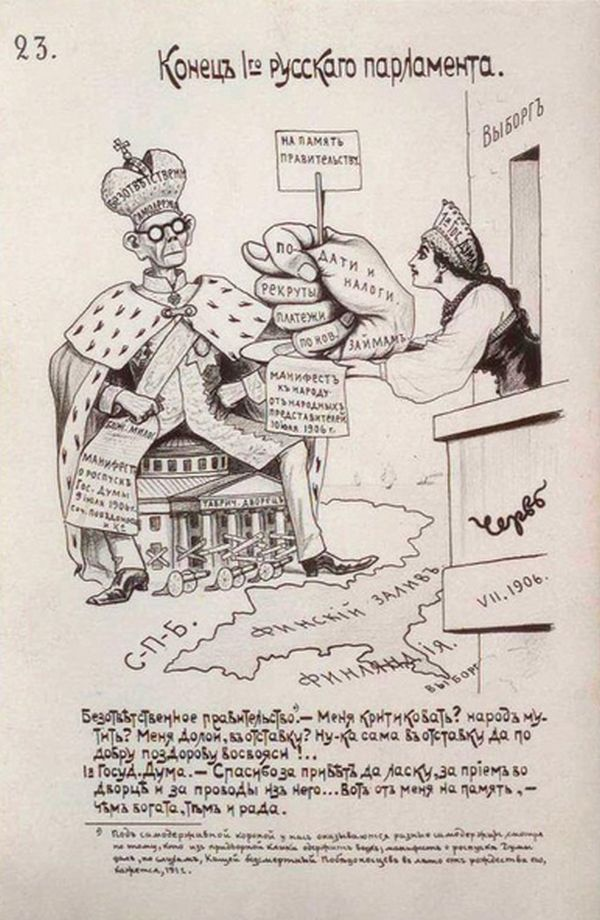
Postcard for the dispersal of the First State Duma, depicts the Chief Procurator of the Synod Konstantin Pobedonostsev sitting on the Tauride Palace (the seat of the Duma meetings)
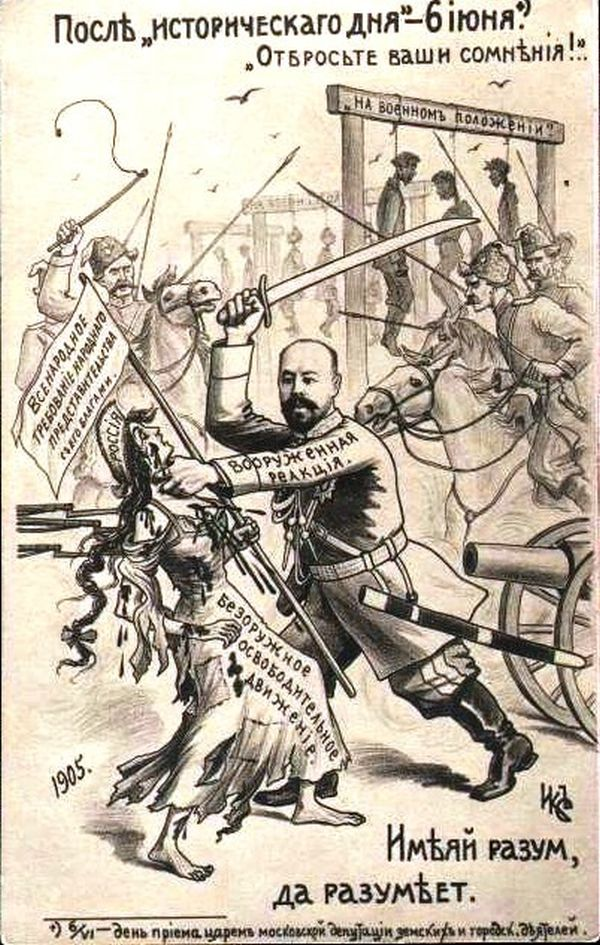
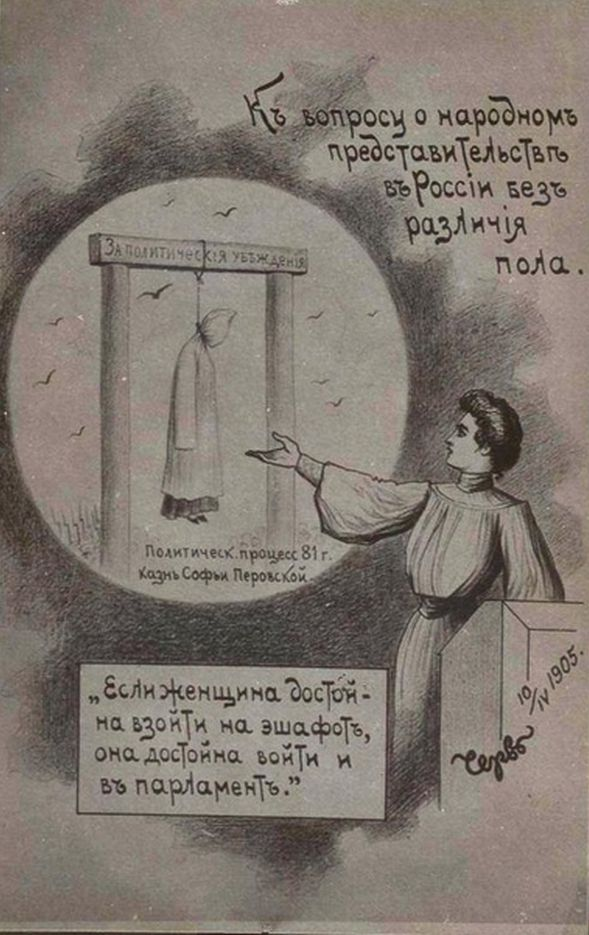
Postcard. „On the Question of People’s Representation in Russia Without Distinction of Sex. If a woman is worthy to ascend the scaffold, she is worthy to enter Parliament.“ The woman depicted on the postcard refers to the „Political Trial of 1981: Execution of Sofia Perovskaya.“ On the scaffold is written „For Political Beliefs.“
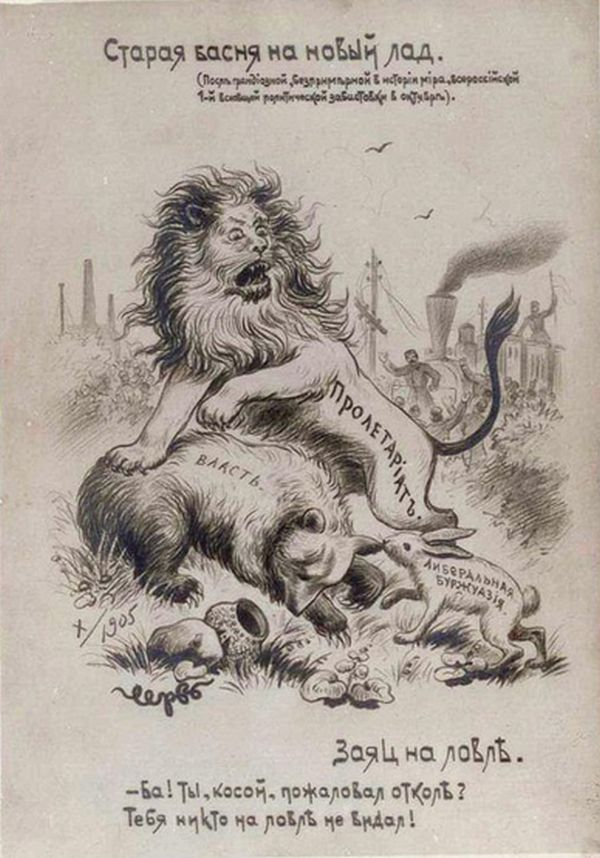
„An old fable in a new way. (After the grandiose, unprecedented in the history of the world, All-Russian First General Political Strike in October). A hare on the hunt.“
The „proletariat“ (the Lion), which has defeated the „Power“ (the Bear), says to the „Liberal Bourgeoisie“ (the Hare): „Bah! Did you, scythe, grant a breakaway? No one has ever seen you fishing!“
The last drawing based on Ivan Krylov’s fable clearly shows that the artist’s sympathies were not at all on the side of the liberal opposition, but on the side of the proletariat that went on strike in October 1905…