
The world of the victorious Kaiserreich.
Chapter 1.
Despite the enormous efforts and sacrifices that were made on the altar of victory by the peoples of the two opposing coalitions, in the winter of 1916-1917 the prospects for the end of the war still seemed rather unclear to contemporaries. The Entente, which was based on a military alliance of the five leading powers—Russia, France, Great Britain, Italy, and Japan—was undoubtedly superior in manpower and logistics to the Central Powers bloc of Germany, Austria-Hungary, Turkey, and Bulgaria. But this superiority was compensated to a certain extent by the extensive territorial conquests of the Austro-German bloc, the smooth functioning of the system of transport communications, and the better coordination of joint actions within the Quadruple Alliance. Nevertheless, despite the strength of the German army, which had been fighting steadfastly on two fronts for three years, it was obvious that the Reich had far fewer resources than the Entente. The strongest link was Britain, which had enormous economic power. An empire on which the sun never sets, numerous colonies of which are ready to voluntarily and forcibly share resources with their metropolis… Britain possessed resources that even the genius of mathematics could not have calculated, and all this was guarded by the greatest navy in the history of mankind. The Germans tried to end British naval hegemony, and although the British suffered more casualties than the Germans at the Battle of Jutland, this did not affect the overall situation. Germany had not been able to shake the British stranglehold from its neck – the naval blockade had not even been broken. The commander of the German High Seas Fleet, Reinhard Scheer, wrote to the Kaiser that
„In spite of the individual advantages of the German ships, even if, under favorable circumstances, the Navy could inflict heavy damage on the British Navy, it would not force Britain out of the war. And the existing material superiority of the British does not allow the High Seas Fleet to hope for the complete destruction of the enemy.“
He insisted that only unrestricted submarine warfare would defeat Britain.
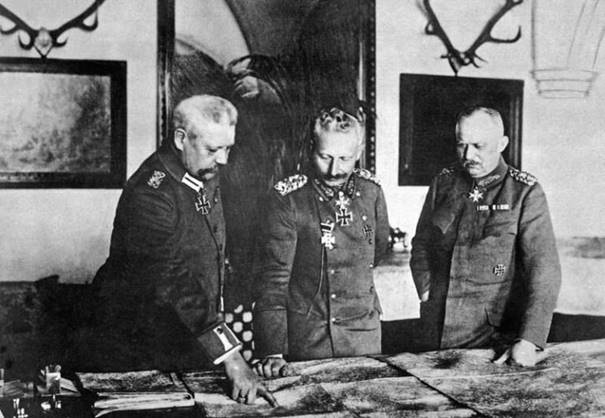
Kaiser Wilhelm had to make a final decision. There were arguments for and against. The need for decisive action and the available potential of the submarine fleet spoke in favor.It was driven by the Admiralty’s firm belief in the success of this strategy. Against it was the fear of incurring the fury of the neutrals. The sinking of the Lusitania was a severe blow to Germany’s reputation. The public of the powerful neutral was ready to tear and toss. A propaganda campaign was launched in the American press about the barbarity of the German submariners. The commanders of the German submarines were declared inhuman. Sentiment in favor of U.S. involvement in the war was growing, and the risk that the question of „whether they will enter into the war“ has increased substantially. The U.S. in the war against Germany?“ will be replaced by the question „When will the U.S. enter the war against Germany?“ It was the submarine warfare that angered the Americans. And to resume it was to provoke them. Reich Chancellor Bethmann-Hollweg understood what was at stake. Initially, he managed to persuade the Kaiser not to sink ships sailing under neutral flags. However, the ships of the British Navy, including military cargo, often used neutral flags in areas of active German submarine activity. Britain continued to spin the flywheel of its economy, while Germany had to work hard to win, with the noose of the blockade around its neck. Many in the General Staff saw unrestricted submarine warfare as a way out, and even a path to victory.
Bethmann-Hollweg did his best to prevent a rash decision. At the Crown Council on January 9, 1917, he spoke out against submarine warfare, recalling that it would involve the United States in the war. But he was in the minority. Bethmann-Hollweg was opposed by most of the leadership of the army and navy, who were in favor of drastic measures. In response to the reasonable objection that unrestricted submarine warfare would provoke the United States into the war, Chief of the Naval Staff von Holzendorff declared:
„I give an officer’s word that no American will land on the Continent.“
Moreover, he assured the Kaiser and those present that unrestricted submarine warfare would lead to the surrender of Britain in six months. These words made an impression. Hindenburg supported the admiral: if the most thorough blockade of the Entente’s forge, Britain, was abandoned, the enemy would defeat Germany in terms of industrial production and resources. Bethmann-Hollweg found himself alone. He was already inwardly broken. Still, he decided to slam the door one last time. The Chancellor made a speech in which he repeated his arguments, but this time with the insistence of a cornered desperate man. And unexpectedly for himself, he managed to find the right words, which were heard by the Kaiser. Of course, the military attacked Bethmann-Hollweg’s position furiously. They insisted that indecision would ruin Germany. But doubts had already been sown in the Kaiser’s soul. After much deliberation, Wilhelm II made the final decision not to resume submarine warfare. The military was dissatisfied, but they obeyed the Kaiser’s decision. The die was cast. The minority defeated the majority. And it turned out to be right, although the importance of the decision to stop unrestricted submarine warfare has never been fully noticed and appreciated by history.
The absence of unrestricted submarine warfare had a beneficial effect on the British economy. Cargo from the colonies reached the metropolis without any problems. Industry produced everything it needed, and military products were transported to the front almost unhindered. In terms of economy and supplies, the Entente was already outplaying Germany, and due to the lack of unrestricted submarine warfare, this superiority became even more ultimatum than in RI. However, rifles, cannons and tanks are nothing without people. Although the Entente had more resources, both material and human, even mighty Britain was stretched to the limit. And Germany, despite the war on two fronts, despite the fact that it squeezed all the juices out of itself, still showed itself to be a tough nut to crack and did not want to surrender in any way. The Western Front was at a standstill, and on the Eastern Front alarming tendencies were gaining more and more momentum. The Entente needed new allies, and not allies like Romania. It was necessary to win over to one’s side a truly powerful power, with a strong economy and a strong army, whose strength would strike at Germany and lead it to its final collapse.
The Entente pinned all its hopes on the United States. But whether these hopes would be justified depended on the Americans themselves. It seemed that the Americans had to go to war. Anti-German sentiment reigned in the United States, which reached its peak after the sinking of the Lusitania. On the other hand, anti-British sentiment was also noticeable in the United States, especially among Germans and immigrants from Ireland. Until early 1917, the American press was no more sympathetic to Britain and France than to Germany, and the vast majority of Americans wanted to avoid U.S. involvement in the war in Europe. Among other things, left-wing movements (represented by organizations such as the Industrial Workers of the World) began to become more active with their pacifist program denouncing „imperialist war.“ It is not surprising that President Wilson went into the elections of 1916 with a pacifist program. Wilson’s main slogan was „He saved us from war.“ Accordingly, under such circumstances, a good reason was needed for the United States to enter the war. Germany did not provide such an excuse. In the presidential election, Wilson came up with a fairly peaceful program, but he put pressure on Germany to stop unrestricted submarine warfare. Wilhelm made concessions. This means that the incident is over.
Wilson, however, was far from being an isolationist. The idea of creating a new, more just world order based on „the principles of the American system of government, the political beliefs and standards of life of the American people“ matured in his head. He hoped to achieve this goal through diplomacy.
By the end of 1916 and the beginning of 1917, Wilson had intensified his attempts to construct a postwar world order. In fact, he then declared his desire to lead a „democratic“ alternative to the Old World. The U.S. president began to talk about new principles of international relations (self-determination of peoples, „peace without victory“), the need for the United States to abandon traditional isolationism, and the readiness of the American leadership to „cooperate“ with all countries in the name of further preserving peace. At the beginning of 1918, he proposed a program of „14 points“, which, unlike the RI, still had less anti-German notes (the rhetoric was softened and sustained in the spirit of Leopold the Cat’s trademark phrase: „Guys, let’s live amicably!“), but the main idea – the self-determination of peoples and the creation of the League of Nations – remained unchanged in the alternative world.
This irritated the Entente. The British and French needed American soldiers, not Wilson’s utopian projects. Although the Fourteen Points were a good alternative to the extremely radical Bolshevik Decree on Peace, it is still better to start thinking about the reorganization of the world after the victory. Especially when you consider that the situation was getting worse and worse. The Eastern Front, on which great hopes had been pinned, was collapsing. The June offensive of 1917 failed. Kerensky did not become a Russian Napoleon, and Kornilov did not even get a chance to become one. The army was disintegrating: the soldiers did not obey the officers and brazenly fraternized with their enemies. Then the Bolsheviks came to power and immediately began peace negotiations with Germany. Misjudging the German army’s ability to fight, placing overly optimistic hopes on the revolutionary solidarity of the German workers, and choosing unsuccessful tactics in the negotiations, the Bolsheviks eventually provoked the Germans to launch an offensive in the East. The results were catastrophic. The Russian army, which had finally fallen into anarchy, and the Red Guard units offered practically no resistance. Compared to this disgrace, the Great Retreat of 1915 paled in comparison. The Bolsheviks had no choice but to sign the obscene Brest-Litovsk Peace. This was the worst thing the Entente could fear. Russia was not just withdrawing from the war, it was handing over vast territories to Germany, from which the Reich immediately began to siphon off the necessary resources. Although it was necessary to periodically suppress the uprisings that broke out here and there in the occupied lands, it was still not a full-fledged front, where it was necessary to fight against a multi-million regular army. The Germans began to move their main forces to the Western Front for the final battle.