
Trotskyism or Stalinism?
Stalin repeatedly spoke out categorically against the use of such a concept as „Stalinism.“ He considered himself a disciple of Lenin, and indeed he was a great disciple of Lenin, a very capable, outstanding disciple of Lenin. It is not a question of creating a new theory of principle of Leninism or of opposing this new theory to another. It is precisely a question of applying Leninism and carrying it to its logical conclusion.
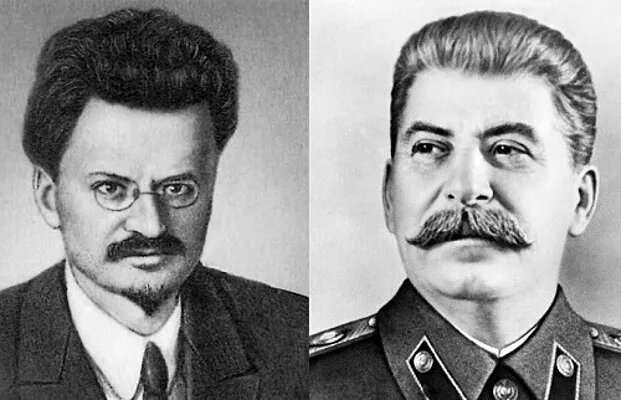
Trotsky and Stalin
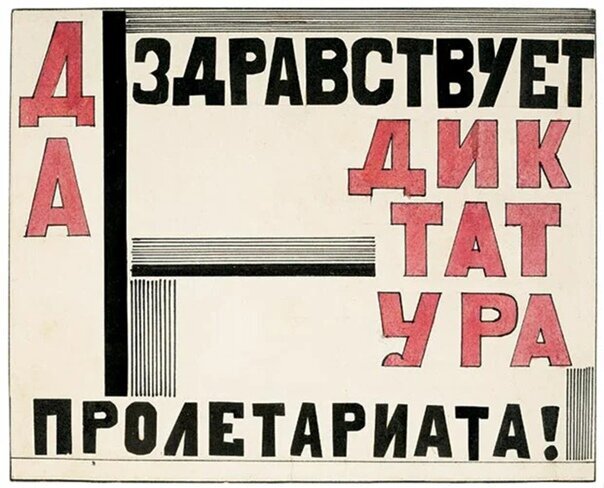
Leninism is the doctrine of the dictatorship of the proletariat and the complete abolition of classes. And as long as the complete abolition of classes has not taken place, the distinction between town and country, between manual and intellectual labour, has not been abolished, the dictatorship of the proletariat continues to be indispensable. And this means that the struggle of the working class and all the forces that help it are necessary. Fight against all negative trends.
And there are a lot of negative tendencies under socialism. These negative tendencies involve a wide variety of people: workers, collective farmers, and intellectuals. For this is the lowest phase of communism, and there are birthmarks in the lower phase of communism. This means that in our country direct social production has not completely freed itself from marketability. The desire for marketability, to act according to the principle „how can I get more money“ is the opposite of socialism.
Some begin to talk about the national character and thereby curtail the dictatorship of the working class. They’re its opponents, and they’re starting to move backwards and push everything backwards. The same applies to the issue of spontaneity and planning. If, for example, we are talking about the struggle against careerism, bureaucracy, departmentalism, and localism, Lenin said that without the universal participation of the working people in management it is an insoluble problem.
It is necessary that no one should meddle in the Party for the sake of material benefits, in order to obtain a better position than ordinary working people. But this cannot be done without the participation of the working people in management, because bureaucracy is not an abscess that can be cut out, but a disease that needs to be cured for a long time.
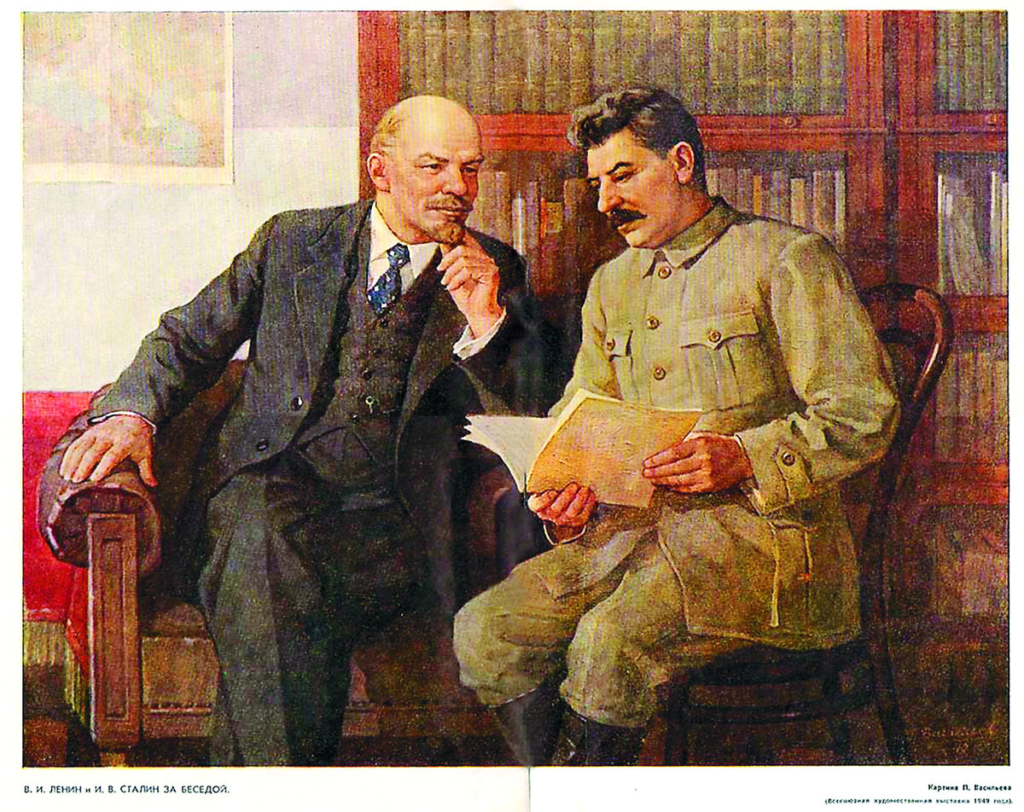
And it was in this sense that Comrade Stalin set an example of following Lenin’s teachings. However, we can find certain shortcomings, certain deviations and argue with them. But taken as a whole, Stalin is undoubtedly the conductor of Leninism.
Trotskyism, on the other hand , is one of the currents hostile to Bolshevism. There were many such movements. Because the Mensheviks were in favor of considering as a member of the party anyone who sometimes helps in some way the common cause, but is not necessarily a member of the organization. Because if he is part of an organization, he must obey the general decisions. And our brother, the intellectual, especially does not like to obey the general decision. He wants to be free „Freelancer“, as we say now. Well, these „freelancers“ are still bending their Menshevik line.
In addition, discussions should take place before a decision is made, and when a decision is made, the decision should be implemented. But to do this, you need to be part of an organization. And the Mensheviks are ready to pay for their inactivity.
There was an attempt to unite the Mensheviks and the Bolsheviks, which Lenin categorically opposed. The Third Congress was purely Bolshevik, and the Fourth was a joint one, an attempt to unite. The Mensheviks gained a majority in the Central Committee and were able to seize the Central Committee’s treasury. Thus the money which the capitalist Morozov had transferred to the Bolsheviks ended up in the hands of the Mensheviks. And the German Social Democrats, who came to settle this dispute, acted very simply: they took the money for themselves, and then began to „judge“. And that money never came back.
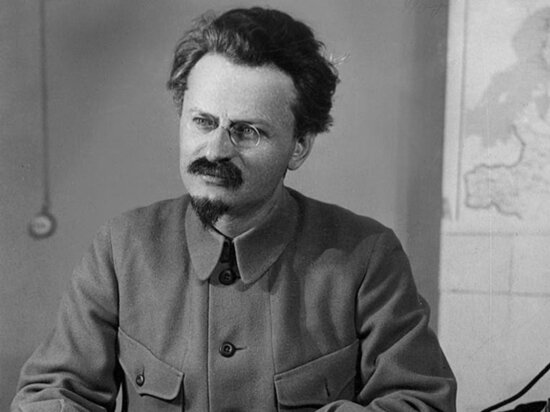
Leon Trotsky
So, when one asks where the German money that went to the Bolsheviks to carry out the coup was, one must understand that it was the other way around: the same German Social Democrats took the money from the Bolsheviks with the help of the Mensheviks.
In 1912, Trotsky decided to prove himself. He was one of those people who like to see themselves in a revolution. That is what Trotskyism consists in. Not to serve the working class, not to serve the proletariat, but against the background of the revolutionary struggle to shine a light on my personality and to show what kind of person I am. And so he showed that he tried to create, to put together an anti-Party August bloc, to somehow unite such Bolsheviks who are in favour of an alliance with the Mensheviks, and such Mensheviks as are in favour of contacts with the Bolsheviks. That is, to concoct something in between, mushy.
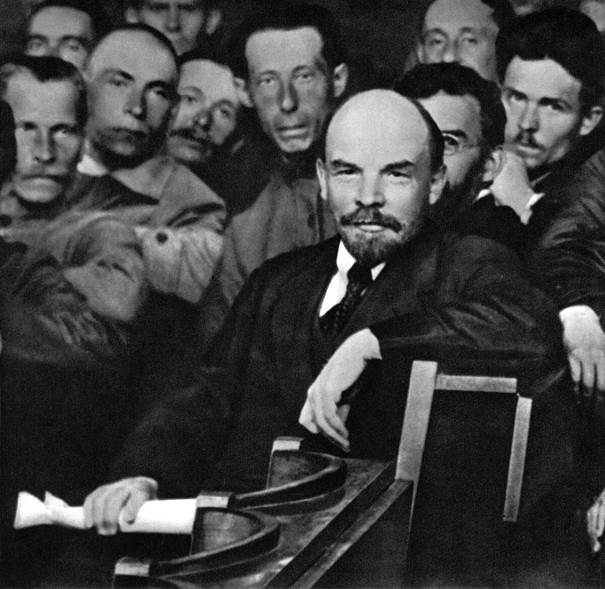
Lenin spoke out very sharply against this. The expression „Judas Trotsky“ refers to this time. But the Mensheviks, with their habits, quickly disappeared as a party, because a party does not live long without discipline. By 1917 the Mensheviks had become a scattered mass and played no serious role. The only party that moved forward towards the socialist revolution was the Bolshevik Party. Therefore, anyone who wanted to shine against the background of the revolution had to join this party. The Mezhraiontsy – a whole organisation of Social-Democrats – asked to go there! Trotsky also asked.
When it comes to handing out briefcases, they’re right there! These people did not serve the working class, but that the working class served them. In particular, Trotsky directly advocated a „shake-up of the trade unions.“ For a man who serves the working class and understands that the trade union is a school of communism, that the trade unions are trade unions, or, in other words, workers organized in trade unions, how can the idea of shaking up the organizations that the workers themselves have created? This shows a lack of respect for the working class, for its organizations, and once again emphasizes that Trotsky is one of those people who saw themselves in the revolution.
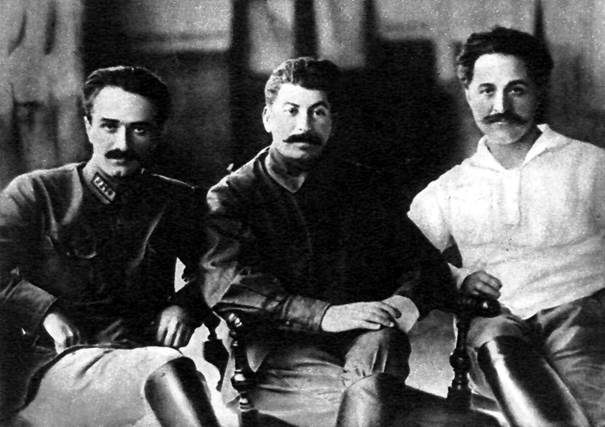
Mikoyan, Stalin, Ordzhonikidze
During the Civil War, Stalin conducted offensive operations, for which he received an order. Although sometimes we had to retreat along with everyone else. There is nothing sinful in this, there are moments when it is necessary, like Kutuzov, to lure the enemy into the interior of the country. Tear it away from its supply centers, wait for good frosty weather, and then smash it, and then beat it non-stop until it is destroyed in its lair.
Therefore, the very formulation of the question, Stalinism or Trotskyism, is incorrect. Trotskyism or Leninism! And there is no Stalinism as such. There is a great deal of experience in the implementation of Lenin’s plan for building socialism, which belongs to Stalin, industrialization, the cultural revolution, the creation of a planned economy, five-year plans and annual plans appeared. This made it possible to dramatically increase labor productivity, with growth rates of about 20 percent per year. That is, absolutely stunning! Had it not been for this, the Soviet Union would not have been ready for the Great Patriotic War and would not have been able to defeat Germany.
After the war, there was the restoration of the national economy, the abolition of the rationing system, in which everyone who had less money won. And those who had a lot of money lost a little.
So, the people who carry out bourgeois ideology in communist and Marxist phrases are revisionists. And those people who repeat the right party words, but in practice advocate only the smallest interests, sacrificing fundamental interests, are opportunists. That is the alternative: revisionism or opportunism.
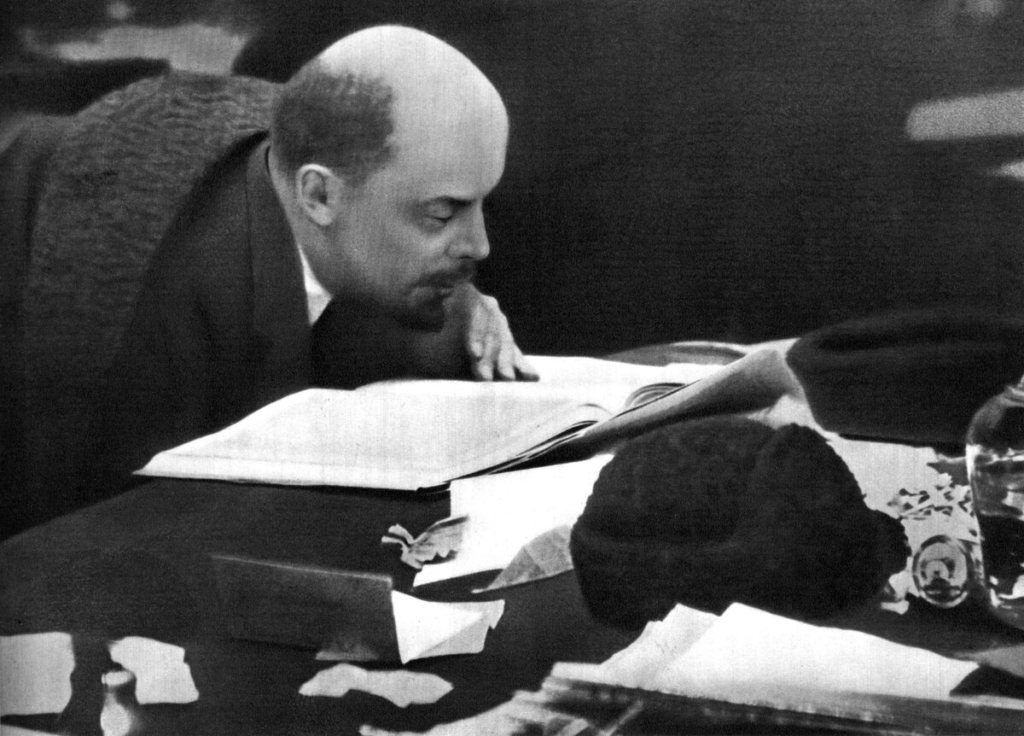
Of the opportunists, Lenin said admirably that the opportunist does not betray his Party, does not depart from it, that he sincerely and zealously continues to serve it, but that his characteristic feature is that he is supple to the mood of the moment, that he is incapable of resisting fashion, that he is unprincipled and spineless, and that he sacrifices the fundamental interests of the movement to the incidental and momentary.
Trotsky was always tossing and turning. If you remember, in spite of Lenin’s firm order to sign a peace treaty with the Germans, he refused to do so. The Germans began to attack, seized a considerable part of our territory, and Lenin and Stalin had to convene the Sixth Congress specifically to decide the question of the Brest-Litovsk Peace. At the same time, both Lenin and Stalin, as leaders, considered it impossible to be delegates to this congress, because the question of war and peace should be decided by people who had come from the fronts. Lenin and Stalin made reports, spoke, but only delegates voted. Lenin and Stalin were not among these delegates.
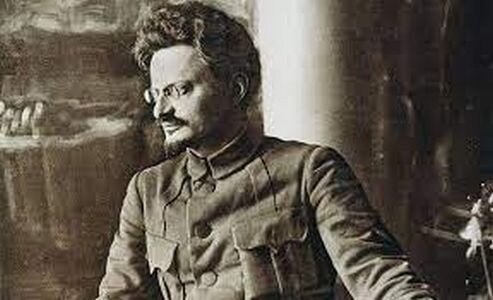
Even after the decision had been made in a very difficult struggle, Trotsky was clowning around, constantly trying to find some third line. And there couldn’t be a third line. Either they signed the contract or they didn’t. After all, the Germans continued to act while these negotiations were being conducted.
That’s the picture. As for Trotsky’s subsequent activities, he was a representative of the anti-worker deviation of the C.P.S.U.(B.). And Bukharin was a representative of this deviation, and Zinoviev and Kamenev. And all these deviations were removed from the road in the course of rapid socialist construction.
Popov Mikhail Vasilievich, Doctor of Philosophy.