
Poetics of the Soviet Poster
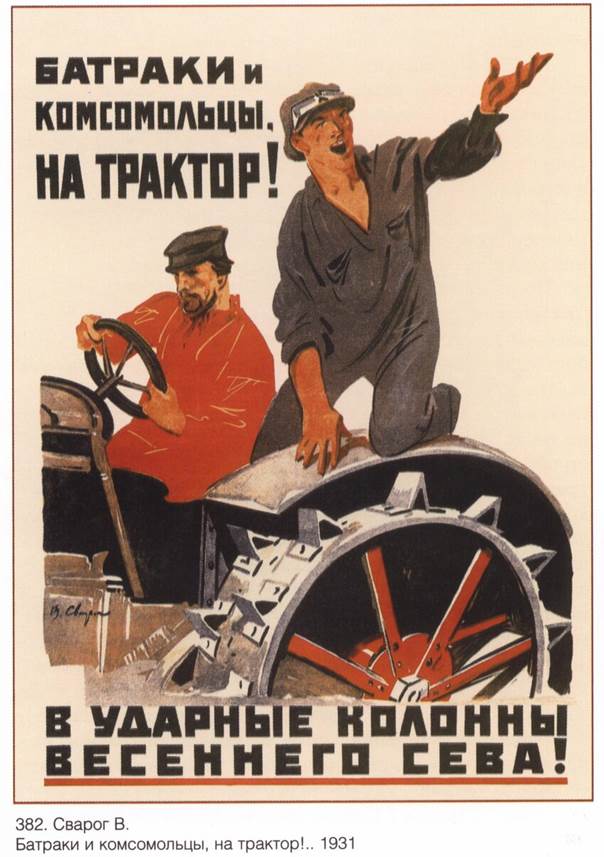
In the USSR, the most mobile, operative, and widespread type of fine art was graphics: magazine and newspaper drawings and posters. Two types of posters developed: heroic and satirical. The art of the poster was accessible to the masses, its meanings were understandable to everyone, and the short catchy text was a slogan that accompanied the image, was memorable and called people to action.
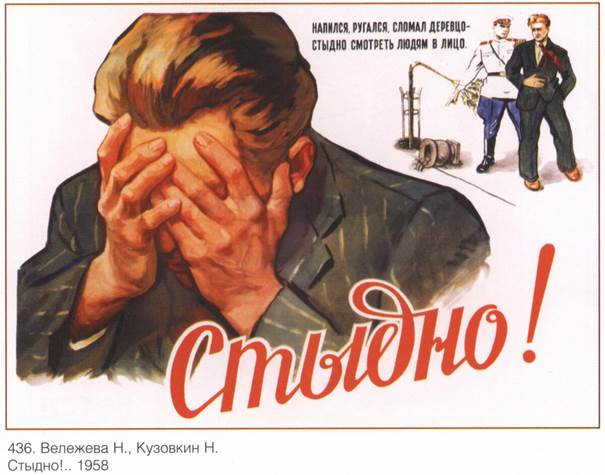
A poster is a type of fine art, a kind of applied printed graphics in the form of information of an advertising, agitation and propaganda, instructive and methodological, educational and other nature. The poster contains a catchy image and a striking headline or appeal. Its features include: the poster should be visible from a distance, be understandable and readable, and be easily perceived by the viewer. The poster often uses an artistic metaphor, figures of different sizes, the depiction of events taking place at different times and in different places. Font, layout, and color are important for text. A poster can combine photographs, drawings, and paintings.
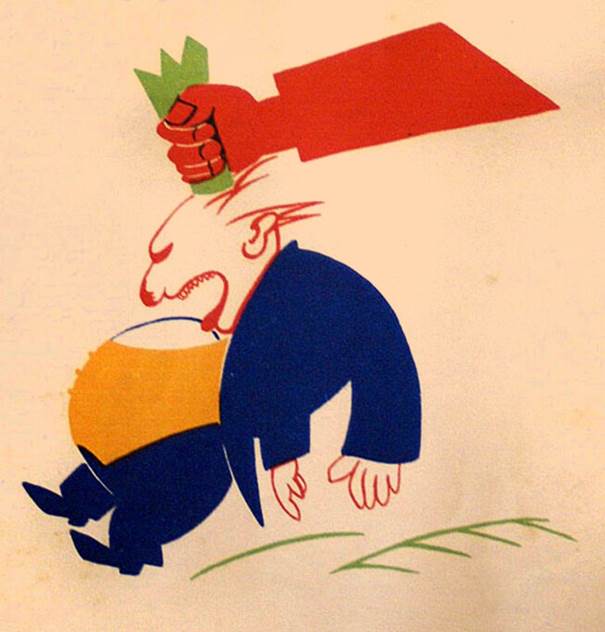
A poster in the USSR is not just an information sheet, but an object of art and a handbook of the new morality. Moreover, during the existence of the USSR, the poster changed both the methods of presentation and the general idea, depending on the main events in the country. From the illustrations and inscriptions on the posters, you can study the history of the USSR, tracing the general political course, and important events for the country.
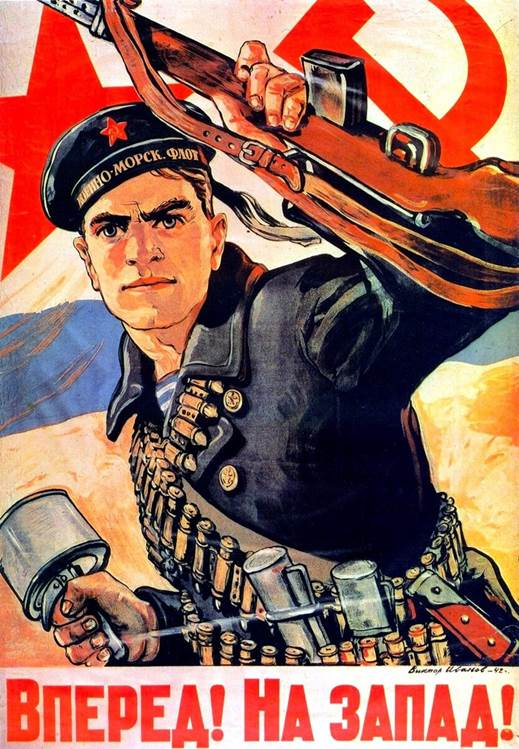
V. Ivanov. 1942
The term „Soviet poster“ originated after the 1917 Revolution. Such a poster carried the calls of the Communist Party to the masses, called for the struggle for freedom and justice.
During the years of the Revolution and the Civil War, the poster acquired a special significance. In those difficult days for the country, very few newspapers were published. Therefore, the newspaper was replaced by a poster. Propaganda posters were sent to the fronts of the civil war along with cartridges and shells, they were pasted on the walls of cities. At the bottom, on the bright margin of the poster, there was usually an inscription: „Anyone who tears down or glues this poster is doing a counter-revolutionary deed.“ The poster fought, it was a weapon, and so it was cherished like a weapon. Posters were produced in huge numbers and were popular. Eyewitnesses noted that when new samples were hung, people gathered around to gawk and discuss the novelty. The works of the authors of the GROWTH WINDOW were especially popular. The famous V. V. Mayakovsky, K. S. Malevich and others worked here. Despite the lack of materials, the artists managed to create vivid images.
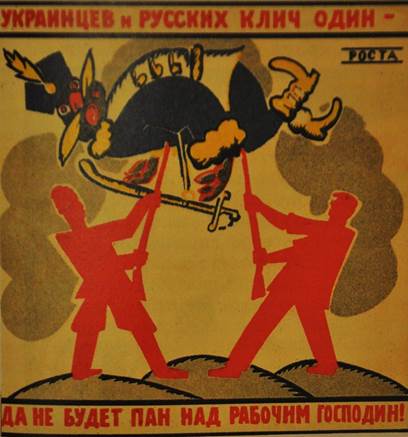
Posters of Vl. Mayakovsky during the Civil War (scroll through the carousel)
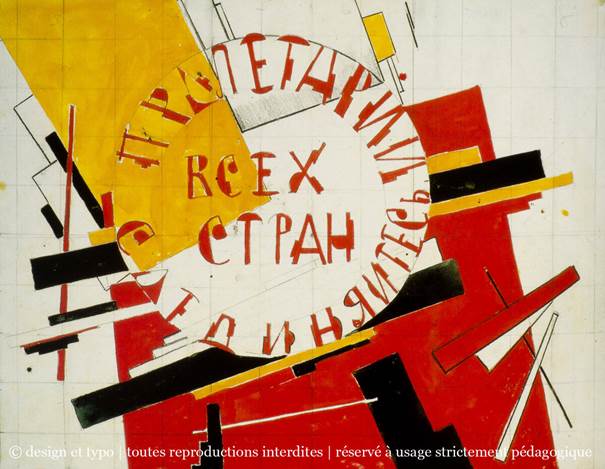
K. Malevich, 1918
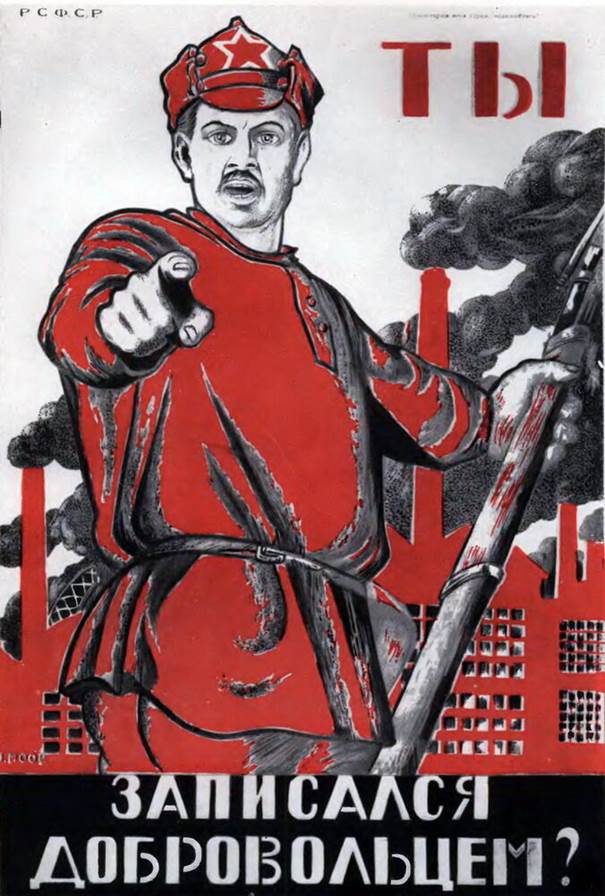
The most famous poster of the Civil War Dm. Moora, 1920
In the 1920s, in the peaceful and well-fed times of the New Economic Policy, attention was paid to social problems. A literacy programme was promoted, and attention was paid to everyday life and the family.
However, this does not prevent the parallel existence of advertising of products.
The quality and quantity of posters are increasing, the authors are using a technical novelty: photomontage. Handicraft production is no longer possible, all printed products must be approved by the censorship of Glavlit or Gosizdat. However, such a poster no longer arouses the interest characteristic of the poster of the past decade.
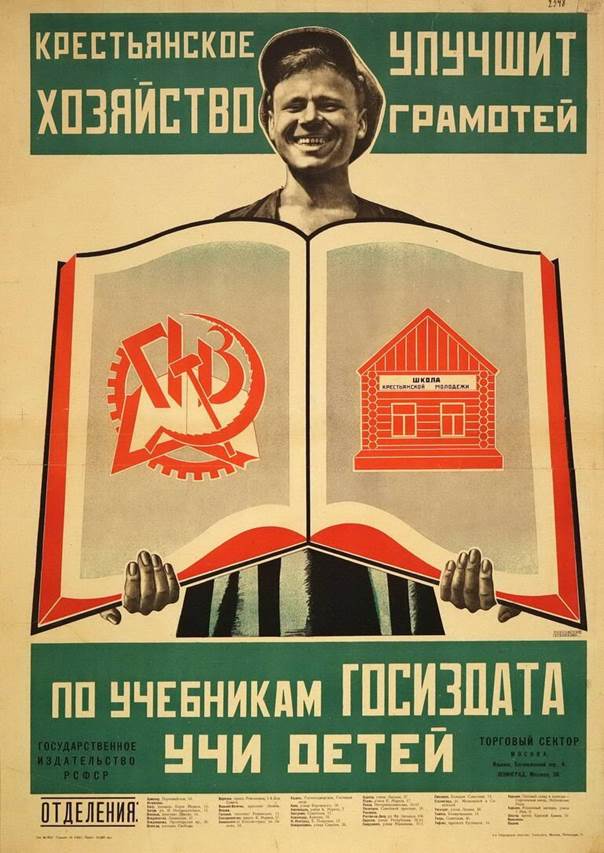
Photomontage of 1922,
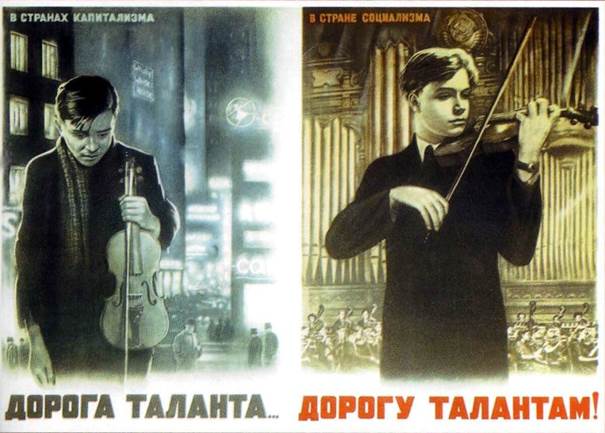
A. Mogilevsky, 1925
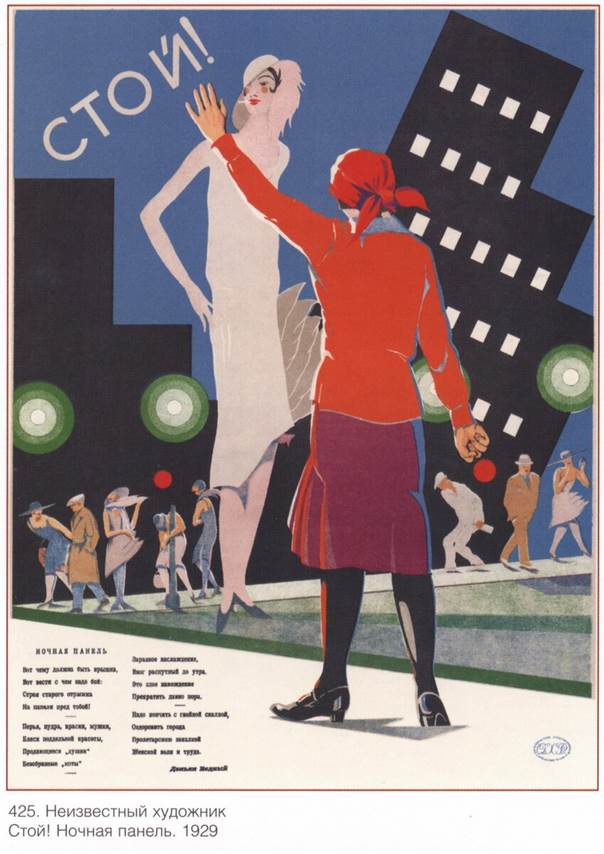
The First Five-Year Plan continues the formation of public morality, but also brings attention back to the political course in the country. Lenin and Stalin appear on the posters as wise and caring fathers.
Posters from the beginning of the decade call on peasants to go to unpopular collective farms and tell citizens about the enemies of the state.
Towards the end of the decade, the military mood that appeared is also visible in the posters: the power of the army and a separate image of a warrior ready to defend the Motherland are shown.
The circulation of posters is growing, and their quality of execution, as well as variability, will decrease. There are 2 explanations for this phenomenon:
1) Necessary unification of the country;
2) Departure of talented artists to other spheres, as well as mass repressions.
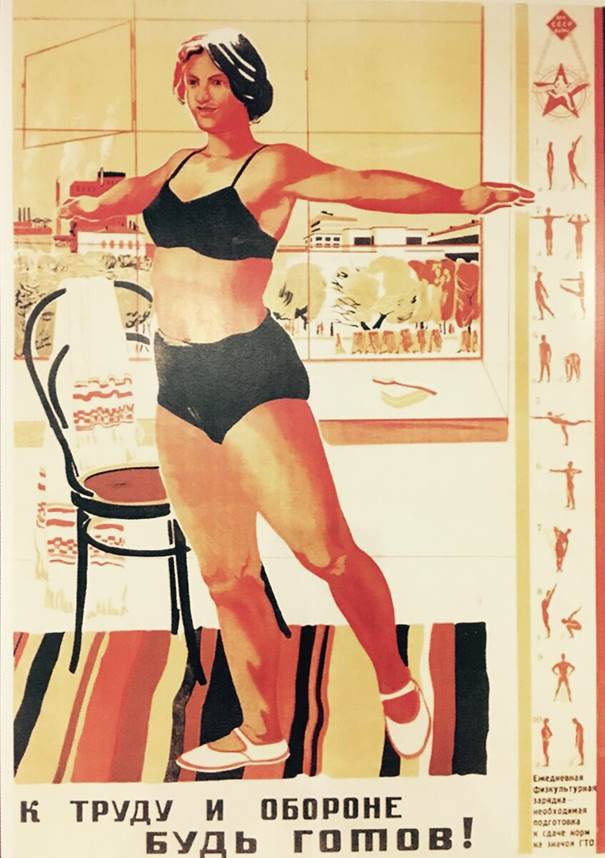
Author unknown, 1930s
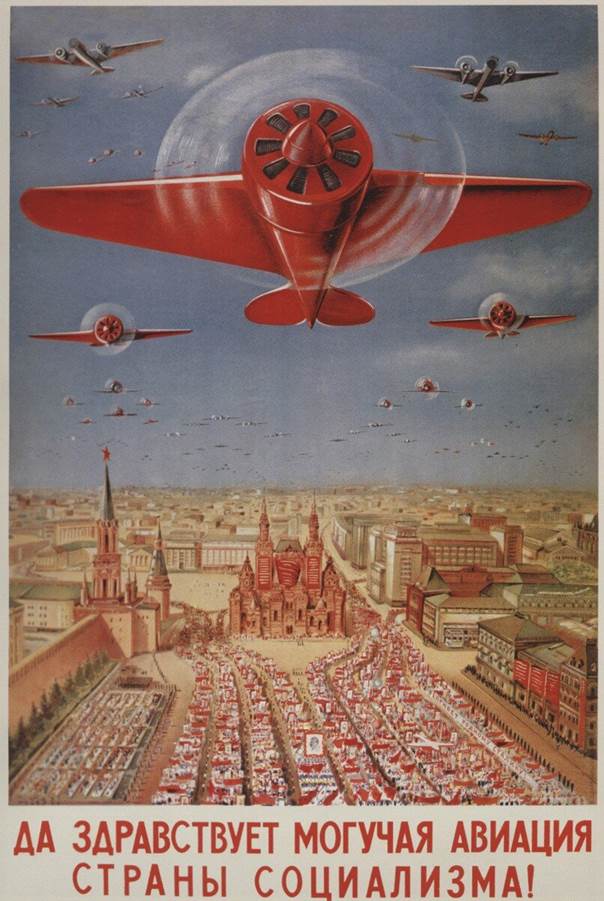
V. Dobrovolsky, 1939
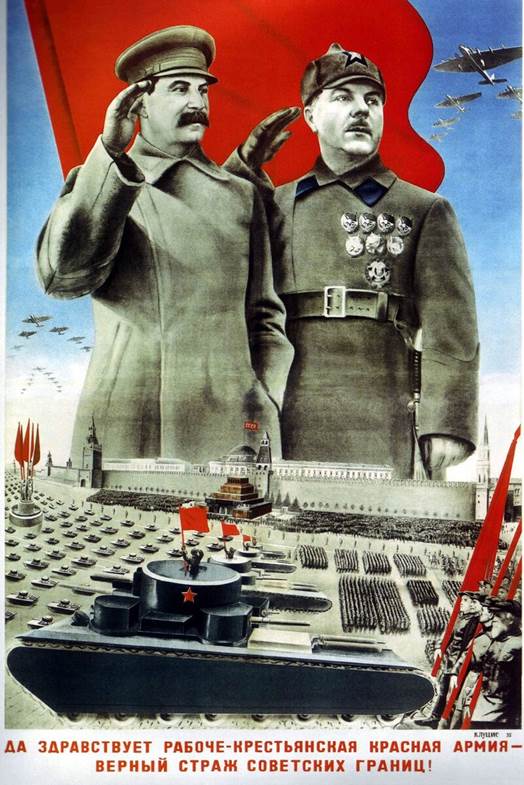
G. Klucis, 1935
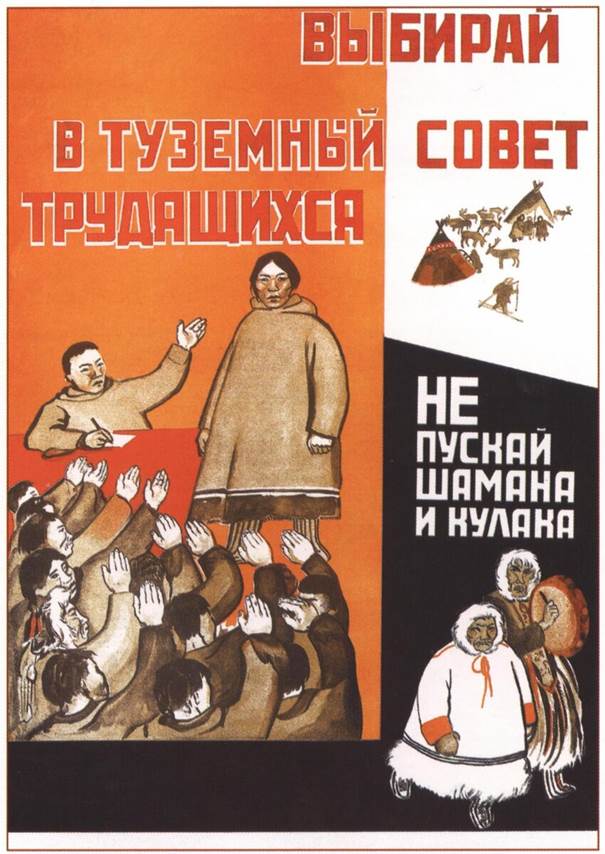
G. Khoroshevsky, 1931
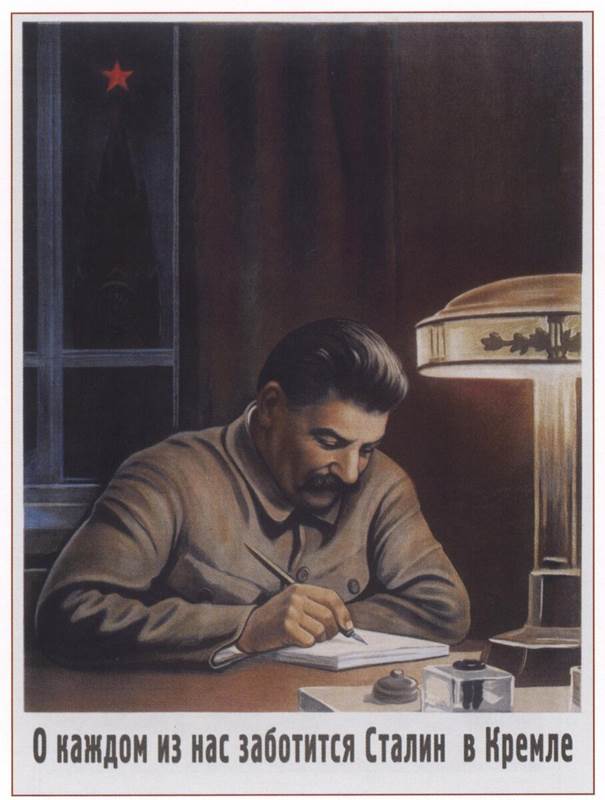
V. Govorkov, 1940
A wartime poster is somewhat similar to a post-revolutionary one: incredibly popular among people, massively used. However, now it is full of drama and patriotism.
The best artists and illustrators return to the poster, uniting in collectives: TASS Windows as a continuation of Windows of Rosta, the famous Kukryniksy, Combat Pencil.
Posters for the home front called on people to help the country wage war (donations, work on the home front), and posters for soldiers reminded of home and relatives.
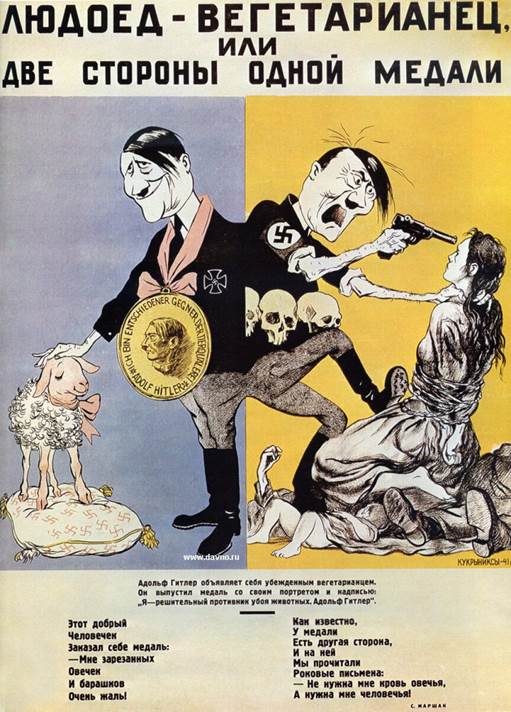
1941 Kukryniksy
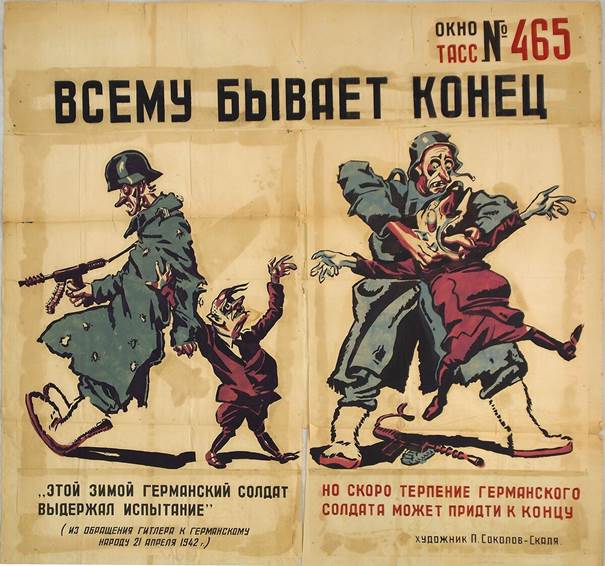
TASS windows, circa 1942
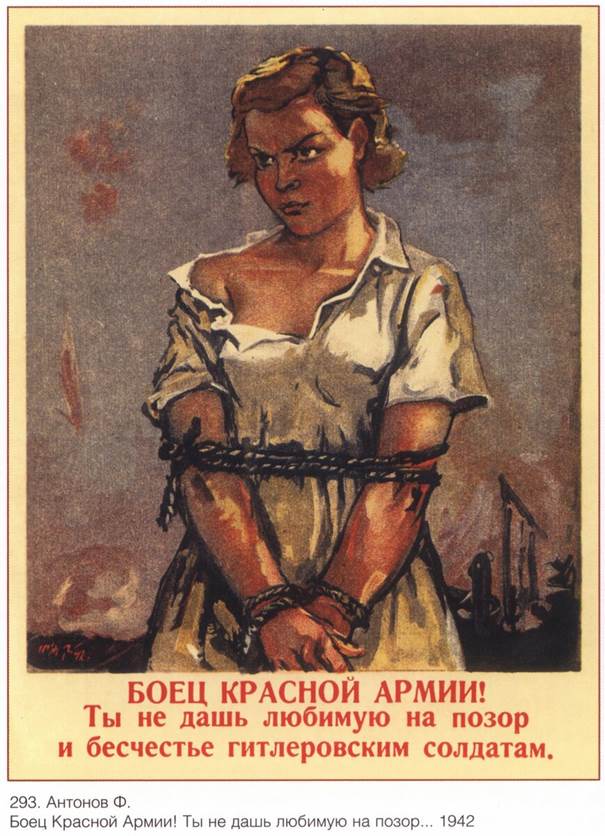
After the Patriotic War in the 1940s and 1950s, with the beginning of the Cold War, the poster raised the theme of the fight against spies, criticized and ridiculed capitalism, the Western way of life, as well as ceremonial posters praising Stalin.
The most famous spy poster of the 50s. V. Koretsky, 1950, photo taken here
V. Koretsky, 1948
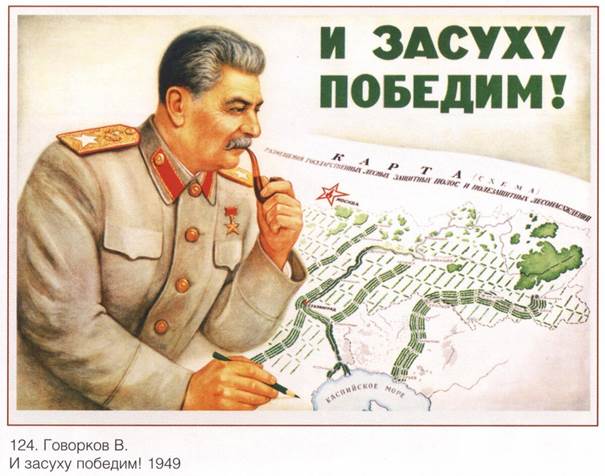
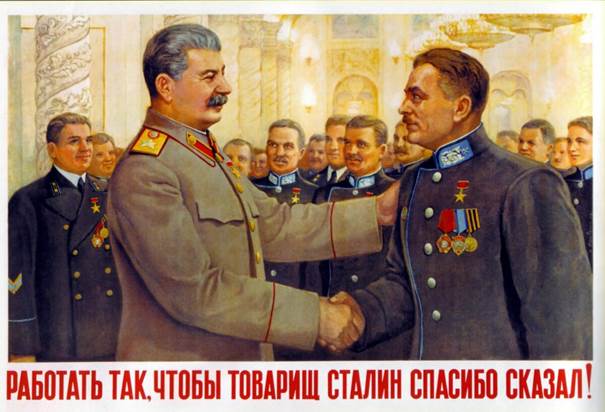
V. Pravdin, 1949
After Stalin’s death, not only the poster, but the entire USSR smoothly transitioned from the Khrushchev thaw to Brezhnev’s stagnation, and then merrily plunged into Gorbachev’s perestroika. The posters of the Khrushchev and Brezhnev times are filled with optimism and agriculture: corn, virgin land, praise of communism and the Motherland, brotherhood of peoples.
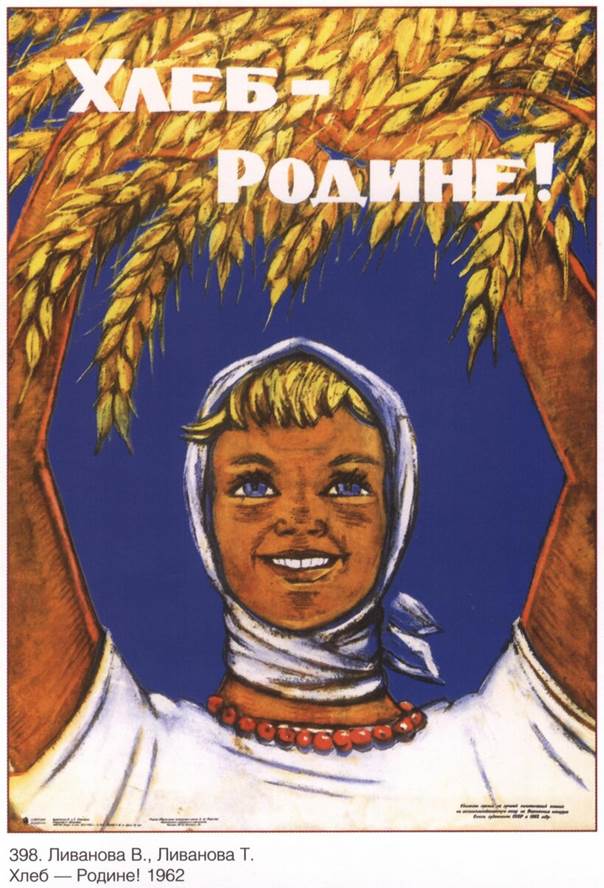
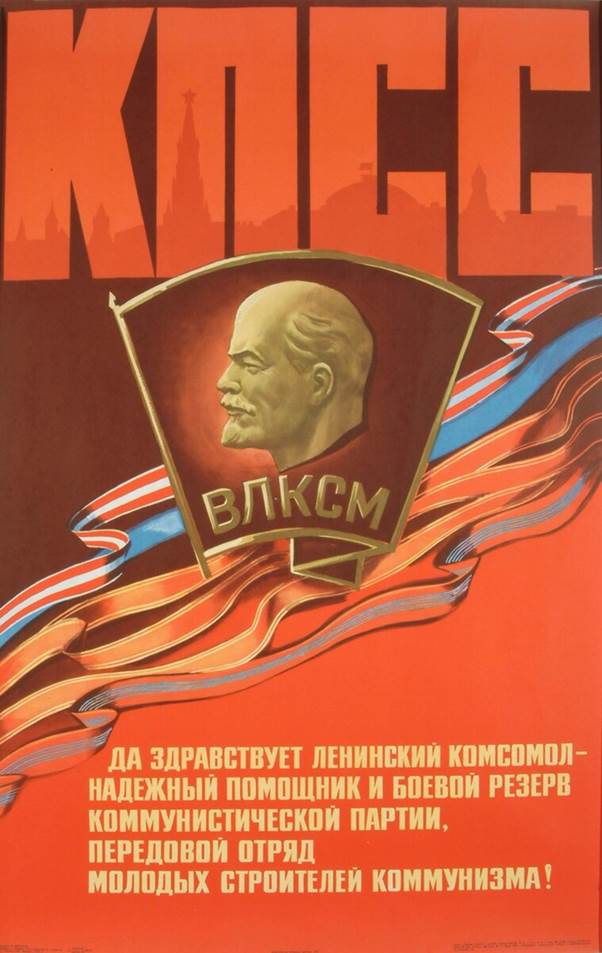
V. Viktorov, 1978
Having begun its existence as a mouthpiece of freedom, the poster gradually outlived its significance and influence in the life of the Soviet people, becoming the embodiment of the totalitarian regime. For example, the artist Erik Bulatov builds a lattice of the poster inscription „Glory to the Communist Party of the Soviet Union“ against the background of a free sky
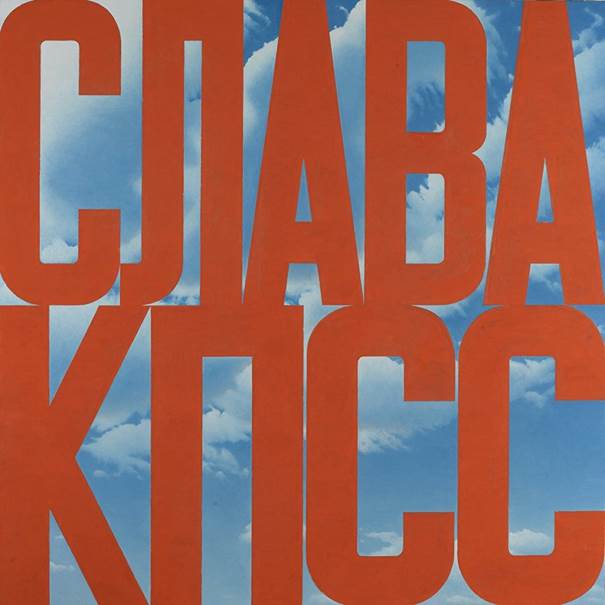
Glory to the Communist Party of the Soviet Union, 1975 – 2005 Erik Bulatov,
and Ilya Kabakov covers the walls of the art installation „A Man Who Flew into Space from His Room“.
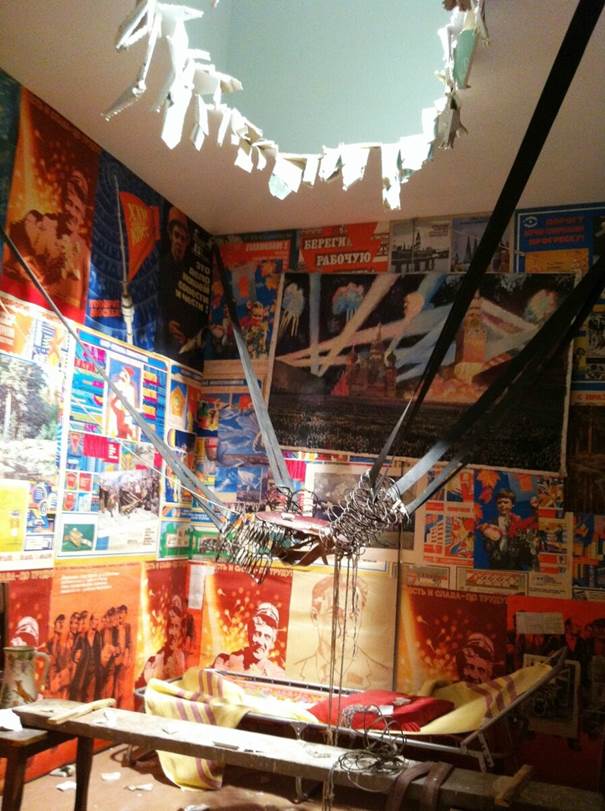
A man who flew into space from his room, Ilya Kabakov, 1985, photo taken here