
TOTAL DESTRUCTION OF THE SC-7 CONVOY. THE PINNACLE OF GERMAN SUBMARINERS‘ SUCCESSES.
By early October 1940, the commander of the German U-boat fleet, Admiral Karl Dönitz, had only 25 large and medium-sized submarines capable of operating on convoy routes in the Atlantic. At the same time, according to the pre-war calculations of the same Dönitz, at least 300 boats were needed for an effective blockade of the British Isles. But even with only two dozen submarines, the Germans were inflicting heavy damage on the shipping of the British Empire. The pinnacle of their success was the destruction of convoy SC-7.
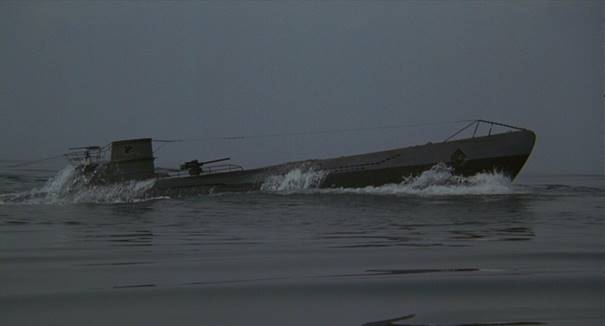
The slow-moving convoy SC-7 was formed in early October 1940 in the Canadian port of Sydney. It was assumed that 35 ships were supposed to cross the Atlantic at a speed of 8 knots, but already during the passage it turned out that the old steamers that were part of the convoy could not support even such a course. For most of the journey, the caravan was to be accompanied by only ONE warship, the sloop Scarborough. The sloop Foey and the corvette Bluebell were to meet the convoy 500 miles off the coast of Britain.
Convoy SC-7 put to sea on 5 October. The transports formed nine wake columns, 3-4 ships each. The distance between the columns was half a mile. The convoy’s commodore, retired Admiral MacKinnon, sailed in the transport Assyrian at the head of the central column. From time to time, he ordered ships to carry out an anti-submarine zigzag. Observing radio silence, orders were transmitted by means of signal flags or a flashlight. After four days of relatively calm sailing, the convoy was caught in a storm, which caused several ships to lag behind the convoy. At dawn on 16 October, a distress signal was received from one of these transports, the bulk carrier Trevisa, which had been attacked by U-124. The sloop Scarborough, being the only warship in the convoy, could do nothing, she had no right to abandon the convoy. Treviza was never seen again. On the same day, the convoy was finally joined by the Fowey and the Bluebell. The warships took up positions, one in front, the other two on the flanks of the convoy. At the same time, the commanders did not have any plan of joint action.
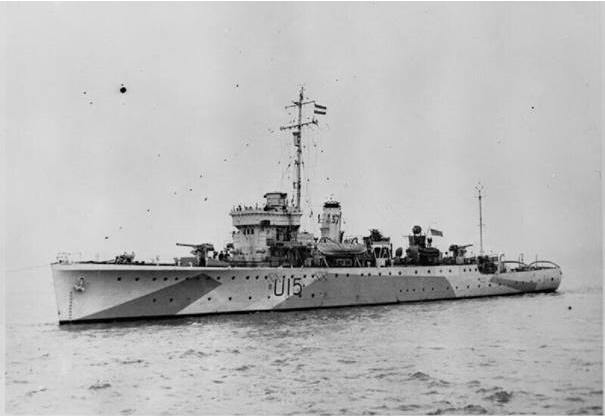
Sloop „Foey“
On the night of 16-17 October, convoy SC-7 was spotted by a signalman on the bridge of the German submarine U-48. The commander of the submarine, Lieutenant Commander Heinrich Bleichrod, immediately sent a report to the headquarters of the U-boat fleet indicating the course and speed. Dönitz immediately began forming a wolf pack to attack SC-7. Prior to their arrival, Bleichrod was supposed to refrain from attacking and maintain contact, but he could not stand it and, in violation of instructions, attacked alone. The first torpedo hit the tanker Languedoc with a displacement of 9,500 tons. A tall column of water and fire rose above the ship, and after a while the escort ships had to finish it off. Two minutes after the Languedoc, the bulk carrier Scoresby was torpedoed. Soon it sank. That was the end of U-48’s success. On the afternoon of 17 October, she was attacked by the Sunderland flying boat and anti-submarine ships. Because of this, Bleichrodt missed the convoy, which he reported to Dönitz.
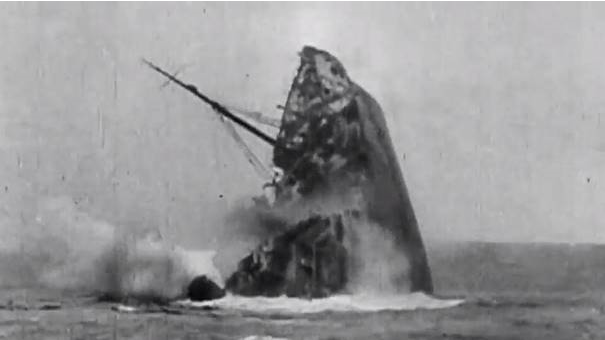
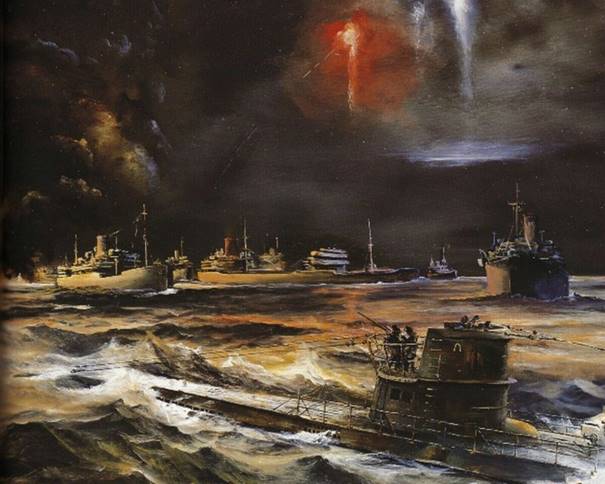
Upon receiving this unpleasant news, Dönitz ordered six boats to form a curtain on the convoy’s intended route by 08:00 on October 18. It was still 7 hours before the convoy was spotted again, this time by U-38 under the command of Heinrich Liebe. On the 17th, Liebe had already managed to sink one of the SC-7 ships, the Swedish transport Enos, which had previously lagged behind the convoy. After sinking the Swede, U-38 continued her search, and at 01:10 her signallers spotted convoy SC-7. Just at this time, the escort forces of the convoy were additionally reinforced by the approaching sloop „Lace“ and the corvette „Highins“, which, however, did not prevent Liebe from attacking from a submerged position to damage the English steamer „Karsbrek“. The escort ships drove the boat away without giving it a chance to attack again, and Liebe also lost the convoy. But thanks to his report, Dönitz still managed to lead a „wolf pack“ to the convoy. On the night of 18-19 October, convoy SC-7 was literally torn to pieces by a pack of 5 submarines: U-46, U-99, U-100, U-101 and U-123. Conditions for the German submariners that night were ideal: a moonlit night, a slight rough sea.
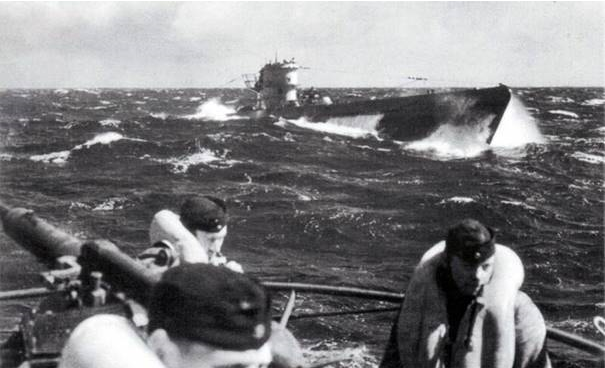
German U-boats make the passage on the surface
At 20:24, U-123 torpedoed the British ship Shecatika. The ship lost speed and was finished off the very next day. Immediately after this attack, the convoy turned left and began firing flares. Between 20:58 and 21:04, U-46 fired 4 torpedoes, sinking the English steamer „Butus“ and the Swedish „Convallaria“. Then the attacks followed one after another, and it is quite difficult to make out who exactly sent this or that target to the bottom. According to the calculations of the German historian Jürgen Rover, during the night of October 18-19, 16 ships were sunk, of which 3 transports were recorded by U-46 and U-101, 4 by U-123, 6 by U-99, which made its way to the very center of the convoy under the command of German ace No. 1 Otto Kretschmer.
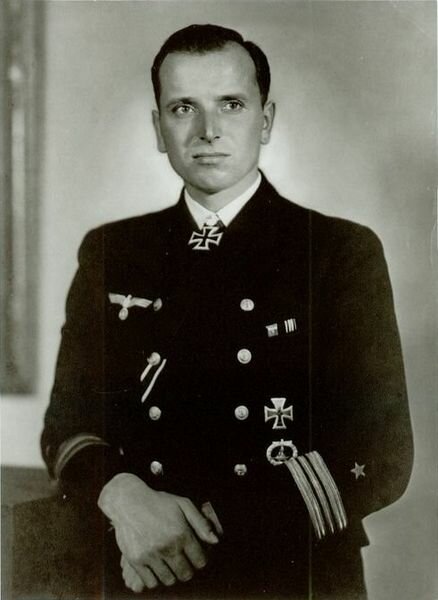
Otto Kretschmer
An illustration of the battle can be found in the logbook of U-99.
17:45. The wind is southeasterly, moderate. Excitement – 3 points. Slightly cloudy. U-101 (2 miles away) signals with a searchlight: „Enemy ship on the port side.
17:49. I see a ship. The course is East, the heading angle is 30 degrees on the starboard side. Smoke on the horizon: convoy. I’m not going to get closer. I noticed a steamer. It should be unguarded.
19:28. Switched to an underwater position.
19:50. Moved to the surface position. The steamer is slowly heading east. I’m pursuing a goal.
20:00. Walked half a mile from U-101
20:24. The steamer is torpedoed by another boat. Exchanged light signals with U-123. The convoy is coming at me. A destroyer ahead. Fires flares. I’m infiltrating the guard line.
22:02. Full moon. Visibility is satisfactory. Defined the goal. He fired a shot from the bow torpedo tube. Miss.
22:06. From a distance of 700 meters, he fired a shot from the stern torpedo tube. Hit the middle part of the vessel with a tonnage of 6500 tons. It sank in 20 seconds. The ships of the convoy are sailing on a zigzag course.
10:30 p.m. Set a new goal. He fired a shot from the bow torpedo tube. Miss. Probably, the incorrect setting of the gyroscope angle let you down. I was discovered by an escort ship, which continued the pursuit even after I had laid down on a course of retreat from the scene of the battle. Squeezed everything out of the car to get away from pursuit. The ship opened artillery fire, but then changed course and returned to service. Back to the convoy.
23:30. I got into a position convenient for attacking. Determined the target – a cargo ship. He fired a shot from the bow torpedo tube. The torpedo missed its target (the ship made a turn), but hit another ship of 7,000 tons, which was in its line of motion. The ship sank.
23:55. Went to the target (a cargo ship with a tonnage of 6000 tons) on the bow course angle. He fired a shot from the bow torpedo tube from a distance of 750 meters. Hit. Explosions, high flames.
00:15. Three destroyers approached the ship and, dispersing in a line, began the search. Broke away from the pursuit. Explosions can be heard everywhere. Destroyers fire flares. With a full moon, it’s of little use.
00:38. Went out to intercept a new target. From a distance of 950 meters, he attacked a cargo ship with a tonnage of 6000 tons. Explosion of the boiler room. The ship sank.
01:58. Reached the target at the bow heading angle. The distance is 975 meters. He fired a shot from the bow torpedo tube. The ship with a tonnage of 7000 tons sank in 40 seconds.
02:40. Attacked a cargo ship with a tonnage of 9500 tons.
02:55. Attacked the same ship again. The torpedo exploded with a great delay.
03:02. Went for a rapprochement with the same goal. He attacked from a distance of 720 meters. Hitting the middle part of the vessel. The ship sank.
03:56. Attacked a ship that had lagged behind the convoy. The torpedo missed its target.
03:58. Attacked the same target from the stern torpedo tube. Hit. The ship is kept afloat.
05:04. The attacked vessel turned out to be the „Klitonia“ with a tonnage of 3106 tons, which was sunk by fire from the U-123 deck gun. The convoy is lost to sight. I lay down on the course of retreat from the place of battle.
And what did the escort ships do? Unfortunately, 5 escort ships were clearly not enough to cover the perimeter of defenses up to 20 miles long. Second Lieutenant James Kichee of the Bluebell recalled:
Chaos reigned everywhere. I remember feeling our utter helplessness when I saw that three ships had been sunk at once. What should I do? The ships were destroyed in different parts of the convoy and we had to rush around in search of submarines, and the sonar was of no use
After defeating the SC-7 convoy, the Wolves withdrew. In 4 days, they destroyed 20 of the convoy’s 35 ships without losing a single boat. On the same day, 19 October, U-47, under the command of another famous ace, Günther Prien, spotted another HX-79 convoy, and not far from where SC-7 was defeated. Upon receiving the report, Doenitz ordered Prien to maintain contact while he began to form another pack. In addition to U-47, it included U-38, U-46, U-48 and U-100 torpedoes, which had not yet shot the entire stockpile of torpedoes. On the night of 20 October, 5 submarines attacked convoy HX-79, and despite a fairly powerful escort of 11 warships, 12 of the 49 transports were sunk. Thus, the total losses of both convoys amounted to 32 ships with a total tonnage of more than 150,000 tons.
The Germans were triumphant, the British were drawing conclusions. One of the reasons for the low efficiency of the escort was the lack of fusion of the ships and crews that were part of it. At the beginning of the war, escort groups were formed from random ships that happened to be at hand, sometimes right on the move. The group was commanded by a senior officer. Thus, if the escort received reinforcements, and on the newly arrived ships the commander was superior in rank, then the command of the group passed to him. From the beginning of 1941, the British formed escort groups of permanent composition with permanent command. The effect was immediate. Already in March 1941, one of these groups will sink the boats of two of the best aces of the Kriegsmarine – the familiar U-100 Joachim Schepke and U-99 Otto Kretschmer.