
Why education in the Russian Empire was better than Soviet education
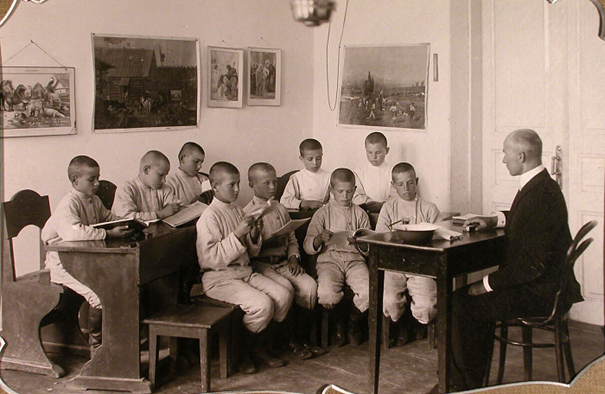
Pupils of the 2nd year of study at the Russian language lesson in the classroom of the school-sanatorium for the deaf and dumb
The Bolsheviks are very fond of exploiting two myths. The first is that the population of the Russian Empire was absolutely illiterate. The second is that it was they who began to educate this „illiterate population“. And there is certainly some truth in these statements. But only a fraction. At the same time, the forgotten „tsarist education“ had a number of significant advantages over the Soviet one. But first things first.
To begin with, the idea of total literacy was born not by the Bolsheviks, but by the tsarist government. If we talk about the number of schools, then:
In 1903 there were a total of 87,973 primary schools of all types and departments. The number of pupils in them was 5,088,029, the amount of funds for the maintenance of primary schools was about 59 million rubles (Source: Novye Izvestia. „Figure of the Day: In 1914 There Were Twice as Many Schools as There Are Today“)
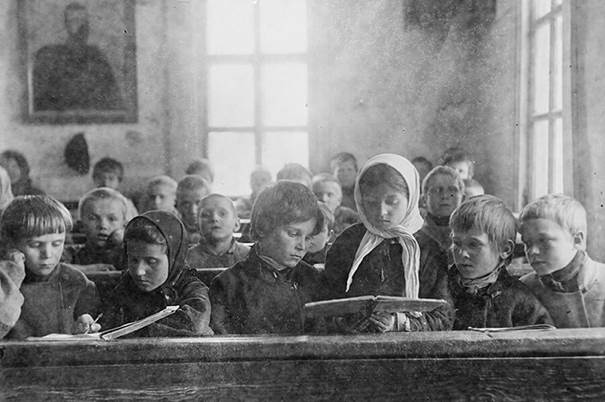
King’s School
By a decree of May 3, 1908, Nicholas II introduced additional state funding for the development of free education. At the same time, it must be admitted that the already prepared law of 1907 „On the Introduction of Universal Primary Education in the Russian Empire“ was stuck in „bureaucratic red tape“ and the timing of its adoption remained rather vague.
In spite of this, expenditures on the Ministry of Public Education increased almost fivefold from 1900 to 1913, and the number of schools doubled between 1894 and 1914. By 1916, the number of schools was almost 140,000. For comparison, this is several times more than today in Russia. According to Rosstat, as of September 2021, there were 39.9 thousand schools in Russia:
For example, the number of schools in the Russian Empire grew and in 1914 was twice as large as in the Russian Federation now, and this number continues to decrease – now they have reached the level of 1903-04 (Source: Novye Izvestia. „Figure of the Day: In 1914 There Were Twice as Many Schools as There Are Today“)
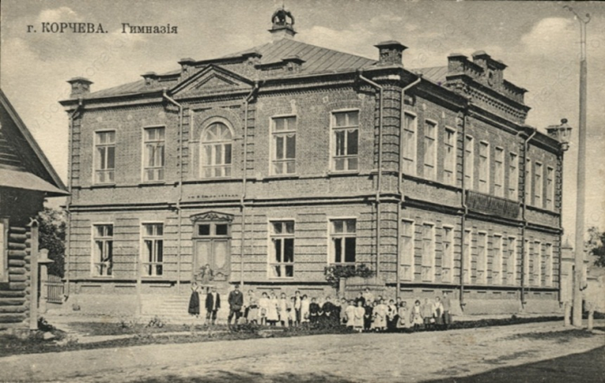
Korchev Gymnasium
But it is not entirely correct to compare the number of schools in modern Russia, the Russian Empire and the Soviet Union. Much more important is the quality of these schools, their capacity and the curriculum in which students are trained. As for quality, there is another myth about the „best Soviet education“ that has not stood the test of time. Here is what Alexei Lyubzhin, a historian of Russian education and head of the humanities master’s program at Dmitry Pozharsky University, has to say about this:
If the opinion about the superiority of Soviet education were even remotely close to reality, it is logical to assume that Western countries should arrange educational reform in their countries following the example of the USSR. But none of the European states—not France, not Britain, not Italy—has ever thought of borrowing Soviet models. Because they didn’t think highly of them. (Source: Lenta.Ru (Why Soviet Education Cannot Be Considered the Best in the World)
Still, Soviet education had obvious advantages. Primary education, where people learned to read and write, was organized quite well in the Soviet Union. But further training left much to be desired:
In terms of the quality of training, a graduate of a secondary Soviet school was equal to a graduate of the Imperial Higher Primary School. Before the revolution, there were such schools in Russia. Education in them was based on primary school (from 4 to 6 years, depending on the school) and lasted four years. But this was considered a primitive level of education. And a diploma from a higher primary school did not give access to universities (Ibid.)
At the same time, the education of tsarist Russia took into account the characteristics of students and their desires and abilities:
… There were many types of schools in Russia: a classical gymnasium, a real school, a cadet corps, a theological seminary, commercial schools, etc. There was „their“ school for all abilities. (Source: Lenta.Ru (Why Soviet Education Cannot Be Considered the Best in the World))
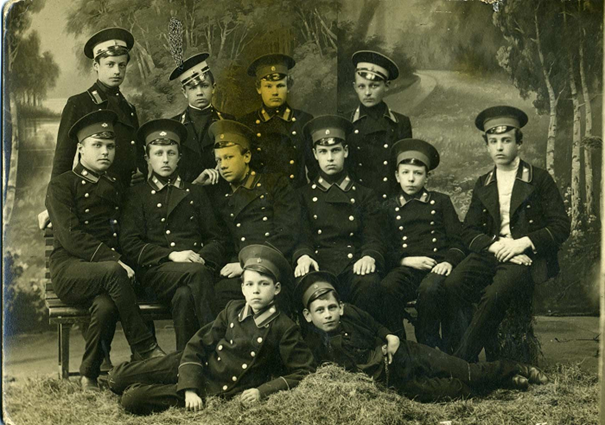
Uniform of gymnasium students of tsarist Russia
Thus, we can conclude that the main advantage in the education of tsarist Russia was the versatility and high quality of education. In the Soviet Union, the quality of education was several times lower, but at the same time it was accessible to everyone and allowed them to gain basic skills in reading, writing and arithmetic. However, the revolution did not accelerate, as is commonly believed, the process of universal education, but rather „postponed“ it for ten years. Only in 1930, by the decree of the Central Executive Committee and the Council of People’s Commissars of the USSR „On Universal Compulsory Primary Education“ of August 14, 1930, the Communists were able to introduce universal free four-year education.
But if we talk about the „free“ nature of Soviet education, then there were also pitfalls. Under Stalin in 1940, tuition fees were introduced for students of secondary schools (grades 8-10), technical schools and colleges, agricultural and other special secondary institutions:
Taking into account the increased level of material well-being of the working people and the considerable expenditures of the Soviet state on the construction, equipment and maintenance of an ever-increasing network of secondary and higher educational institutions, the Council of People’s Commissars of the USSR… Decides:
1. To introduce tuition fees in the 8th, 9th, and 10th grades of secondary schools and higher educational institutions from September 1, 1940 (Decision No. 27 of the Council of People’s Commissars of October 26, 1940)
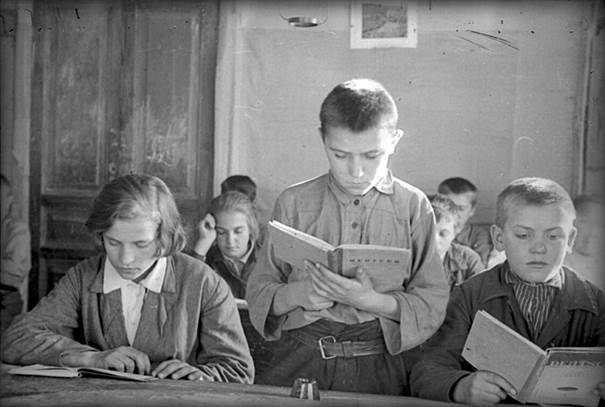
Soviet school of the 20s and 30s
The cost of education for schoolchildren began to be 150-200 rubles per year. And for students of higher educational institutions, 300-500 rubles per year. It wasn’t the biggest money. The average salary of workers and office workers in 1940 was 221-409 rubles per month (Table of the Central Statistical Office of the USSR on the Development of the National Economy of the USSR. RGAE. F. 1562. 41. D. 113. Pages 161-161 rev.). Nevertheless, even this amount caused a wave of discontent.
At the Krasnoyarsk Pedagogical Institute, some students asked whether the decree contradicted the Soviet Constitution. They remembered that Article 121 guaranteed them the right to free education. In the first two weeks, 85 people escaped from the institute, and only 2 people paid a fee of 300 rubles each. (A. S. Ilyin, Organization of Paid Public Lectures in the Krasnoyarsk Region in the Early 40s of the 20th Century)
Well, there is one more Soviet argument that is worth paying attention to. Allegedly, Soviet education made it possible to fly into space, build rockets and the nuclear industry. But neither Kurchatov, nor Korolev, nor Langemak, nor Kostrikov, nor Kleymenov ever studied in a Soviet school. For example, in 1911 Kurchatov entered the Simferopol State Men’s Gymnasium. Then he graduated from an evening vocational school. And in 1920 he entered the Taurida University at the Faculty of Physics and Mathematics. In 1920, the country was already called the RSFSR, but Soviet Russia did not have its own professors and teachers, so Kurchatov (and everyone else) was taught by the same tsarist professors.
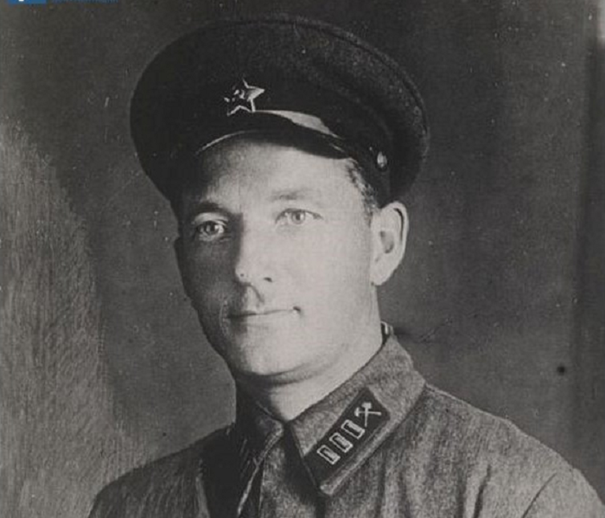
One of the creators of Katyusha and the first rockets is Georgy Langemak. He was shot in 1937 on a case fabricated by the NKVD
For example, professors Mitrofan Viktorovich Donvar-Zapolsky (rector of Moscow and Kiev universities before the revolution), Roman Ivanovich Helwig (assistant prosecutor of the Kiev Imperial University), physicist Leon Iosifovich Kordysh (professor of the University of Kiev), Vladimir Korenchevsky (professor of the Department of the Institute of Experimental Medicine, founder of the Department of General Pathology at the Psychoneurological University, former member of the „White Movement“ (held the position of a member of the Medical Council in the All-Russian Socialist Republic).
Thus, the first „luminaries of Soviet science“ owe their education to tsarist Russia. So we can safely conclude that the formation of the Russian Empire was of such high quality that it allowed the Soviet Union to fly into space, build a nuclear industry and rockets.