
China’s economic and political collapse will happen for obvious reasons that don’t even need to be justified
Everyone knows that China is the second largest economy in the world, but it should not be forgotten that it is completely dependent on this world. And in the world, as usual, there is a lot of industrial and political competition. At some stage of its development, China simply will not be able to withstand this competition, and what will happen next? Let’s not guess, but just consider the reasons why China may collapse as the world’s economic hegemon.
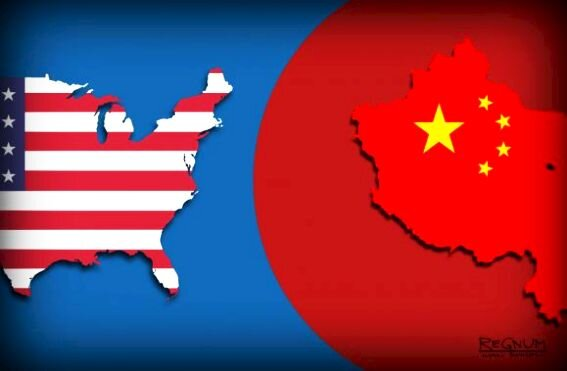
China’s Pursuit of Global Hegemony May Fall into a Trap
Recently, I happened to see something like this text on an English-language website:
„After 2010, China’s economic growth slowed down, as the Chinese economy exhausted its previous growth drivers. For example, the Chinese economy has lost its advantage of cheap labor, the inflow of foreign investment has also fallen dramatically, and the share of the working population has become 30% lower. Today, the rapidly growing Chinese middle class is gradually turning the PRC into the world’s main consumer country, which makes China less dependent on the external economic and political world situation. The economy is gradually shifting from exports to domestic demand, while the service sector is developing as rapidly as industry once was, replacing it where it is no longer able to increase its capacity.“
In principle, these considerations are not clear to non-specialists, and I would have passed them by if I had not found another phrase on another site:
„Revolutions don’t happen because people don’t live well, but because they live too well.“
Thus, it can be understood that China today is in its most unstable stage. Let us recall that the revolution of 1911-1913, which overthrew the imperial dynasty, took place at the peak of economic prosperity in the Celestial Empire, when the European powers and the United States divided the country into zones of influence and spurred its economic development, albeit in their own interests, nevertheless. But the Chinese wanted more, and they got turmoil, which split China into feudal principalities, and then there was Japanese aggression.
And Mao Zedong managed to win in 1949 only because Chiang Kai-shek quickly raised the economy on the Japanese „legacy“, but the Communists promised more. And what Chinese doesn’t want more? So China got the Cultural Revolution, the Red Guards, and a harsh communist dictatorship of the most terrible Eastern type.
Well, as the saying goes, what happened once, maybe twice, but actually God loves the trinity. China is not guaranteed against revolutionary upheavals, and the better the people lived before the revolution, the more terrible will be its fruits. Today, the Chinese are living as well as they have never lived in their history – you can’t argue with that. And whoever thinks that it will always be like this, let him throw a stone at someone.
But today it is still strange to hear all sorts of hypotheses by all sorts of economists and political scientists that China, the world’s second largest economy, may suddenly collapse. However, if we abstract from the revolutionary history of the Celestial Empire, and look for analogues in the rest of the world, we can recall what once happened to the other second economy of the world – the USSR, which collapsed literally in one moment, and a few days before this collapse could not have been predicted.
That is why the threats of the collapse of the Chinese economy and China as a state should be taken seriously. And in order to approach this threat in the most serious way, it is necessary to justify this approach systematically, that is, to break down the entire complex of causes into main points. At the same time, it is desirable not to dig into history, but to reveal the main problems of today, which only specialists think about, but do not want to scare anyone with their conclusions ahead of time.
So I don’t want to scare anyone with my conclusions, but it is still necessary to present them.
So, there are several main reasons for the collapse of China.
1). The Chinese economy is, in fact, based on raw materials. Of course, this is a rather strange statement, but here we need to look at what exactly China produces and what it exports.
The Chinese have not come up with any technologies, and if they sell anything abroad, then only cheap plasterboard and plastic dishes. Yes, today the whole world is flooded with Chinese electronics, but in fact, these electronics are not Chinese, but American and European, they are simply produced by Chinese workers who receive meager salaries and under pseudo-Chinese brands. Thus, China does not export a product, but cheap labor, embodied in a product that is not profitable for developed countries to produce. This is „raw material“ in its most primitive form.
But you understand that the Americans do not need competition, and if they allow Chinese goods to spread around the world, it means that the bulk of the profits from this go to American corporations, not Chinese ones. China itself only profits from drywall and toys (figuratively speaking). Yes, there is also the Chinese car industry, but it is only able to fill the domestic market, because Chinese cars are not in demand all over the world – in Western countries because of low quality, and in backward countries – because of the high cost.
2). Chinese society is heterogeneous in terms of social characteristics. Statistics show that only 10% of Chinese have a decent salary, the rest of the population lives below the poverty line. Given that there is no pension system in China (only the above 10% receive a pension), we can say that the social conditions in which the Chinese live are appalling.
The only thing that keeps China from social revolt is the Communist Party’s tough policies, which have created a highly effective repressive police apparatus. But by virtue of paragraph 1, very soon China will not be able to afford to maintain such a device. Maybe someone doesn’t know this, but the Chinese themselves love their beloved Communist Party, if at all, because party officials very much restrict them economically, not to mention some „democratic freedoms.“ In this regard, it can be understood that not only ordinary people, but also the most creative economic elite of the country would like to get rid of the communists as soon as possible.
3). Chinese society is very heterogeneous in terms of nationality. The Chinese as a nation, despite the best efforts of the Communist Party, do not exist, and the „Chinese people“ are the same as the „Soviet people“ in the USSR, who quickly divided into nationalities as soon as the USSR collapsed.
Maybe you don’t know, but all 1.5 billion modern Chinese belong to 200 different nationalities, the vast majority of which have absolutely nothing to do with each other, often not just ethnically, but also racially. A single Chinese language appeared only in the 17th century and was never fully formed, and even today the Chinese from different regions understand each other very poorly, if at all. So when China starts to crumble, very few Chinese will mourn.
4). Competition in the global market. Even before the 1980s, the Chinese economy was nothing at all in global terms. It was only after the death of Mao Zedong, when the Chinese Communist Party abandoned the idea of world revolution, that Western companies began to build factories in that country in order to exploit the cheap Chinese labor that China has in great numbers. In the same way, ancient slave owners rented out their slaves to foreigners in order to receive commissions, and the Chinese Communists were no exception.
In this way, thanks to such economic policies, the Communists in China accumulated enormous wealth, which they invested not so much in their own economy as in the promissory notes of the Western powers.
But the moment has come when China has begun to compete with Western corporations, and they are beginning to transfer their capacities to other countries – to India, Mexico, South Africa and others.
And this is what will happen when there is not a single Western-made product left in China. The Chinese product will not be needed by anyone, the economy will begin to slow down, and then stop due to the lack of sales.
Total.
Even these four points are enough to understand why China’s collapse as an empire state is just around the corner. And if it has not yet come, it is only because of the fear of the Western powers that the abrupt collapse of this huge country could have a negative impact on the overall economic situation in the world. Therefore, the catastrophe will simply be „put on the brakes“, stretched out in time.
But for China itself, all this will end very badly in the end.