
The Polish campaign of the Red Army: what territories Stalin annexed to the USSR in 1939
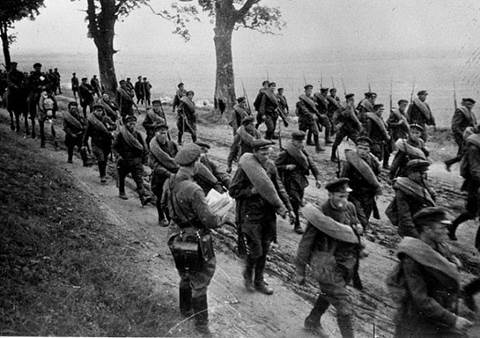
On September 17, 1939, the Red Army crossed the eastern border of the Second Polish-Lithuanian Commonwealth. Ideologically, the Polish campaign can be presented as an attempt to take revenge for the loss of western Ukrainian and Belarusian-Lithuanian lands after the Riga Peace Treaty of 1921. In Soviet historiography, the conflict was even called the „Liberation Campaign in Western Belarus and Western Ukraine.“ According to the official censuses of the Polish government, in many eastern districts, with the exception of the vicinity of Lviv, Ternopil and Grodno, ethnic Poles were not the dominant majority. After the rapid advance of Hitler’s troops towards Warsaw, the Polish government fled to Romania and found itself in a difficult diplomatic situation there, as the French side demanded the formation of a new coalition. On the evening of September 17, Commander-in-Chief Rydz-Śmigły ordered the army to let the Soviet units pass, withdraw to the southwest of the country, and engage in battle only when attempting to disarm. The country’s president-in-exile, in response to the invasion, called on citizens to „maintain courage in the fight against soulless barbarians.“ Rank-and-file soldiers and officers in a situation of general confusion found themselves in complete confusion. Britain and France reacted calmly to the actions of the USSR. Interestingly, the German command also received news of the Soviet maneuvers only a few hours before crossing the border. During the 3 weeks of the operation, the Soviet troops lost 1,500 people, 17 tanks, several dozen cars and aircraft in local battles. The death toll on the Polish side amounted to several thousand people. It is believed that 250-300 thousand servicemen were taken prisoner by the Soviets. Almost half of the territory of the defunct Republic of Poland came under the rule of the USSR. By the end of 1939, the Brest and Vitebsk regions of the Byelorussian SSR, as well as the Ternopil, Stanislav, Lviv, Rivne and Volyn regions of the Ukrainian SSR were created. According to the bilateral treaty, Stalin transferred a significant part of the historical Vilnius region to the independent Republic of Lithuania, which had previously considered Vilna (Vilna) to be temporarily occupied by the Poles. Soldiers of the Belorussian and Ukrainian fronts were instructed to complete the „evacuation“ of military equipment, including rifles, ammunition and fuel, by October 3, while not attracting the attention of civilians, so the main flow of goods went in closed wagons. According to Molotov, the army received more than 900 guns and 300 captured aircraft. At the same time, the entire river fleet of Poland was flooded. Since Moscow demanded the immediate withdrawal of German troops, the German side was deprived of the opportunity to take captured tanks and machine guns in the Brest area, and the fortress itself was actually handed over along with the defending Polish garrison. Two Daimler-Benz medium tanks were also smuggled out of the area. At the same time, there were millions of people within the borders of the USSR who were skeptical or negative about the Soviet regime.