
Why the Chinese don’t like the Uyghurs
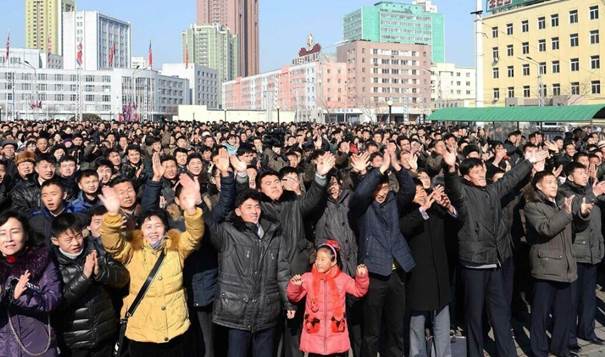
Citizens of North Korea
It is generally accepted that it is North Korea, with its very special level of control over all spheres of life of ordinary citizens, that is the owner of one of the toughest national policies in the world. The government of the DPRK is uncompromising on this issue: it does not forgive mistakes, does not allow for rehabilitation, and actively uses the principle of „punishment of three generations“ (when the entire family pays for the misdeeds of one person) even for seemingly insignificant errors.
Labor Camps in the DPRK
This is all about North Korea, and the international community, although it condemns this policy at every opportunity and always emphasizes the obvious violation of human rights, can do nothing. Because… Don’t come in the stranger monastery with your own Charter… Otherwise, they will beat you.
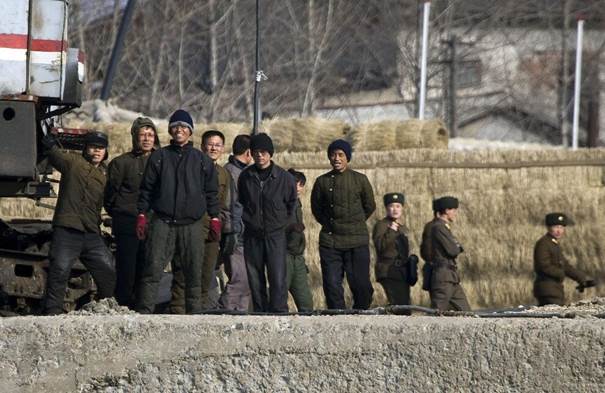
Labor Camps in the DPRK
However, this is not about North Korea, and you may be surprised to learn that modern and progressive China is pursuing an even more brutal policy towards its citizens. And, probably, he has good reasons for this, but we will find out what they are.
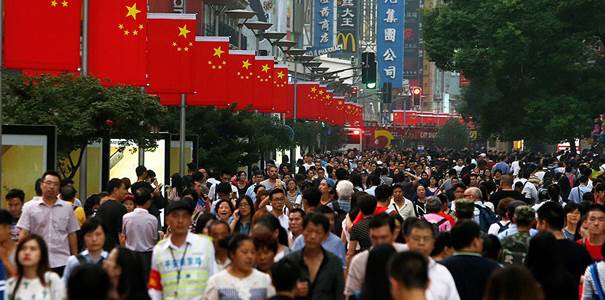
Chinese Citizens
To begin with, I would like to clarify that all sorts of restrictions, repressions and regular violations of human rights do not apply to all residents of China, but only to representatives of the Uighurs, the indigenous Turkic people of East Turkestan, who have their own language, culture and traditions. In general, representatives of the Uyghurs can be found all over the world: their communities live in the border areas of Kyrgyzstan and Kazakhstan, in Turkey, in the UAE, Pakistan, Belgium, Germany, Great Britain, the Netherlands, Canada, Sweden, Russia, Australia and Japan.
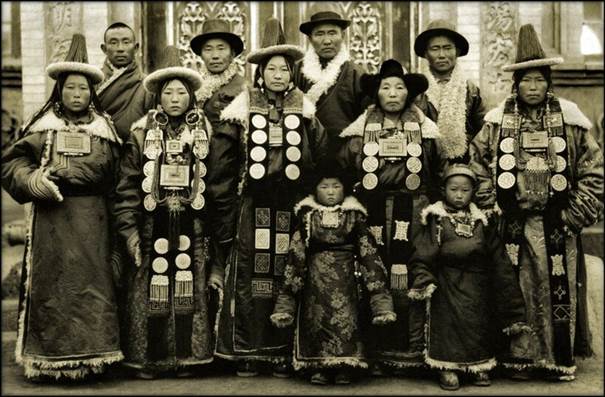
Uyghurs
But since today we are touching only on the „Chinese issue“, it is worth noting that about 11 million representatives of this ancient people currently live on the territory of the PRC, most of whom settled in the Xinjiang Uyghur Autonomous Region in northwestern China.
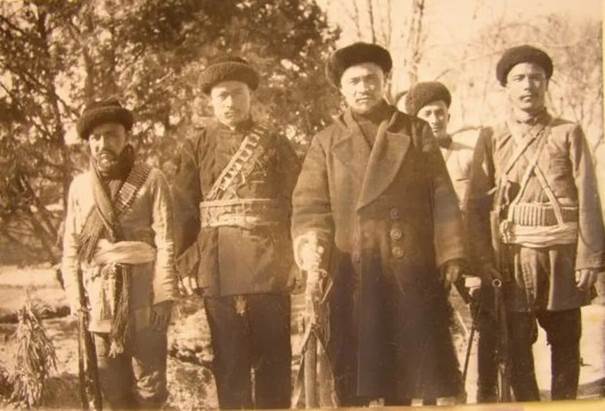
Xinjiang Uyghur Autonomous Region
Back in the 19th century, the Xinjiang Uygur Autonomous Region (XUAR) was known as „East Turkestan“, since it was territorially directly adjacent to Central Asia, due to which it became the homeland for many Turkic-speaking nationalities. The Uyghurs are no exception.
Uyghurs
Moreover, this border location had a direct impact on the way of life of the Uighurs, as they felt less of the influence of China and, accordingly, were able to form their own national identity. And the very name „Xinjiang“ means „new frontier“ in Chinese, so the Uyghurs simply had no choice but to become something new and different from the Chinese.
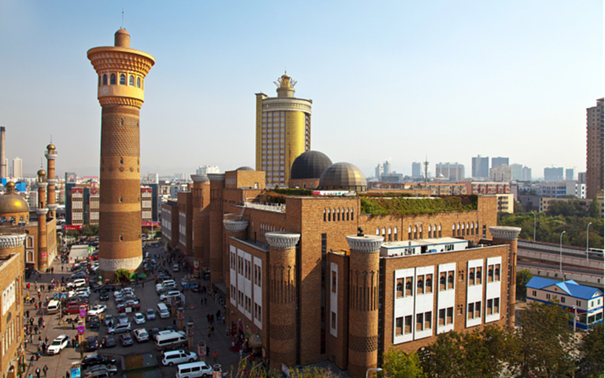
Xinjiang
And, by the way, initially the Chinese government didn’t see anything wrong with that. Moreover, when the Communists came to power in the middle of the last century, they began to actively advocate the promotion of the national consciousness of small nationalities. For 55 peoples, including the Uighurs, the Chinese authorities developed a whole system of privileges, which included tax benefits, quotas for admission to universities and employment, and many other useful things.
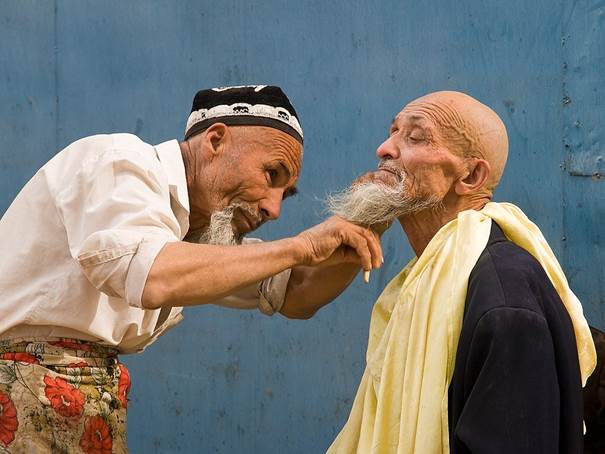
Uyghurs
Small nations were allowed to use their own language as a second state language, and special bilingual education programs even appeared in schools. True, these languages were considered official only in specific territories where small peoples lived, but nevertheless! Even these small steps allowed the Uighurs to preserve and even to some extent multiply their traditional cultural and national values, not to get lost against the background of other residents of China.
Uyghurs
The policy of encouraging small nations had been going on for several decades, and on the whole it seemed that everyone was okay with it. However, the harmony between the Chinese government and the Uighurs was visible. At some point, the Chinese authorities began to think that China did not need such a motley national diversity.
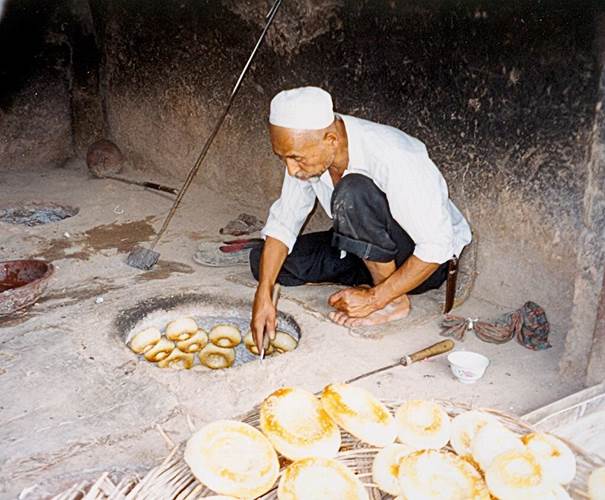
Uyghurs
Moreover, it even harms the further development of the country. Judge for yourself: the majority of small peoples live in very remote and hard-to-reach areas, which significantly slows down the introduction of technological progress into their everyday life. The Uyghurs do not speak the official Chinese well, which is understandable: why, if they have their own language?!
Uyghur, making flatbreads
However, this factor does not allow them to get a well-paid, prestigious job, which, again, affects their well-being and standard of living. All these and many other factors force the Uyghurs to live in a kind of isolation from the rest of modern China. On the one hand, this is not a bad thing, because in this way they preserve their national uniqueness (language, traditions, customs).
A Uyghur camel herder in Xinjiang
On the other hand, according to the Chinese authorities, this hinders the entry of the Uighurs into the general environment of the modern world and „preserves“ their collective identity. To put it simply, at a time when all of progressive China is keeping up with the times, and even ahead of it in some aspects, the Uyghurs are standing still, clinging to their dear but still past.
Uigur
But there’s more to it than that. The territory of East Turkestan (XUAR) was also an important region for China because a large amount of minerals had been found on its territory, and China, of course, was eager to take control of these lands. And the Uighurs, to put it mildly, prevented this…
Territory of East Turkestan
In general, putting aside all sentiments, the Chinese government has begun an active policy of turning small peoples into ordinary Chinese, with all the ensuing consequences, rights and obligations. And while most regions took the new reforms quite calmly, the Uyghurs entered into a tough confrontation with the Chinese government. This is understandable: the Uyghurs did not want to lose their own national uniqueness. Moreover, they were too different from the native Chinese.
Uyghur protests
For example, the Uighurs professed Islam and did not eat pork, and for the modern Chinese, pork was the basis of the diet. Most of the Chinese lived in the cities in the north, while the Uighurs settled comfortably in the south, in rural areas. Also, the Uyghurs had their own language, and hieroglyphs written in Arabic script acted as a written language.
Mosque in traditional Uyghur style
But the Chinese did not understand the Uyghur language at all, just as the Uighurs could not communicate even in the most common Chinese dialects. Well, I have already spoken about the lack of normal work and, accordingly, the lack of means of subsistence. On average, in the commercial sector, the earnings of ethnic Chinese in Xinjiang were twice as high as those of Uighurs. Things like that…
Uyghur script
Active confrontations with rallies and protests began in the 90s of the last century, but at some point, street clashes between Uyghurs and ethnic Chinese escalated into a bloody confrontation with the use of weapons – innocent people were hit, and the Uyghurs did not want to retreat. And then, in 2010, probably realizing that it was unlikely that it would be possible to reach an agreement peacefully, Xi Jinping decided to put an end to the „Uyghur issue“ in his own way – that is, „without mercy“ and „with the help of dictatorial methods.“
Uyghur protests
One of these methods was the introduction of a special regime of life in Xinjiang and the emergence of so-called „re-education camps,“ which were called „vocational training centers“ to appease the public. In fact, the main tasks of these centers were to introduce Uighurs to work, teach them the Chinese language, and forcibly renounce the Islamic religion.
„Re-education Camp“
It was not difficult to get into such a „re-education camp“: a simple and even unconfirmed suspicion of extremist activity was enough. Participation in rallies and protests, downloading WhatsApp (blocked in China), applying for a passport, wearing a beard and even having many children counts. Moreover, detention in a „camp“ is considered an alternative to a prison term, both with and without a court order, and can range from 2 to 18 months. The territory of such „camps“ is surrounded by walls with watchtowers, and the buildings are guarded by armed guards. So, in fact, this is exactly the same prison as all the others, only with its own nuances.
„Re-education Camp“
I also mentioned that Xinjiang has a special mode of life, the essence of which is the existence of a social rating system and cameras with facial recognition systems installed everywhere, fingerprint scanners, and checkpoints between districts of the city.
Database with personal data of Uyghurs
Therefore, in order for a Uyghur representative to be able to do the simplest action, such as leaving a car in the parking lot, he needs to first scan his face or fingerprints. All movements of Uyghurs are recorded in a database, and then an automated system subtracts or adds social rating points for „right“ and „wrong“ actions. And yes, social rating…
Control of citizens on the street
There are three levels in Xinjiang’s social rating: „safe“ (only ethnic Chinese have this status), „neutral“ (exemplary Uyghur), and „unsafe“ (a Uyghur who is suspected of involvement in Islam, has ties to foreigners, or is simply considered suspicious). Citizens with the status of „unsafe“ are under constant monitoring and can be placed in „re-education camps“ at any time without trial or investigation.
Face Scanning
But that’s not all. A few years ago, Uyghurs living in Xinjiang had their passports confiscated and replaced with ID cards, effectively depriving people of the opportunity to leave the country. ID cards display the level of a citizen’s social rating, as well as their biometric data (fingerprints, DNA data, facial biometric data).
Uyghur Passport
Uyghurs attach an ID card at the entrance to a public place, when moving from one area of the city to another. Depending on the status and the number of points on the card, a citizen may be denied access to a specific place or travel to another area of the city. It’s like cyberpunk, some kind of cyberpunk!
ID-card
And finally. As another way to subjugate the Uighurs, the Chinese government uses a very harsh method of birth control. In the Uyghur autonomy, that is, on the territory of Xinjiang, if a family decides to have a third child, and according to Chinese norms, only two children are allowed, the woman is forced to have an abortion and is obliged to pay a fine.
Uyghur family
If the family does not meet these conditions, the father and mother are sent to a „re-education camp“ where the women are given pills, after which they lose their menstrual cycle and become infertile. However, this information is based only on the stories of former prisoners of these very camps, and it is not easy to judge how true it is. Still, I would like to believe that all of the above facts are somewhat exaggerated or even fiction.